

A telescopic ladder is straightforward to use, but like any ladder, most accidents come down to the same handful of avoidable mistakes. Here's what actually matters before you climb.
1. Check it before every use
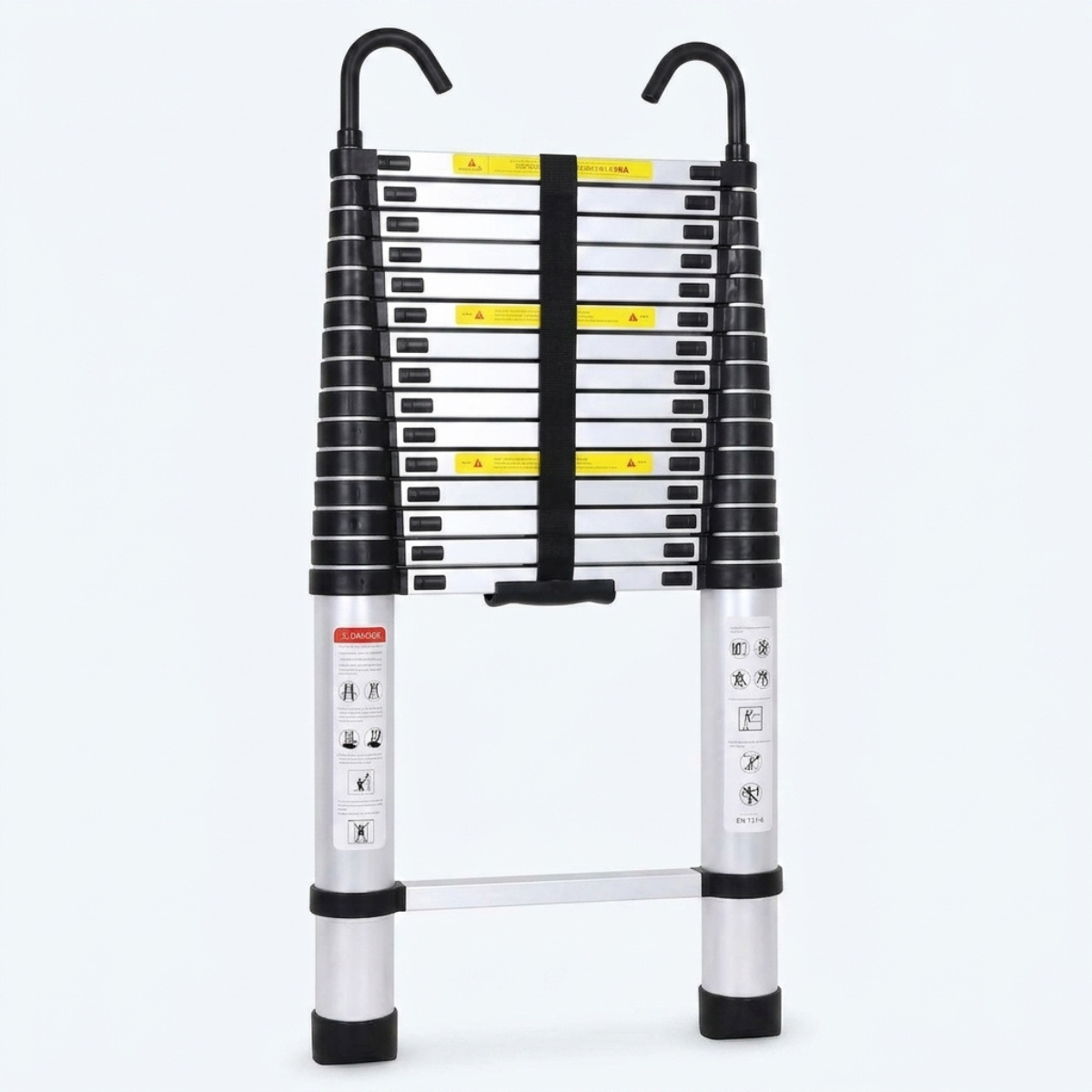
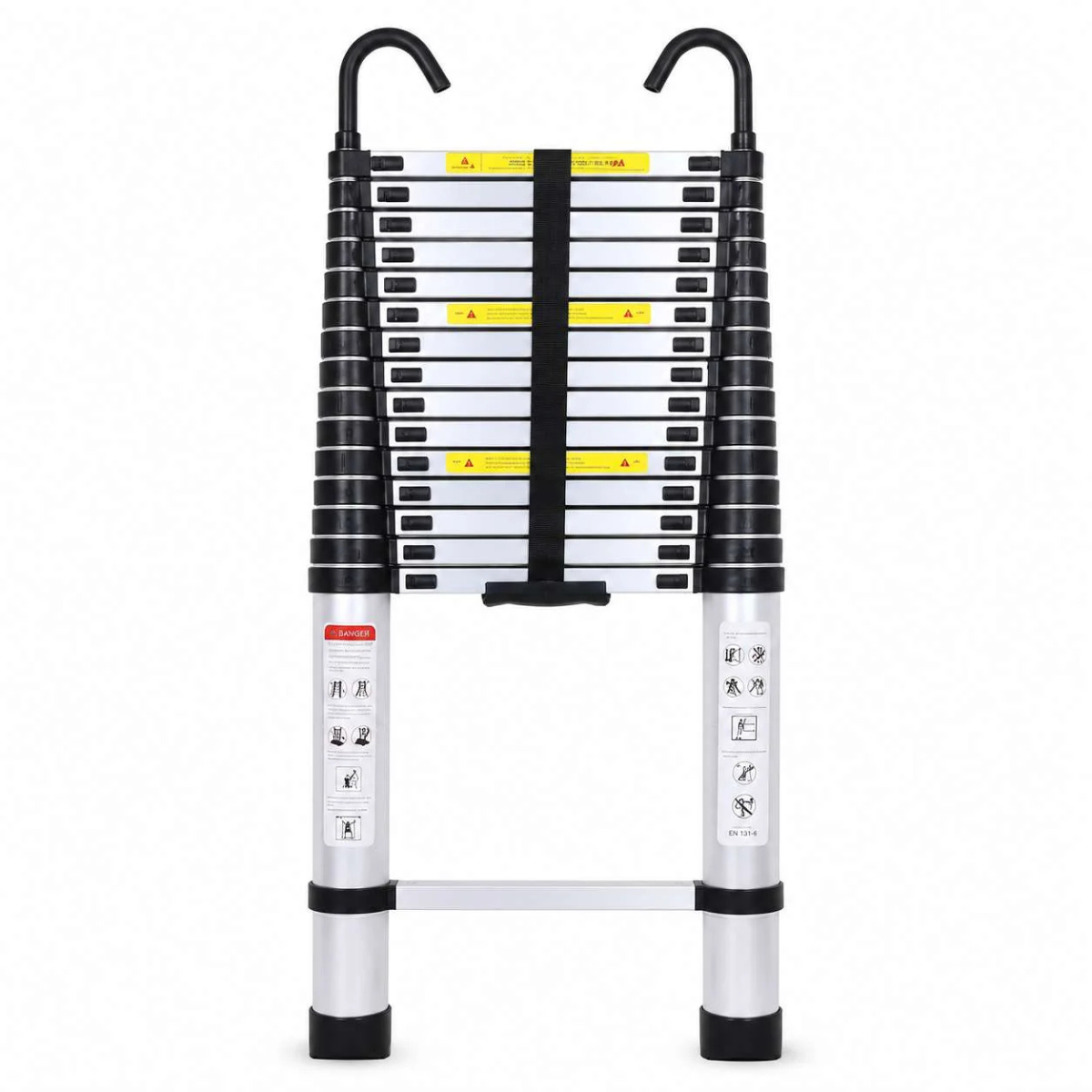
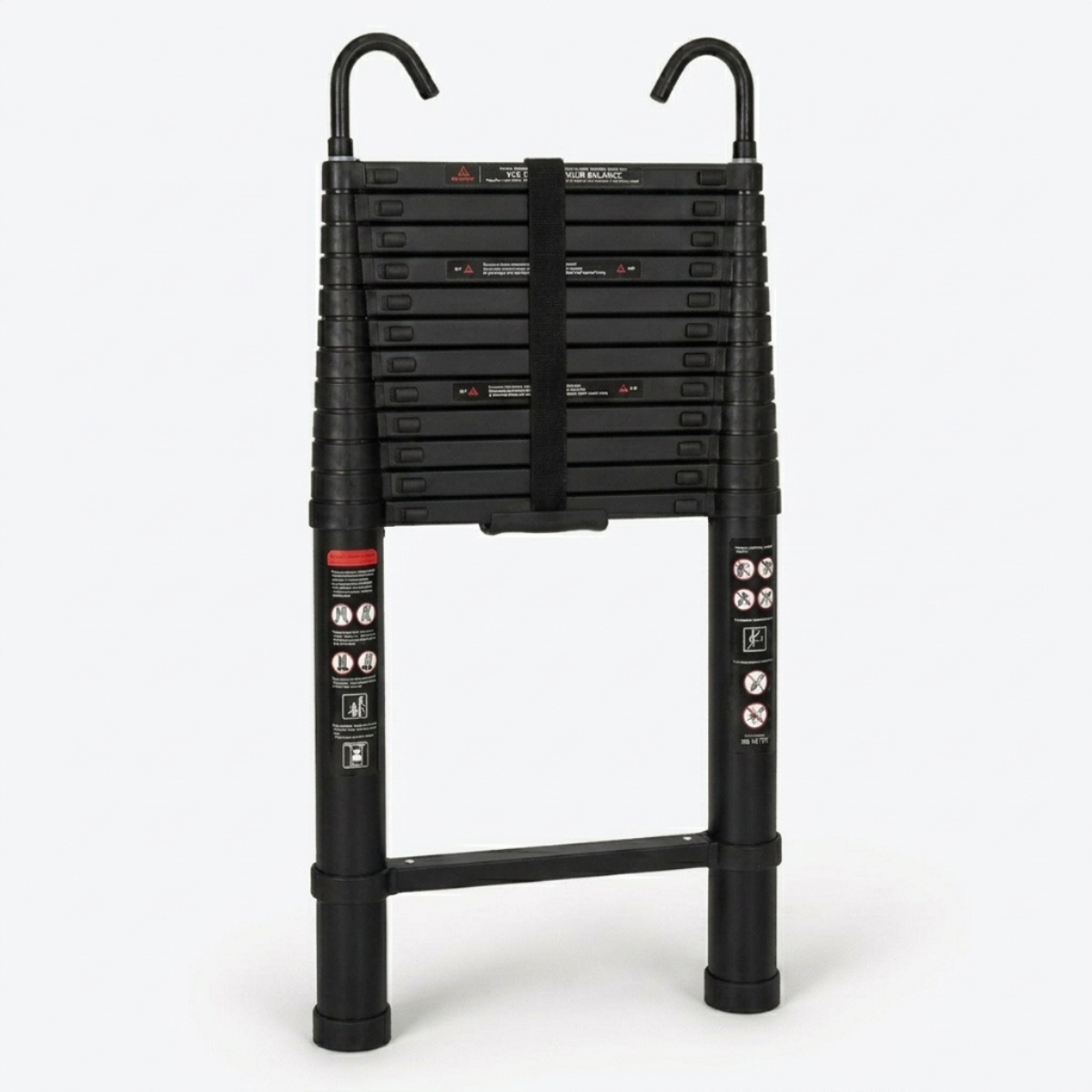
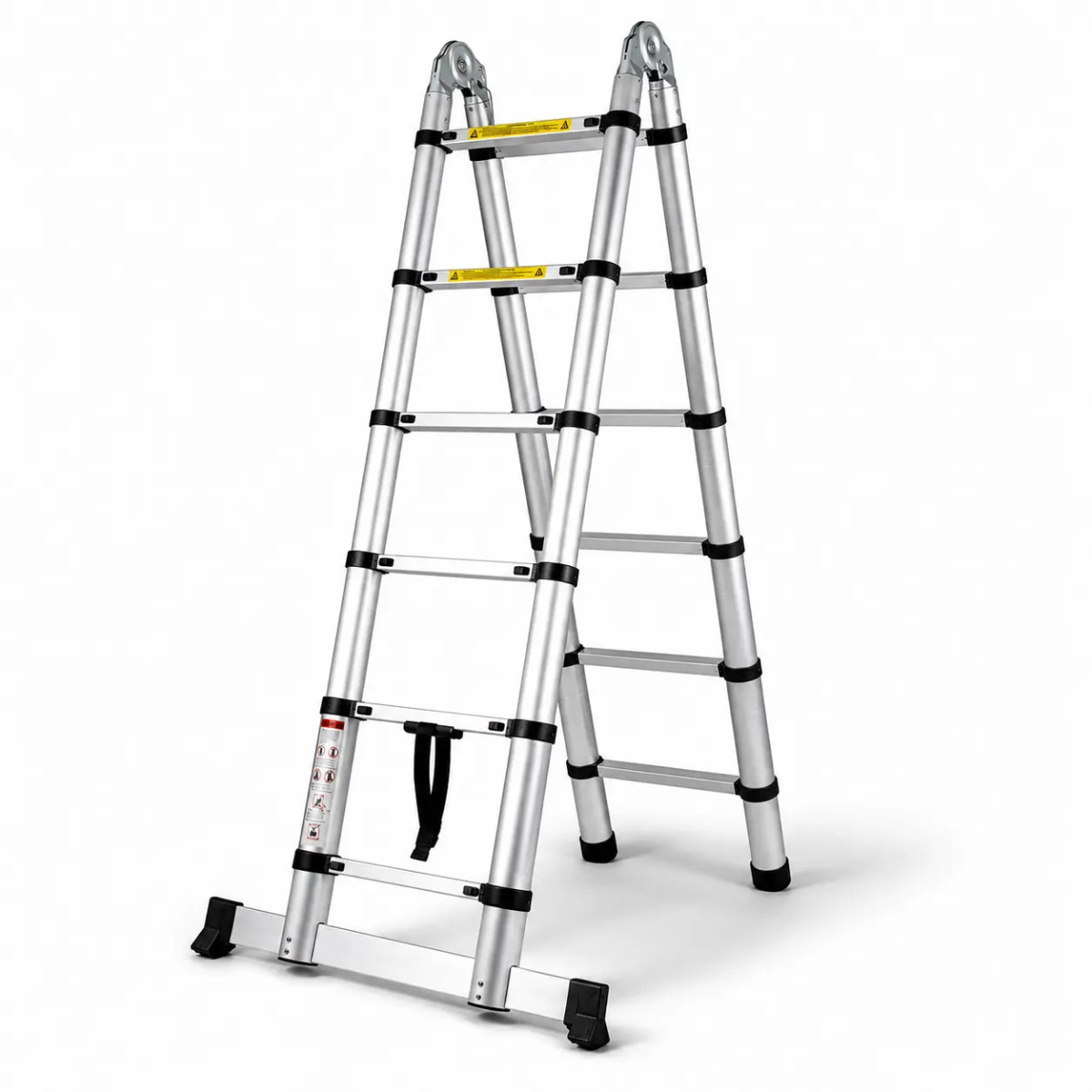
Thirty seconds before you climb: extend the ladder fully and listen for a clear click on every section as it locks. If a section doesn't click into place, don't climb it, retract and try again rather than working on a rung that isn't fully secured.
Check the rubber feet for wear or damage, and look along the stiles and rungs for any visible dents or bends. A ladder that's taken a knock in transit should be inspected properly before it goes back into use.
2. Get the ground right
The ground needs to be flat, firm and dry. On soft or uneven ground, grass, gravel, a sloped drive, a stabiliser bar or base mat makes a real difference. Cardboard, loose gravel or anything that can shift under load isn't a safe base, full stop.
Non-slip feet grip well on tile, concrete and dry grass, but stay cautious on wet grass or a freshly mopped floor, no rubber foot fully compensates for a genuinely slippery surface.
3. The angle: the 1-in-4 rule
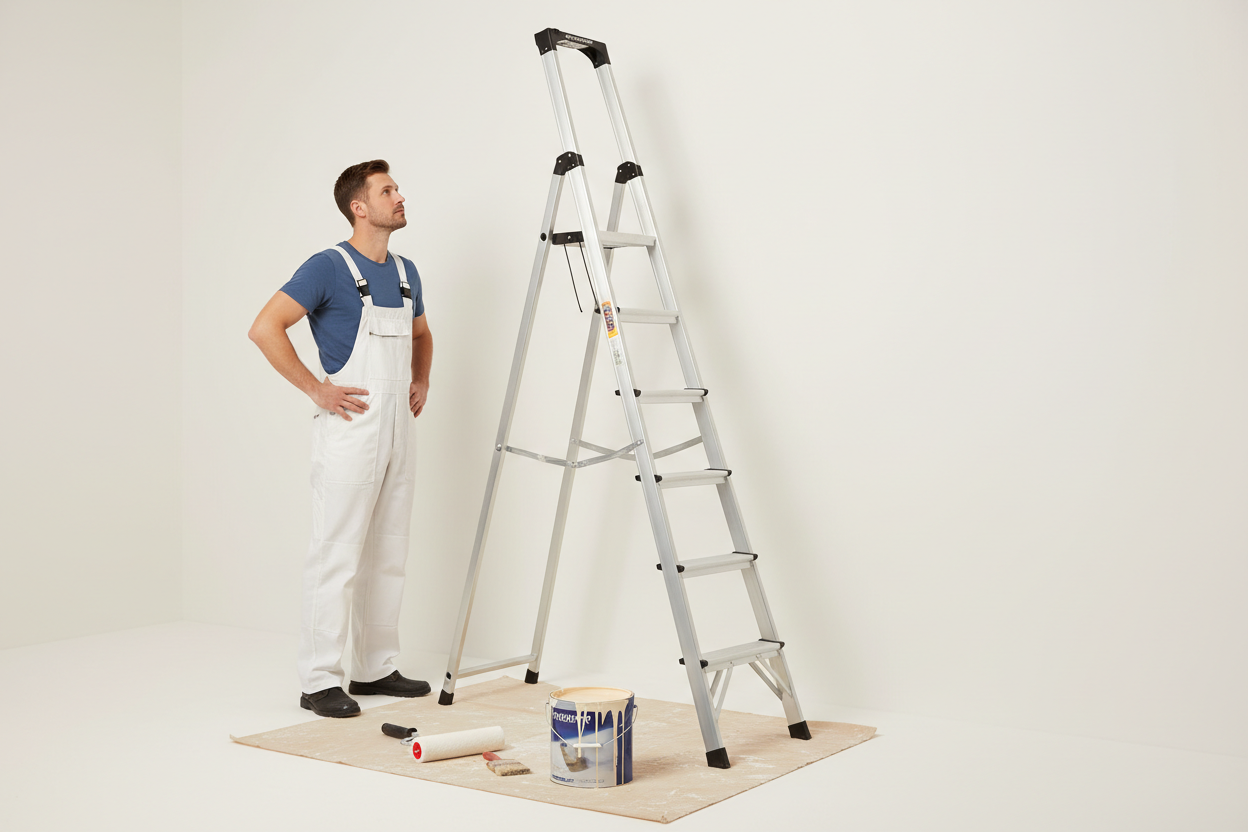
For a ladder leaning against a wall, the HSE's rule of thumb is 1 in 4: for every 4 units of height, the base should sit 1 unit out from the wall, roughly a 75° angle. Too upright and the ladder can tip backwards; too shallow and the base is more likely to slip out.
4. Climbing and descending
Always face the ladder, going up and coming down, never with your back to it. Keep three points of contact at all times: two hands and a foot, or two feet and a hand. Carry tools in a shoulder bag or tool belt rather than in your hands, and don't climb higher than the third rung from the top, the top sections aren't designed to be stood on.
5. Never lean sideways
This is the single most common cause of ladder falls. If something's out of reach, come down and move the ladder rather than stretching for it. A simple rule: if your hips pass beyond the stiles, you've overreached.
6. Folding down, mind your fingers
To retract, release the latches on both sides of a section at the same time and let it lower under control, working from the top down one section at a time. Don't force a section or release it suddenly, the slower descent is there specifically to keep fingers clear.
7. Storage and upkeep
Store the ladder somewhere dry, away from frost. Wipe down the sliding sections with a dry cloth after outdoor use, and once or twice a year, check the locking latches and feet for wear.
The short version
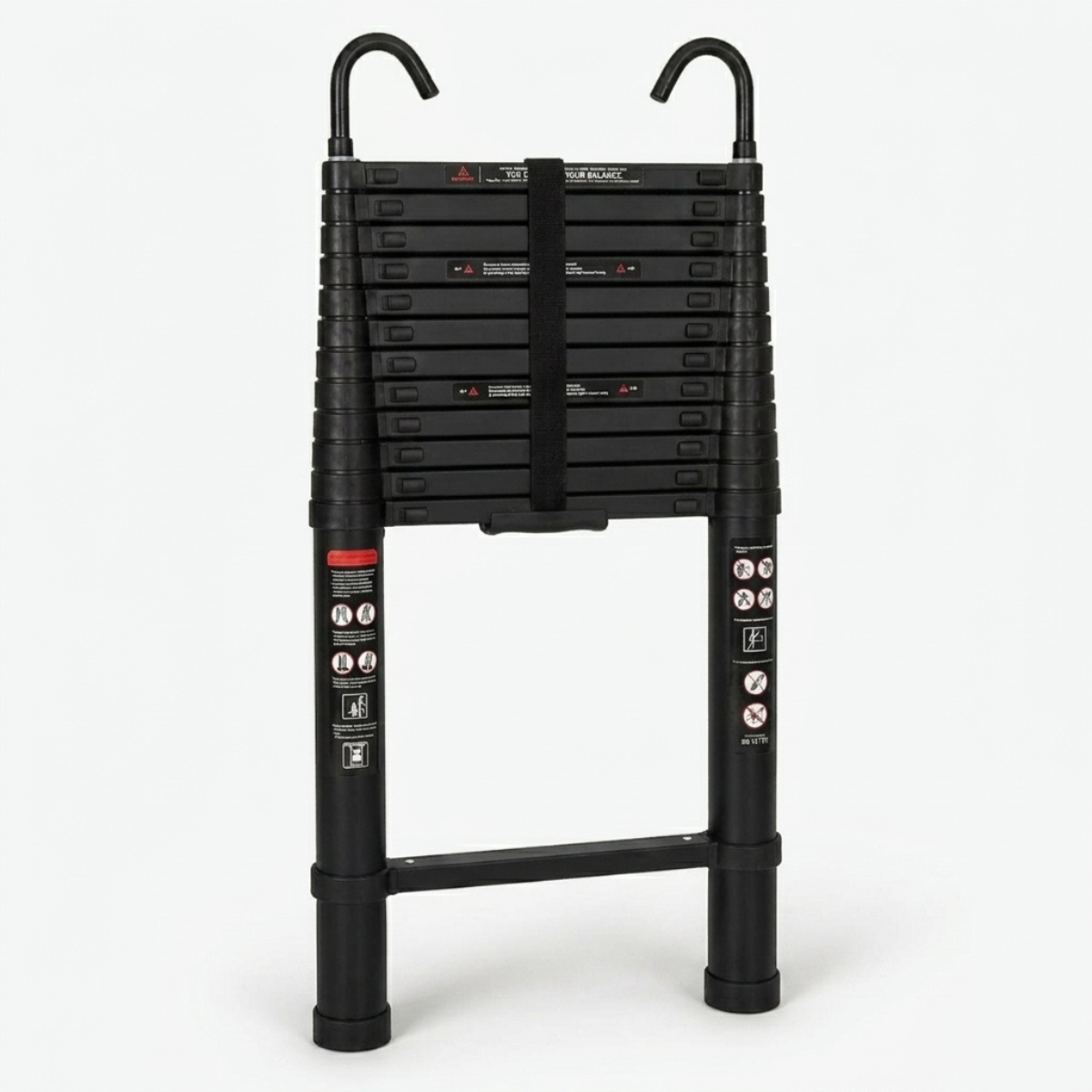
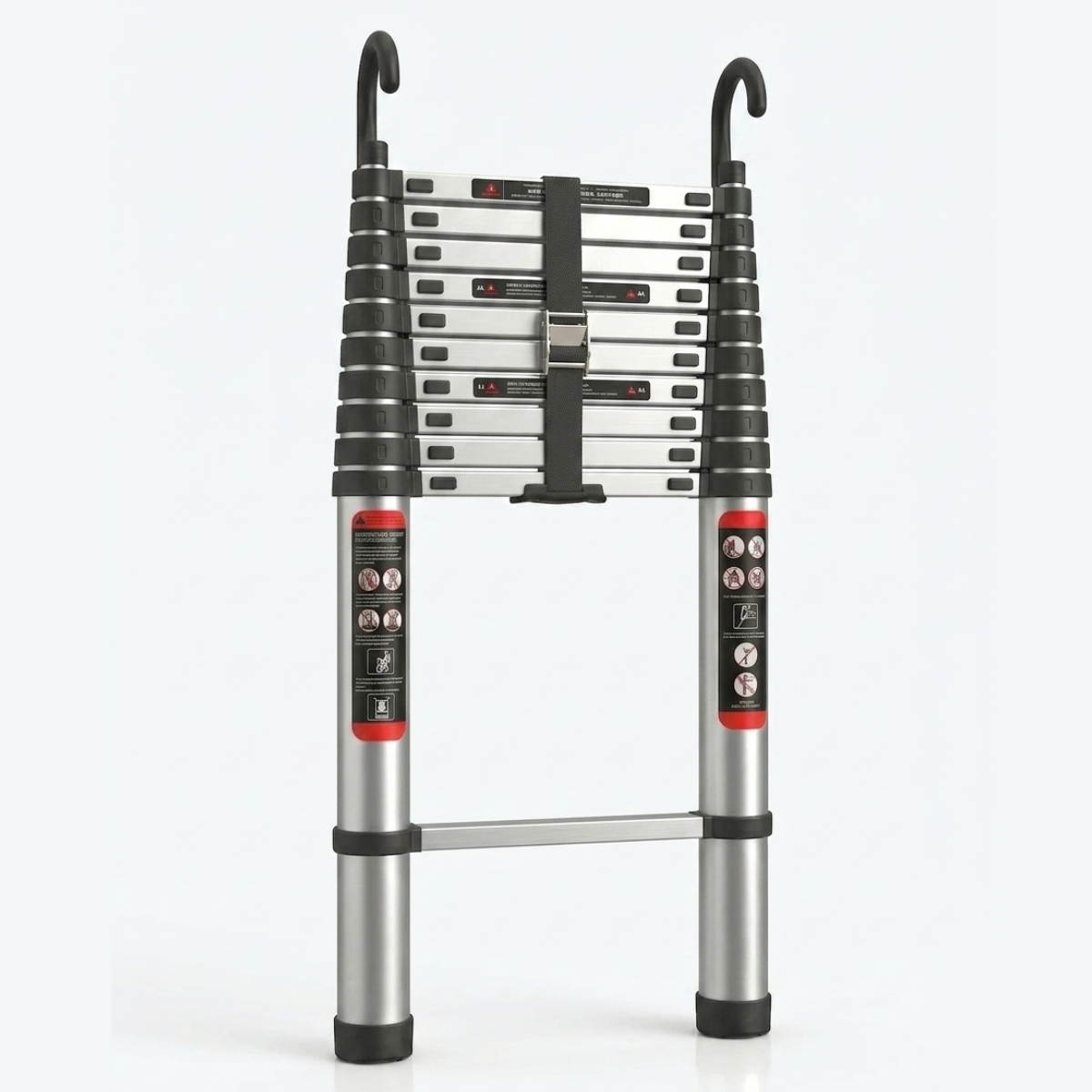
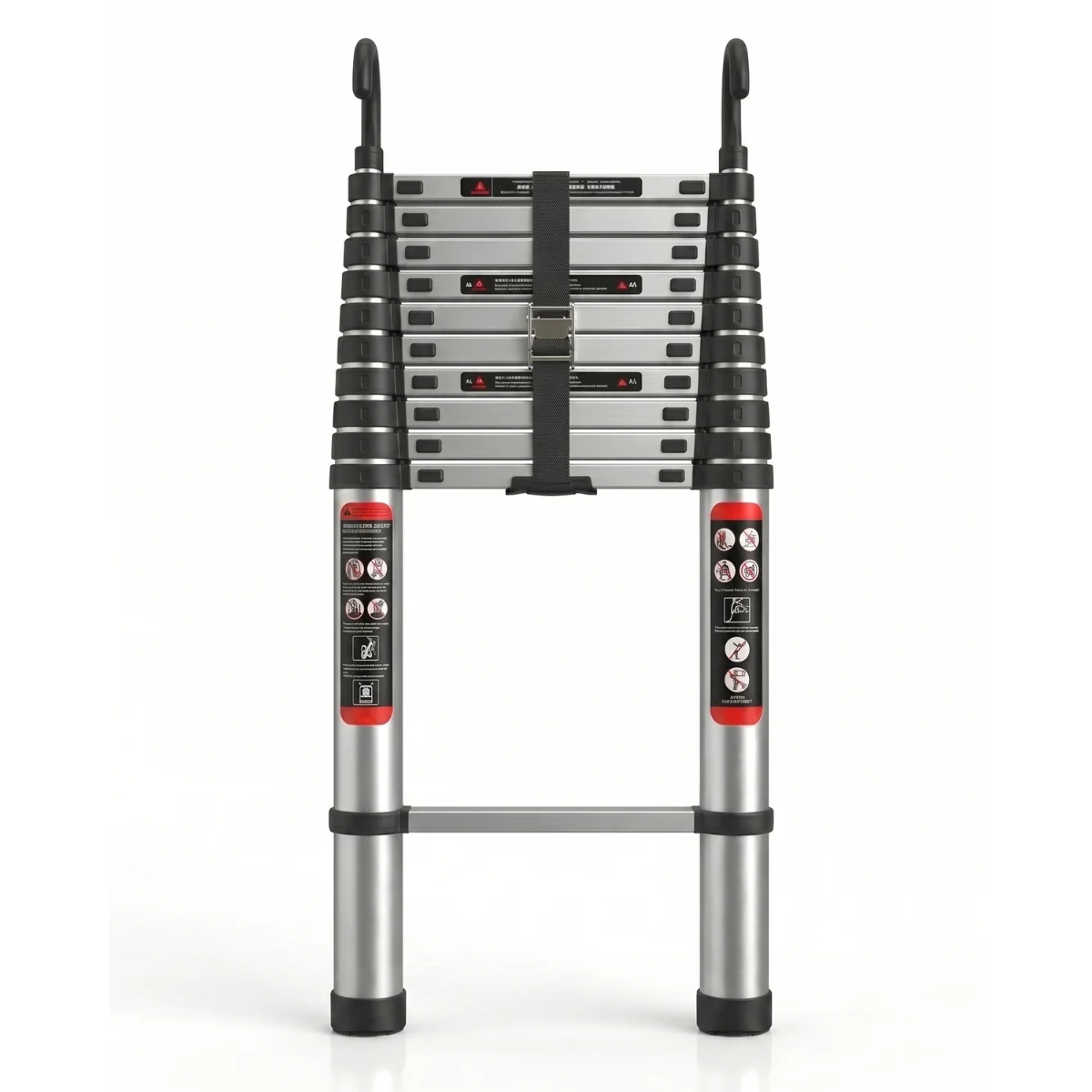
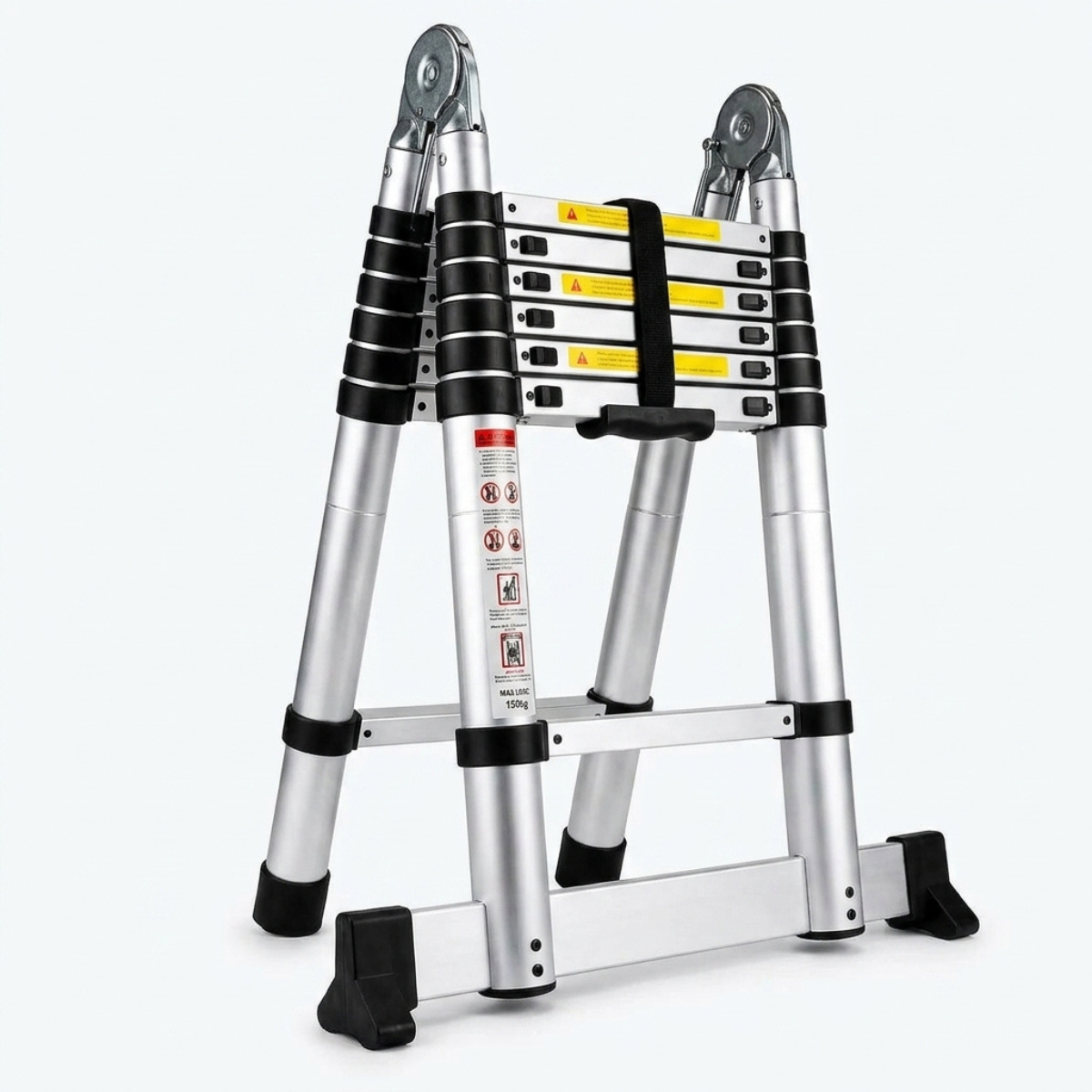
Most ladder accidents trace back to one of the points above, not a manufacturing fault. Every AscendPro ladder is EN131 certified and comes with full usage instructions in the box, see the full telescopic ladder range if you're choosing your first one.

Leave a comment
All comments are moderated before being published.
This site is protected by hCaptcha and the hCaptcha Privacy Policy and Terms of Service apply.