
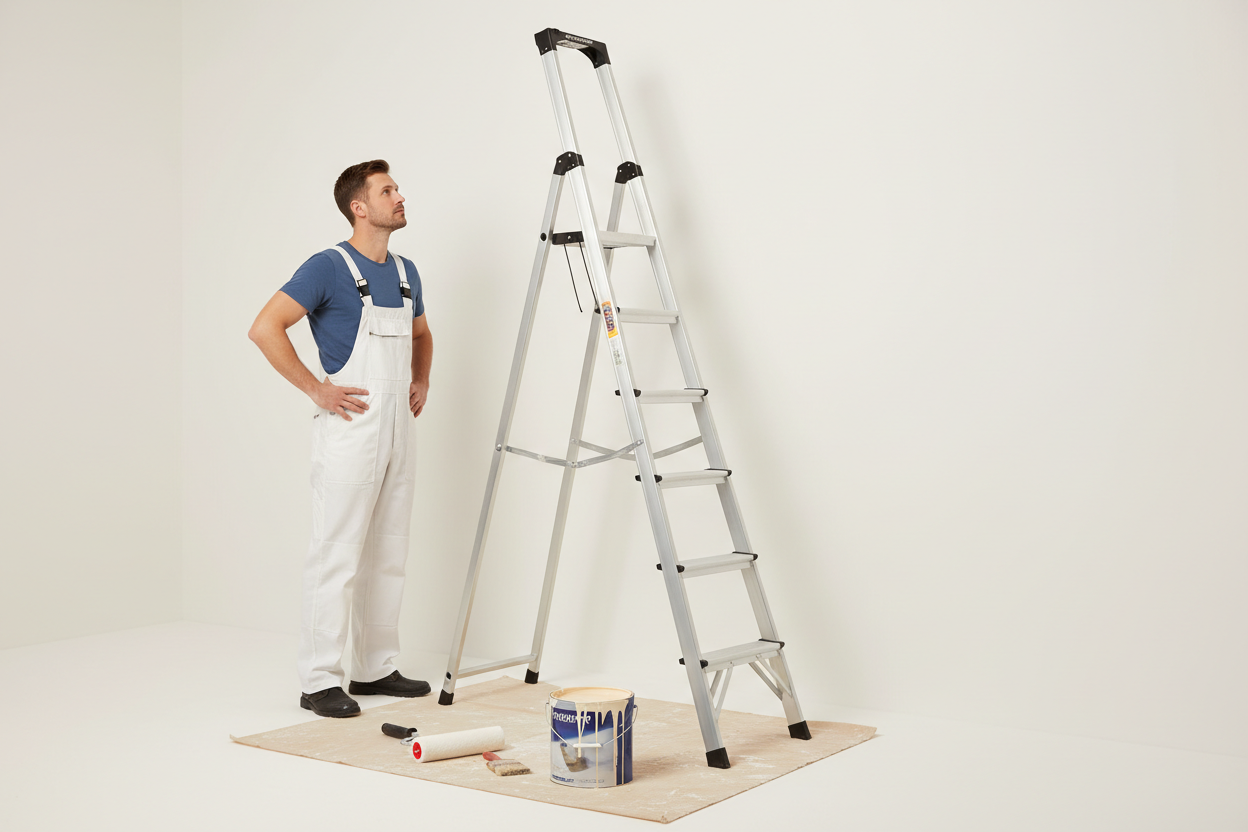
A painter's ladder earns its keep every single day. It needs to fit through a narrow hallway, stand steady on old floorboards, and get you level with a ceiling without three trips back to the van for a taller one. A telescopic ladder covers most of that on its own.
Why decorators reach for a telescopic ladder
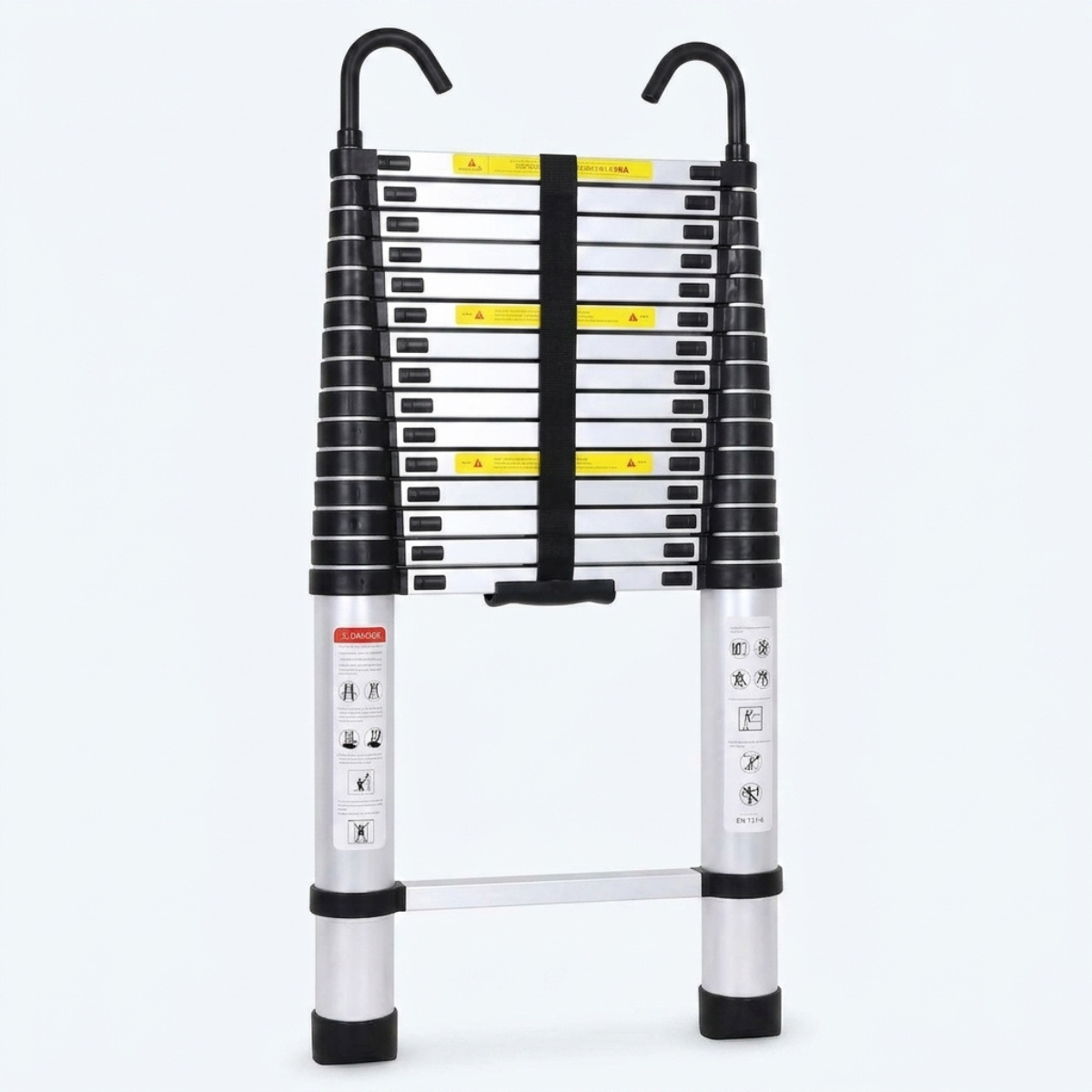
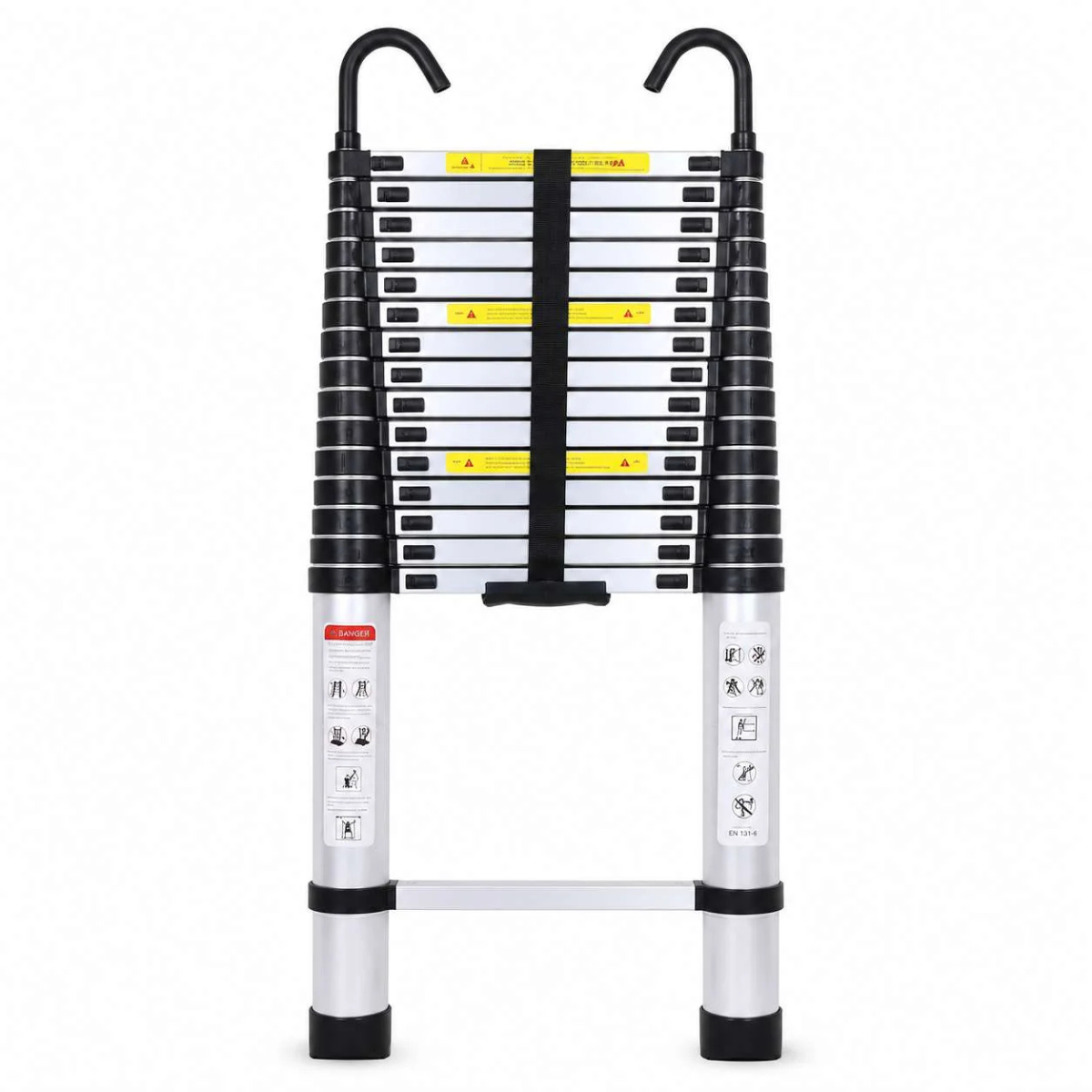
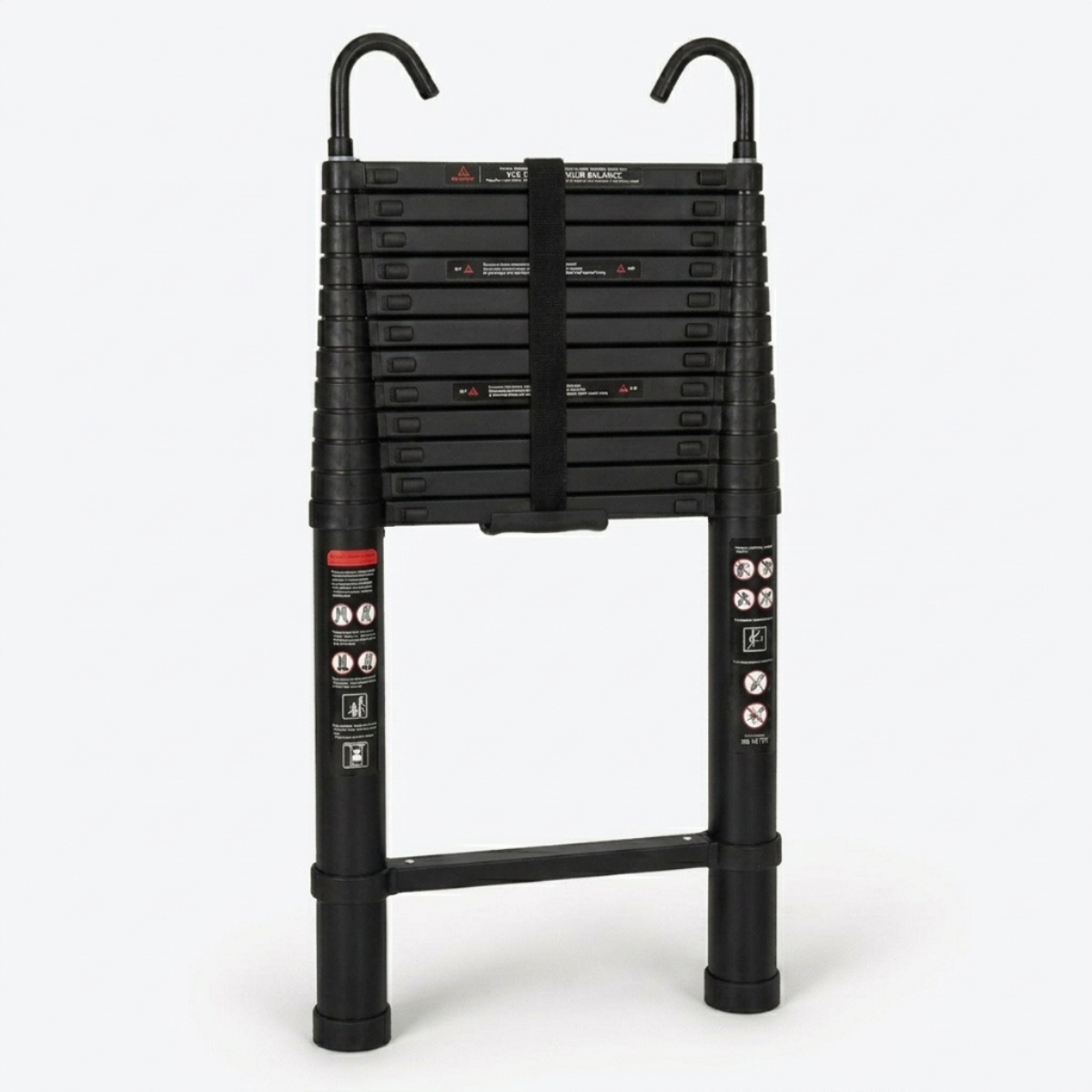
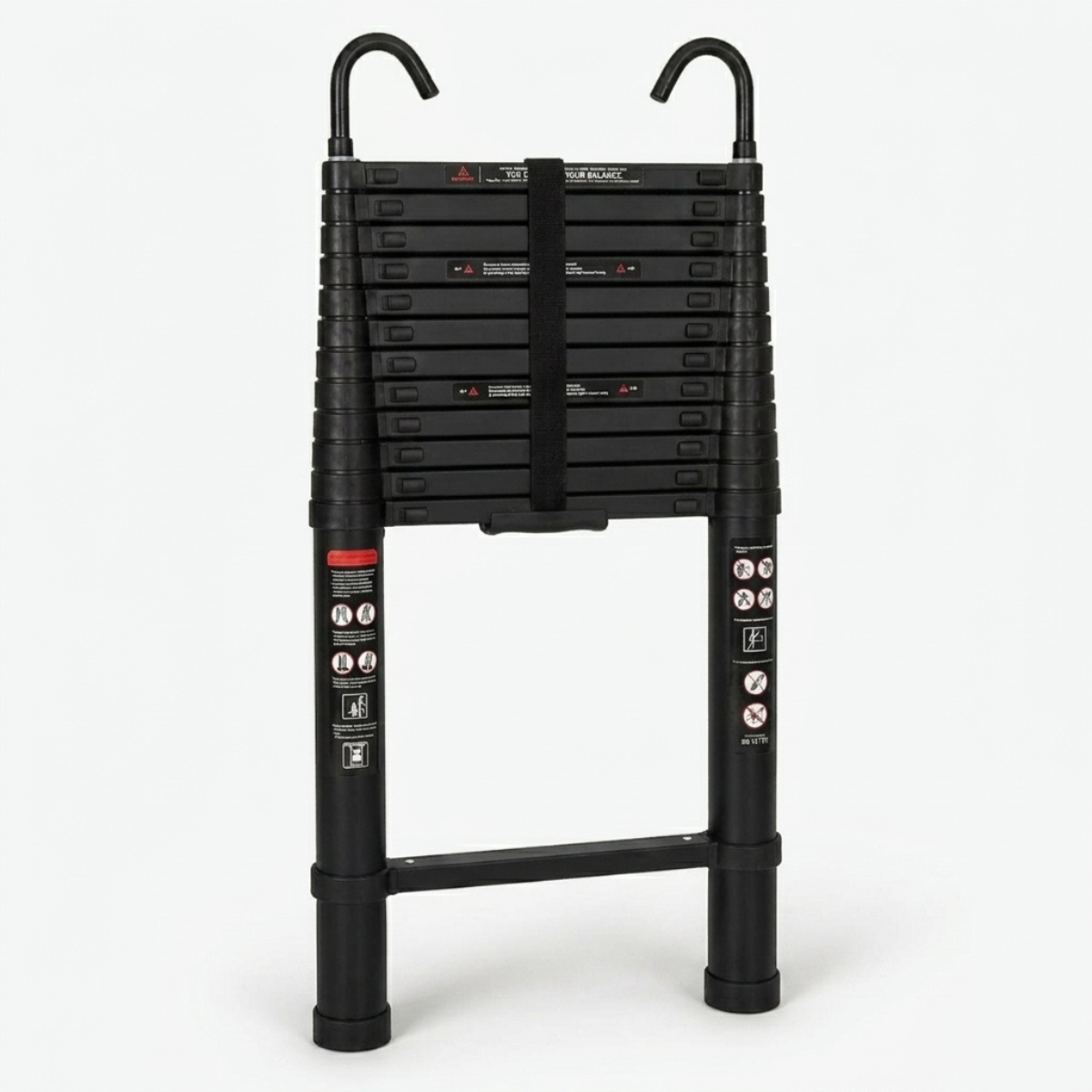
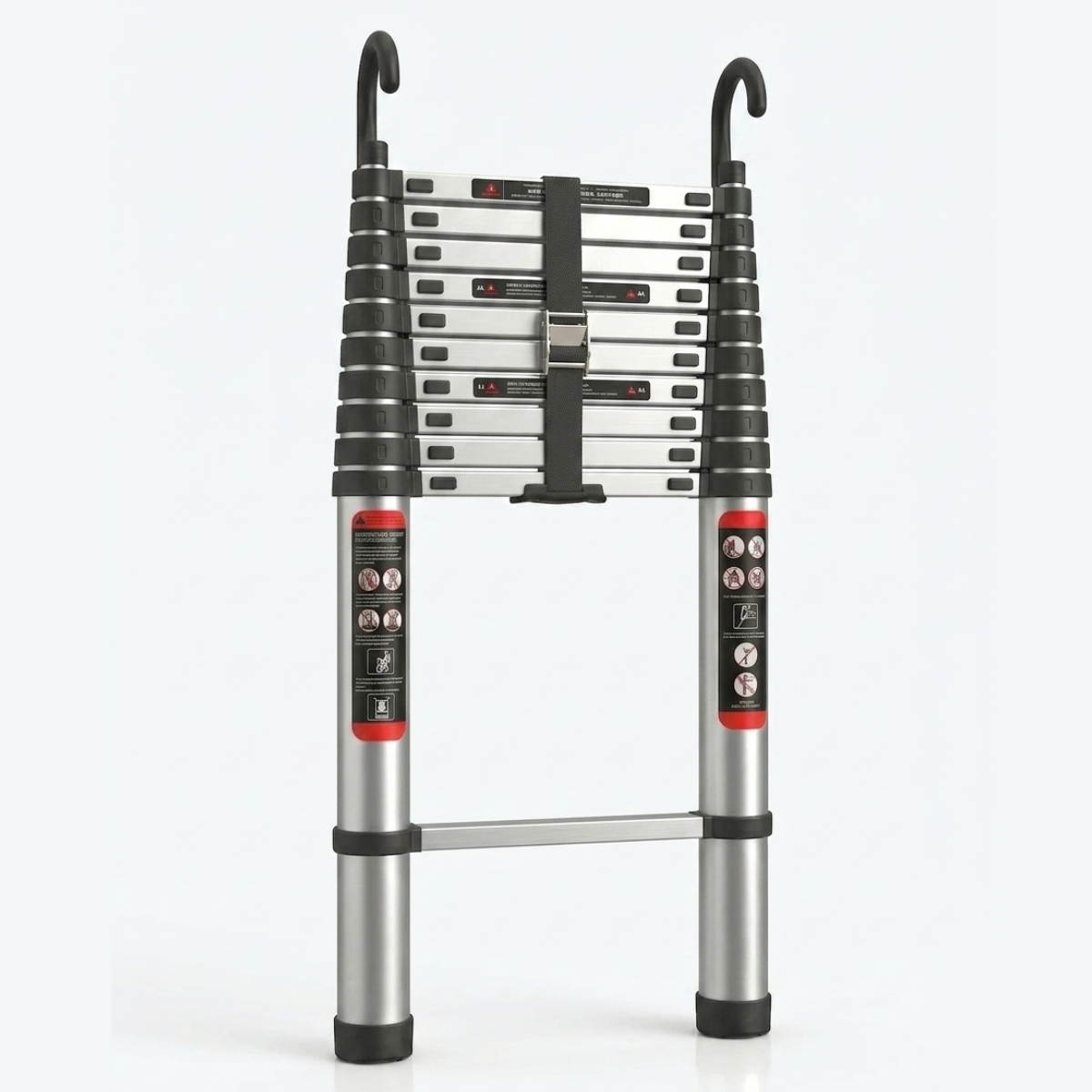
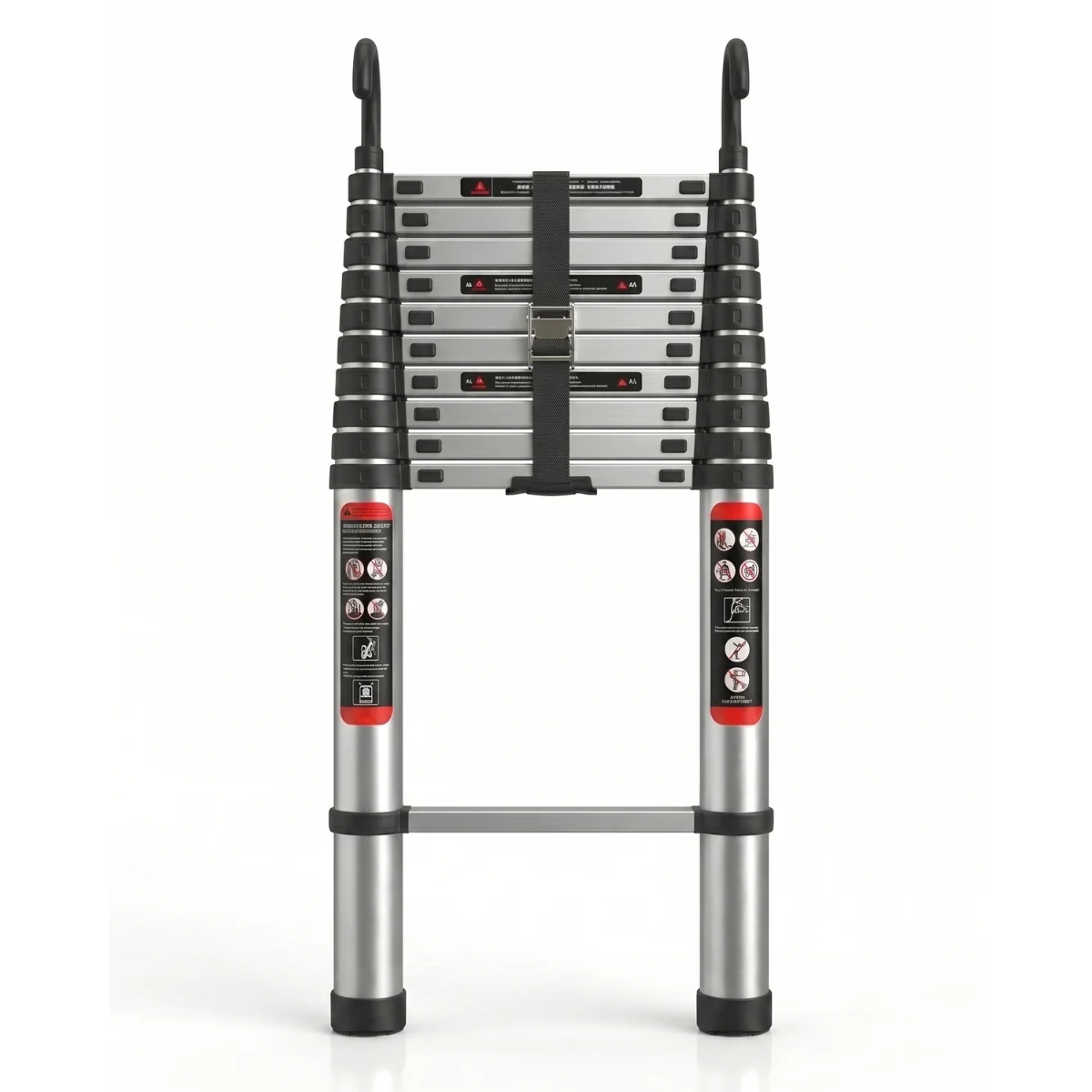
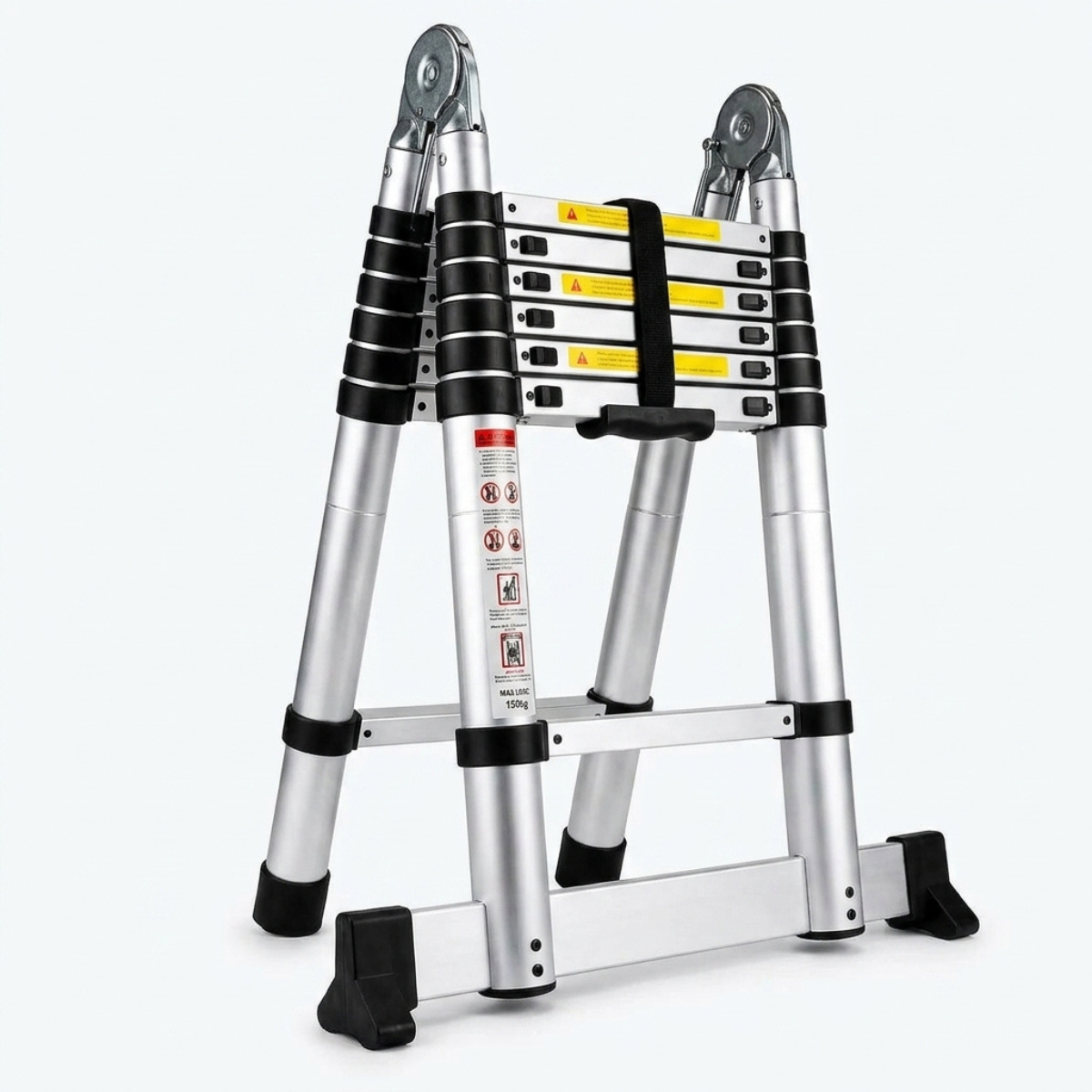
The obvious one is size. Folded down to somewhere between 65cm and 125cm depending on the model, it fits through a stairwell, a bathroom door, or the boot of a hatchback, none of which a rigid extension ladder manages without a fight.
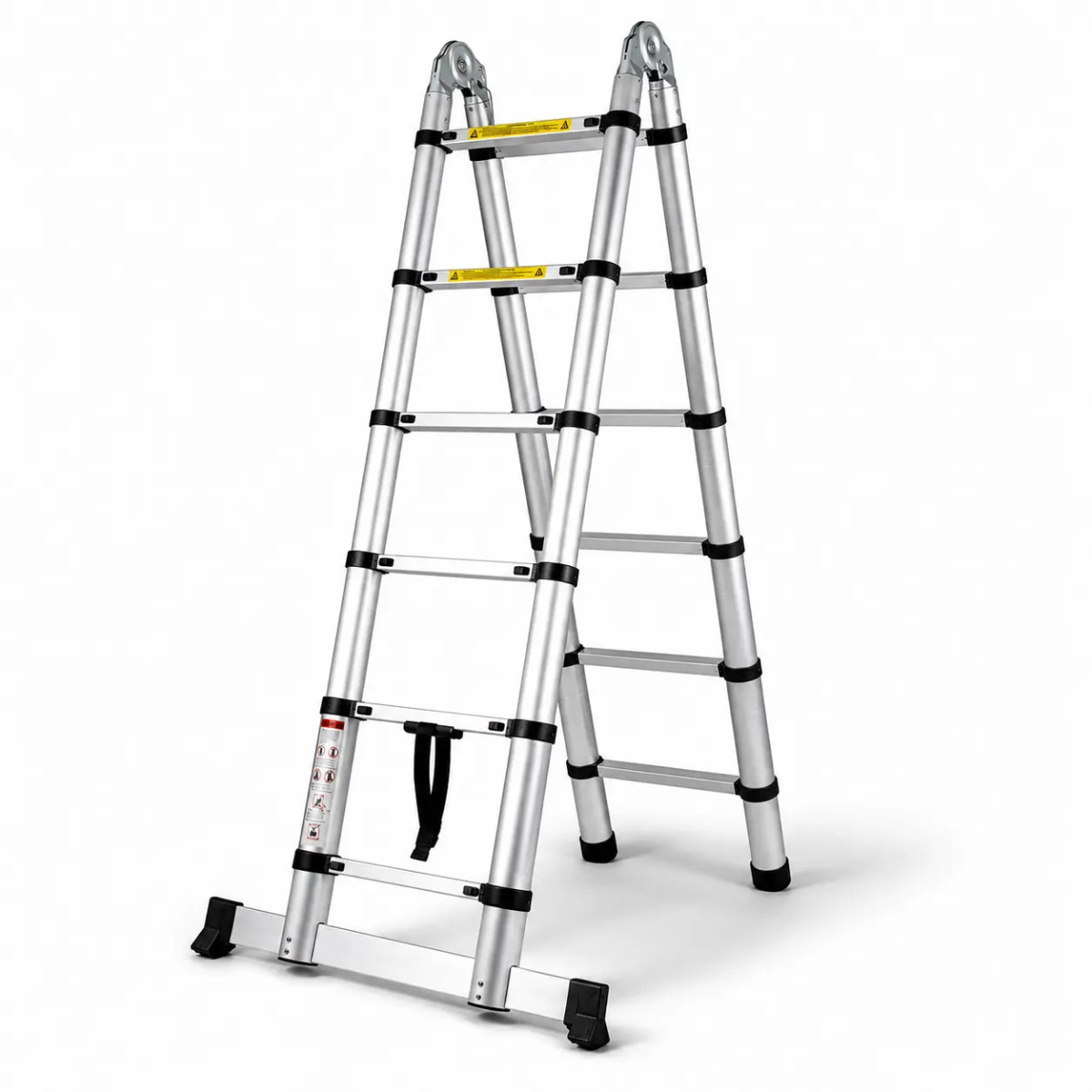
The second is height control. Extending rung by rung means you set the exact working height for the job, rather than climbing an extension ladder that only locks at fixed intervals. That matters more than it sounds when you're cutting in a ceiling line all day and don't want to be reaching above shoulder height for hours.
The third is speed between rooms. Fold it, carry it, set it up again, a couple of minutes, no dismantling.
What height do you actually need?
Standard flats and newer builds (ceilings around 2.4–2.5m): the Compact 260 covers this comfortably, and it's light enough to carry room to room all day.
Older UK housing stock, Victorian and Edwardian terraces often run higher (2.7m or more): step up to the 380 or Sentinel 440, depending on exactly how high the ceiling sits.
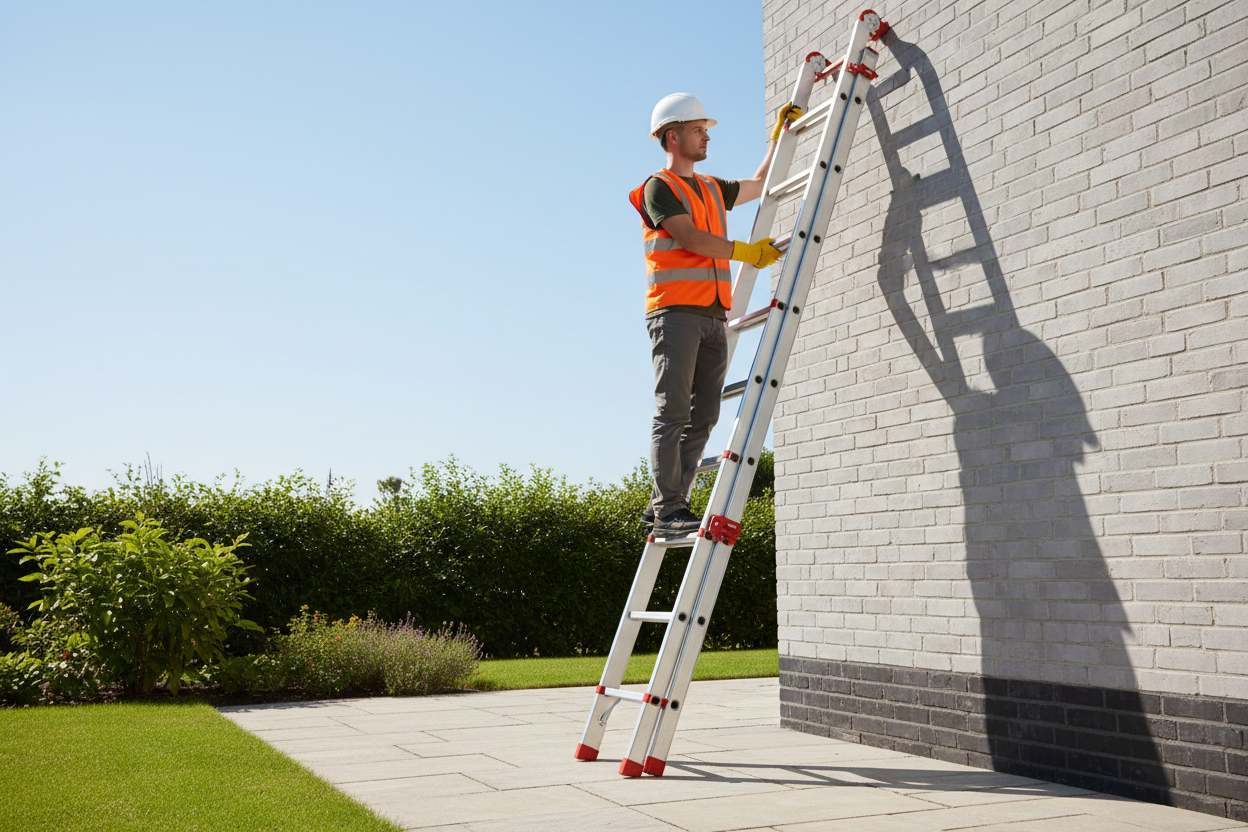
Stairwells and gable walls: a multi-position ladder like the 380 Multi is the better fit — its stepladder and trestle positions let you set each foot at a different height on the stairs, which a straight ladder simply can't do safely.
Facades and larger properties: the Apex 500 or Apex 620 handle the extra reach, with a reinforced build that carries the weight of a decorator plus a paint kettle and tools without flexing.
The multi-position ladder: one ladder, most jobs
If you only want to carry one ladder to every job, the multi-position models are the obvious pick. They switch between four configurations, straight, trestle, stepladder and scaffold stance, so the same ladder handles a stairwell one day and a straight wall the next.
It's the option we see picked most often by decorators working across a mix of properties, simply because it removes the need to own, and transport, two or three different ladders.
Non-slip feet matter more than they look like they should
Decorators spend a lot of time on polished floorboards, tile and sealed concrete, exactly the surfaces where a hard plastic foot slides. AscendPro ladders use dense rubber feet designed to grip without marking light-coloured flooring, which is the complaint we hear most often about cheaper models.
Our recommendation
Working mainly in flats and standard housing: Compact 260 or the 380, light, compact, easy to live with day to day.
Working across a mix of properties and job types: the 380 Multi, one ladder for stairwells, ceilings and straight walls.
Working on larger properties and facades: Apex 500 or Apex 620, the reach and rigidity for bigger jobs.
In practice
A telescopic ladder that matches the job saves time on every visit and takes the guesswork out of working at height. Every AscendPro ladder is EN131 certified and independently tested, see the full telescopic ladder range to compare heights and configurations.
Leave a comment
All comments are moderated before being published.
This site is protected by hCaptcha and the hCaptcha Privacy Policy and Terms of Service apply.