

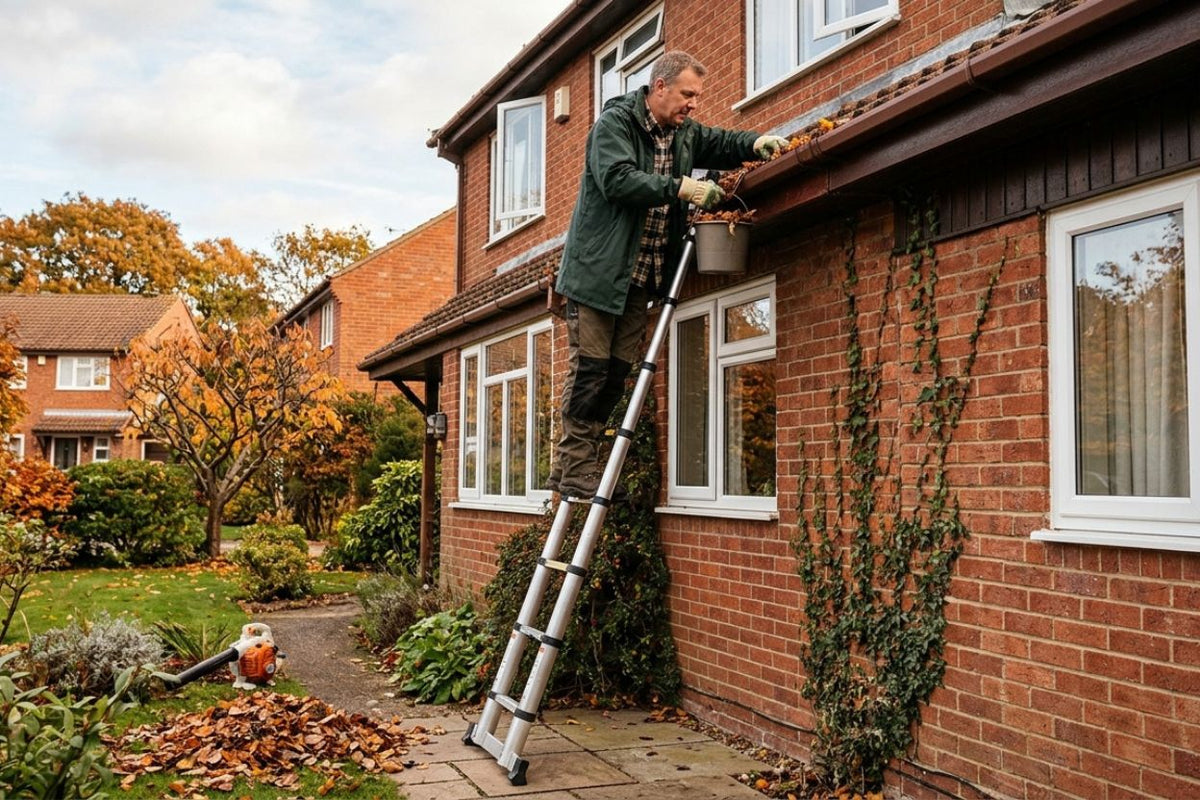
Autumn is the best time of year to prepare your home for winter. Leaves are down, the weather is still dry enough to work, and a few hours now can save you a leaking gutter, a damp loft or a dark front path in January. This autumn home maintenance checklist covers the five jobs that matter most in the UK, and tells you which ladder you need for each.
In short
- Gutters and downpipes: clear leaves and moss once most of the leaves have fallen.
- Loft: look for damp, daylight and pests, and lag exposed pipes.
- Windows and frames: check seals and treat wood before the wet weather.
- Outdoor lights: fix bulbs and sensors before the evenings get dark.
- Roof: inspect from the ground, never climb it yourself.
Contents
Why autumn is the right time
Three things come together every October: leaves block gutters, rain gets heavier and the clocks go back, so it is dark by early evening. Do these jobs now, on a dry weekend morning, and winter storms will have far less to attack.
Did you know?
When gutters are full, rainwater overflows and runs down the wall. Over a winter this can cause damp patches, stained brickwork and even rot in wooden fascias.
Job 1: Clear the gutters and downpipes
This is the job that gives you the biggest return. Clear leaves, moss and silt from the gutters, then flush with a hose to check the water runs freely down to the downpipe.

How to do it safely:
- Choose a dry, calm day and start in the morning.
- Set the ladder on firm, level ground, against the wall just below the gutter. Plastic gutters are not designed to carry a ladder.
- Hang a bucket on a rung and drop the debris straight into it. Wear gloves.
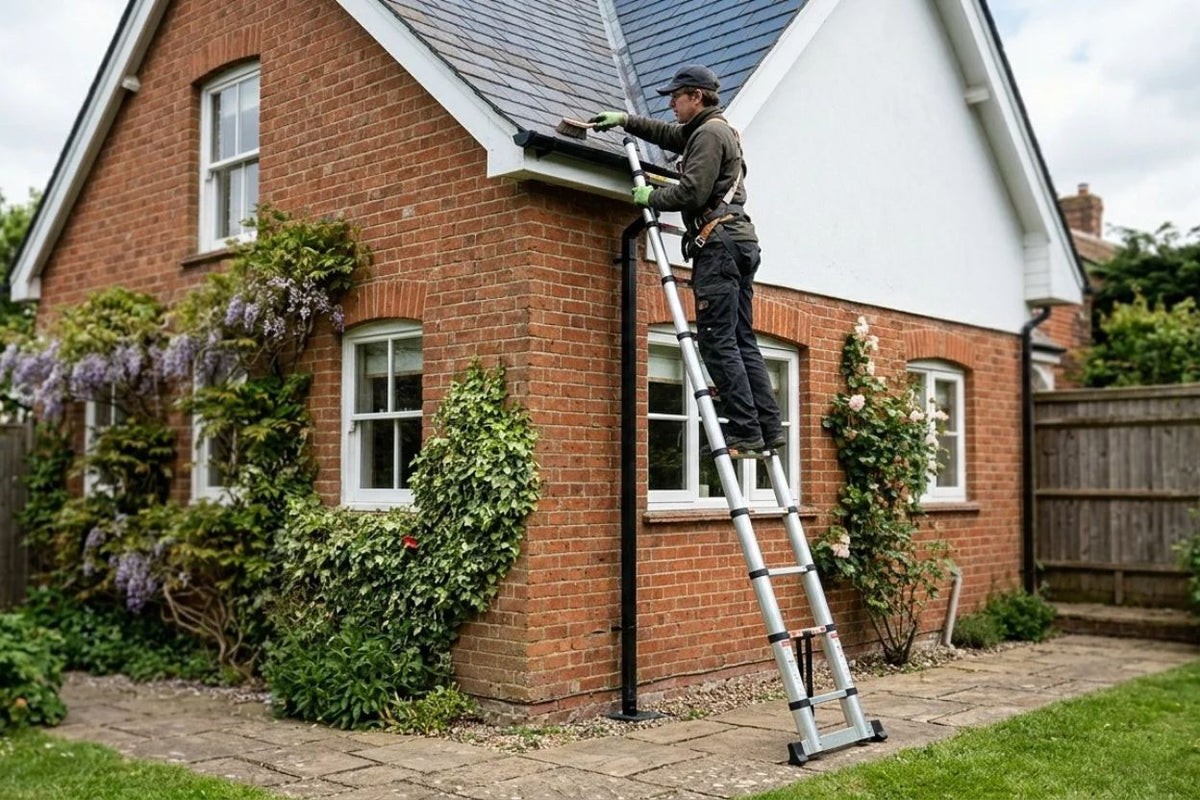
- Move the ladder instead of stretching sideways. Keep your belt buckle between the two rails.
- Clear the downpipe outlet last and check it drains.
Pro tip
On smooth, wet paving, fit an anti-slip base mat under the feet. It adds grip where wet leaves collect.
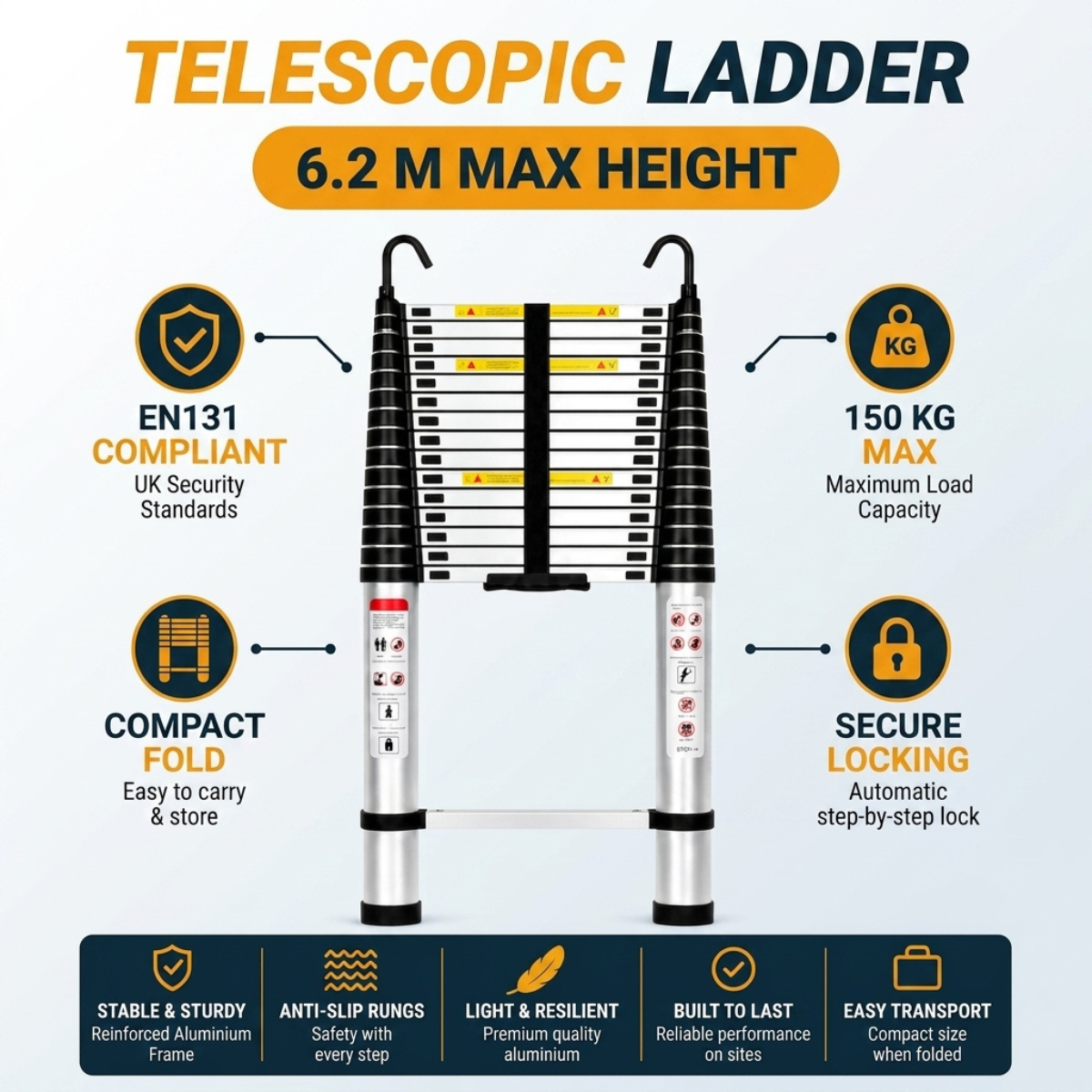
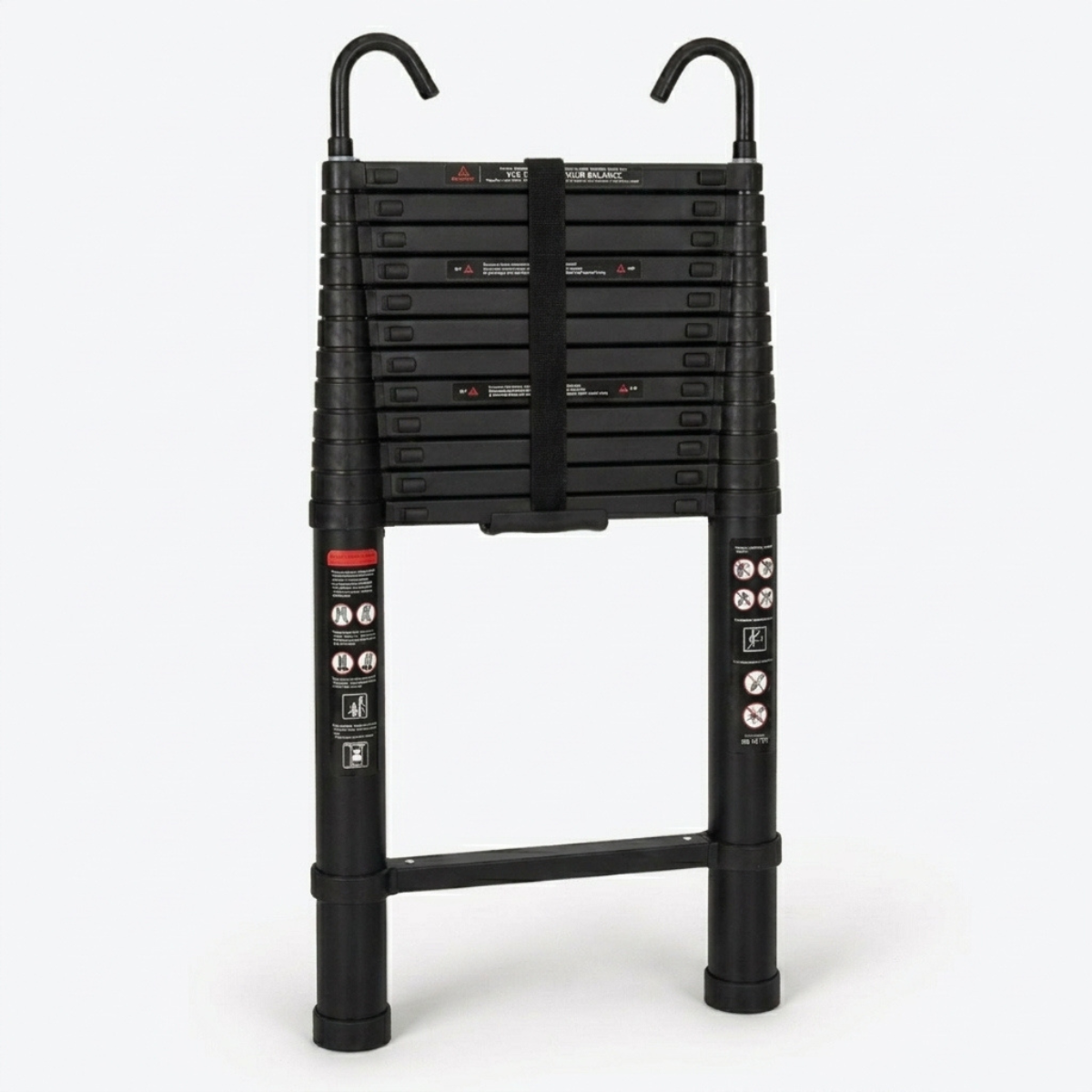
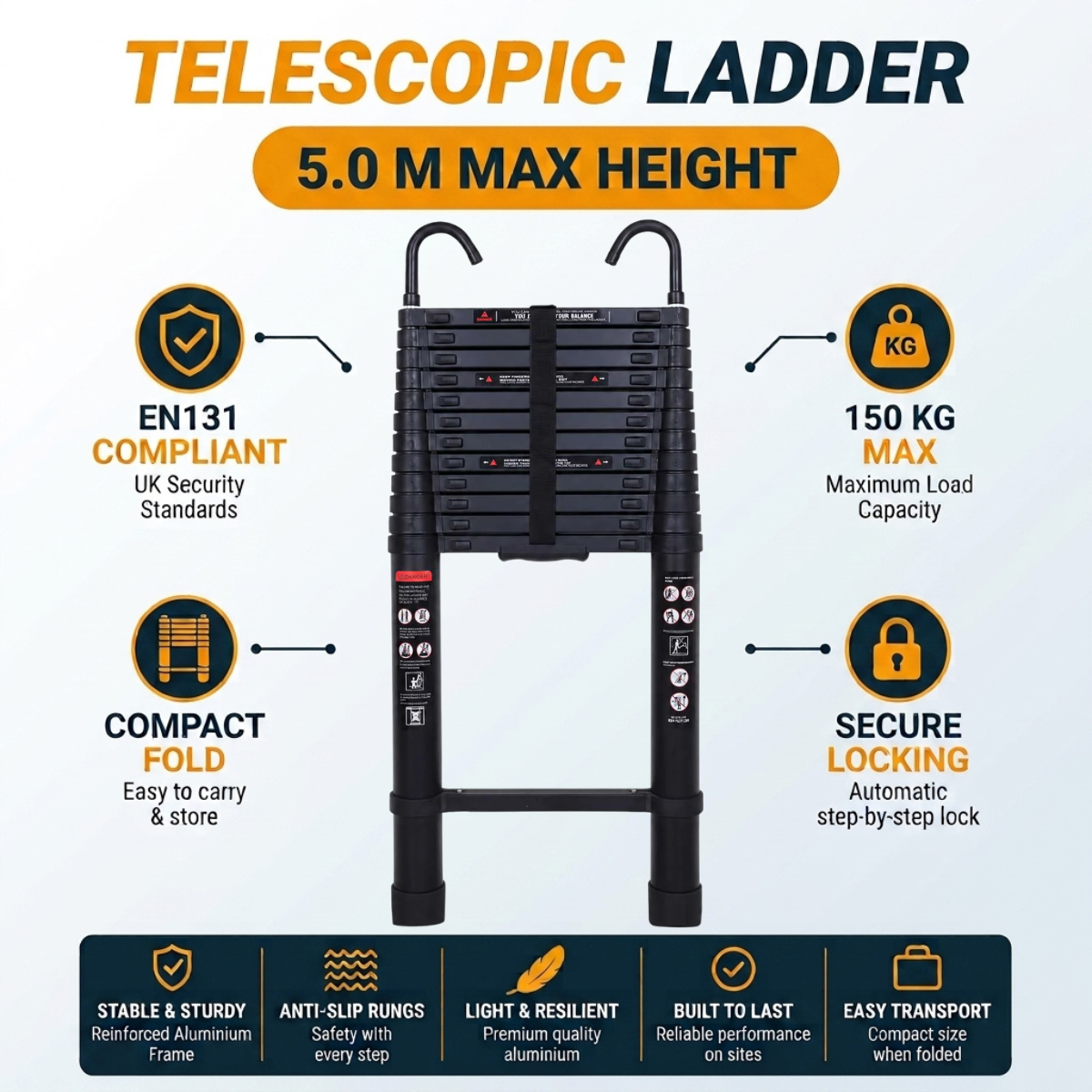
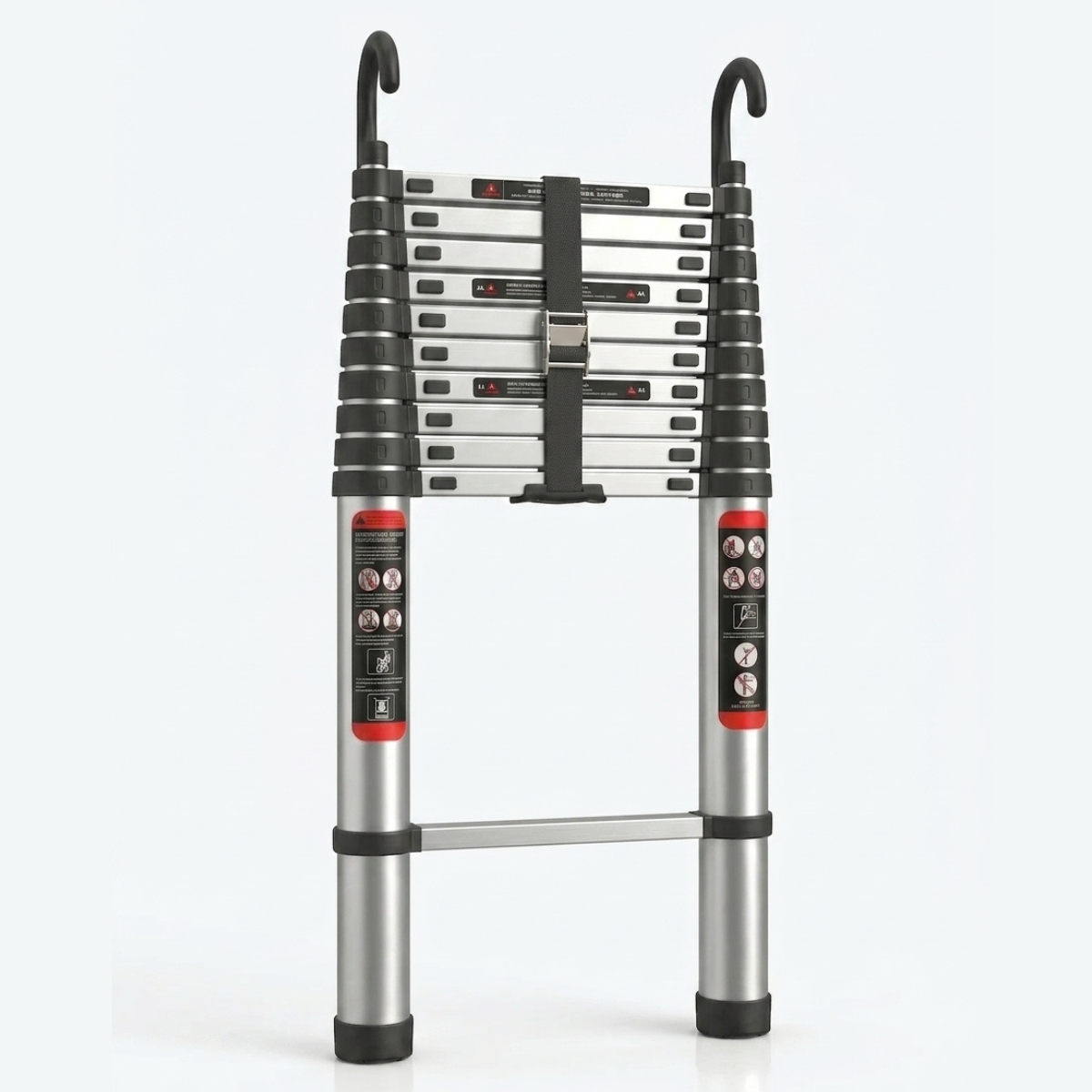
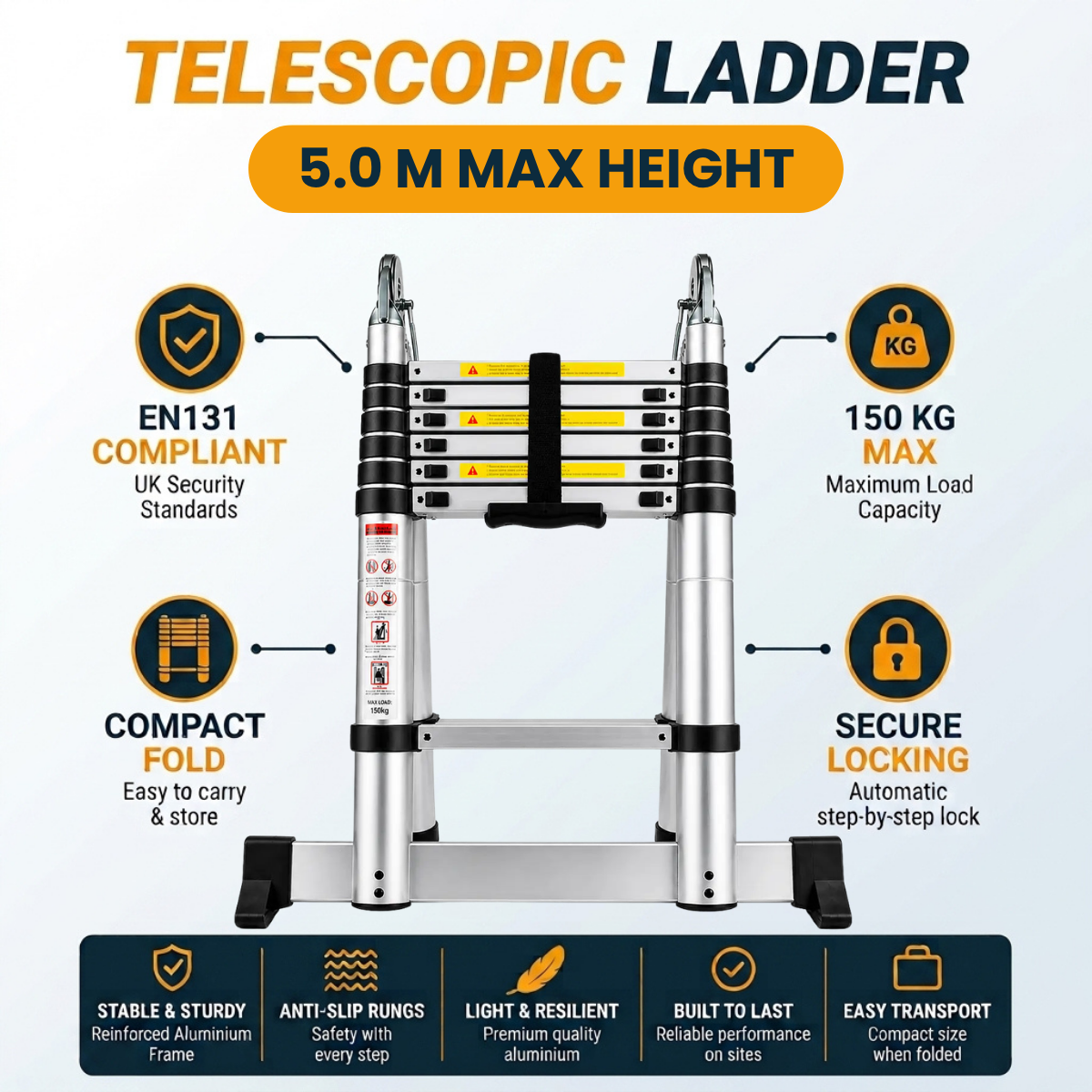
Which ladder? A single-storey or extension gutter sits at about 2.5 m, so a 3.2 m ladder (reaches the wall up to 3.1 m) is plenty. For the gutters of a typical two-storey house, you need a 5 m ladder (reaches up to 4.8 m) or a 6.2 m ladder (up to 6 m) for higher eaves.

For single-storey gutters: the AscendPro 320
Reaches walls up to 3.1 m, weighs 9.3 kg and folds to 79 cm. Light enough to carry around the house on your own.
View the AscendPro 320 →Job 2: Check the loft
The loft tells you early if something is wrong. Open the hatch on a dry day and look for:
- Damp patches or stains on the rafters or insulation.
- Daylight coming through the roof, which means a missing or slipped tile.
- Droppings or nests, a sign that mice or birds have moved in.
- Exposed pipes and the water tank, which need lagging before the first frost.
This is also when you bring the Christmas decorations down.

Which ladder? The Compact 260 is ideal: it folds to 74 cm and stores in a cupboard when you are done.
Pro tip
A telescopic ladder is perfect for reaching and opening the hatch and for working near it. If you go into the loft often, a fixed loft ladder is safer for the last step through the hatch.
Job 3: Windows and frames
Before the wet weather, walk around the house and check every window:
- Sealant that is cracked or peeling.
- Wooden frames and sills with flaking paint, which let in water.
- Glazing beads and trickle vents that are loose or blocked.
If the windows are on the first floor, you need a ladder that can lean on the brick beside the window, never on the glass or the frame.

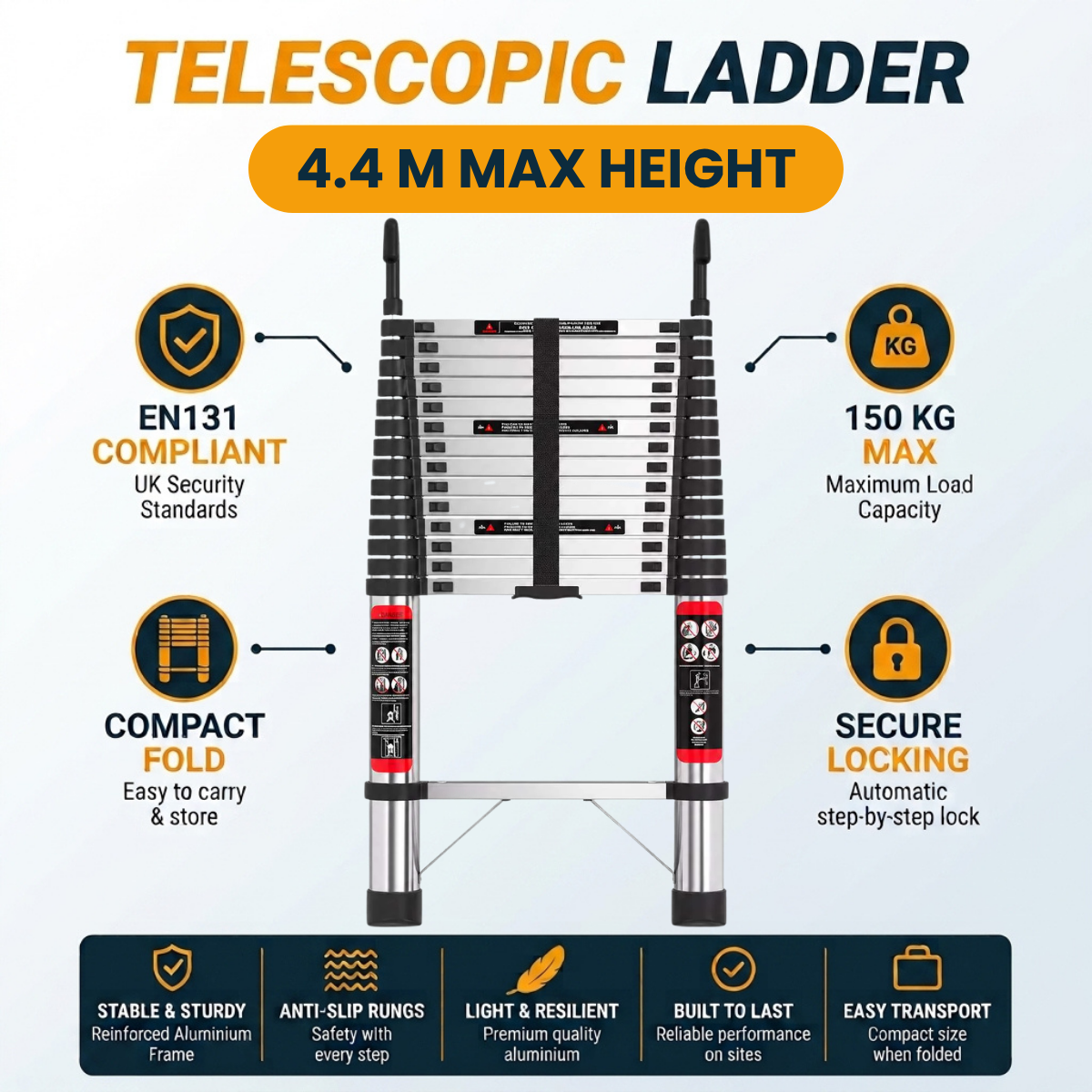
For first-floor windows: the Sentinel 440
Reaches walls up to 4.2 m, which is the height of a typical first-floor window frame. Folds to 91.5 cm.
View the Sentinel 440 →Job 4: Outdoor and security lights
From late October, you come home in the dark. Check every porch light, security light and path light: replace failed bulbs, clean the sensors and reset the timers. Do it before the first dark evening, not after.

Which ladder? The 3.2 m or the 3.8 m reaches most porch and wall lights.
Before you touch a light
Switch the power off at the consumer unit first. For anything that involves wiring, call a qualified electrician: swapping a bulb is a DIY job, rewiring is not.
Job 5: Check the roof from the ground
You do not need to climb up. Stand back with a pair of binoculars and look for:
- Slipped, cracked or missing tiles.
- Damaged flashing around the chimney and skylights.
- Leaning chimney pots and heavy moss growth.
If you see a problem, call a roofer. Walking on a roof is a job for professionals, not a weekend task.
Which ladder for which job
| Autumn job | Typical height | Ladder to pick |
|---|---|---|
| Loft hatch | About 2.4 m | Compact 260 (2.6 m) |
| Single-storey gutter, porch light | 2.5 to 3 m | AscendPro 320 (3.2 m) |
| Taller walls, extension roofline, wall lights | 3 to 3.6 m | AscendPro 380 (3.8 m) |
| First-floor windows | About 4 m | Sentinel 440 (4.4 m) |
| Two-storey gutters (lower eaves) | 4.5 to 4.8 m | Sentinel Pro (5 m) |
| Higher eaves and gable ends | 5.5 to 6 m | Apex 620 (6.2 m) |
Not sure about a height? Read our guide What Size Telescopic Ladder Do I Need?
Ladder safety in autumn conditions
Autumn adds three hazards to normal ladder use: wet leaves, wind and fading light. These rules apply every time:
| Autumn hazard | What to do |
|---|---|
| Wet leaves and mud | Sweep the spot first. Use firm, level ground only, never soft grass or loose gravel. |
| Rain and wet rungs | Wait for a dry day. Wet boots and wet rungs are a slip risk. |
| Wind | Do not use a ladder in strong or gusty wind. A tall ladder acts like a sail. |
| Short days | Start early. Never finish a ladder job in the dark. |
- Angle: 1 m out from the wall for every 4 m of height (75 degrees).
- Three points of contact: two feet and one hand, or two hands and one foot, at all times.
- Do not overreach: keep your belt buckle between the rails.
- Light, short jobs only: the HSE describes ladders as suitable for light work of short duration, around 30 minutes at a time.
- Footwear: clean, dry boots with grip.
The full routine is in our guide: How to Use a Telescopic Ladder Safely.

Printable checklist
Autumn home maintenance checklist (UK)
☐ Clear gutters and flush the downpipes
☐ Check the loft for damp, daylight and pests
☐ Lag exposed pipes and the water tank
☐ Inspect window seals and treat wooden frames
☐ Replace outdoor bulbs and test sensors and timers
☐ Look over the roof from the ground with binoculars
☐ Bring the Christmas decorations down from the loft
☐ Fold and store the ladder in a dry place
FAQ: autumn home maintenance
When should I clean my gutters in the UK?
Late autumn, once most of the leaves have fallen, is the best time. A second quick check in spring catches anything the winter left behind.
Can I clean gutters with a telescopic ladder?
Yes. Lean the ladder against the wall just below the gutter, on firm level ground, and move it along instead of stretching. A 3.2 m ladder covers single-storey gutters, and a 5 m or 6.2 m ladder covers most two-storey houses.
Is it safe to use a ladder when it is wet or windy?
No. Wait for a dry day and avoid strong or gusty wind. Wet rungs and wet boots are a slip risk, and a tall ladder catches the wind.
How high is a two-storey gutter?
Typically around 4.5 to 5 m, but it varies. Measure by counting brick courses (about 13 per metre). A 5 m ladder reaches the wall at 4.8 m, and a 6.2 m ladder at 6 m for higher eaves.
Should I hire a professional instead?
If the gutters are very high, if the ground is uneven, or if you do not feel comfortable at height, yes. For single-storey gutters, loft hatches, windows and bulbs, a good ladder and the rules above are enough for most people.
How do I store a telescopic ladder over winter?
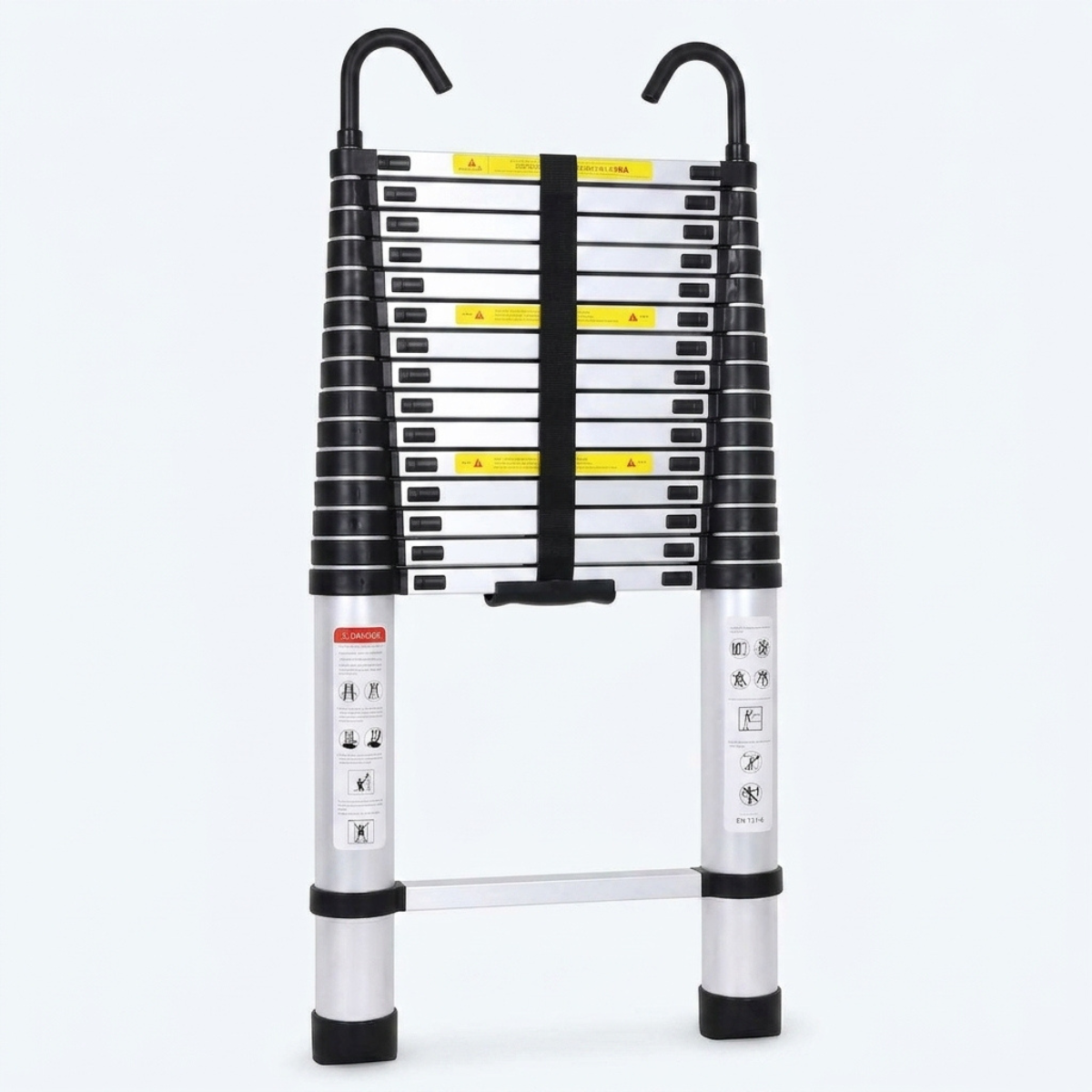
Collapse every section, wipe off dirt and moisture, and store it upright or flat in a dry cupboard, garage or boot. Folded sizes range from 74 cm to 1.09 m depending on the model.
Get your ladder ready before the first storm
Free tracked UK delivery, 30-day returns and a 5-year guarantee. Use code WELCOME5 for 5% off your first order.
Shop telescopic ladders → Find my ladder →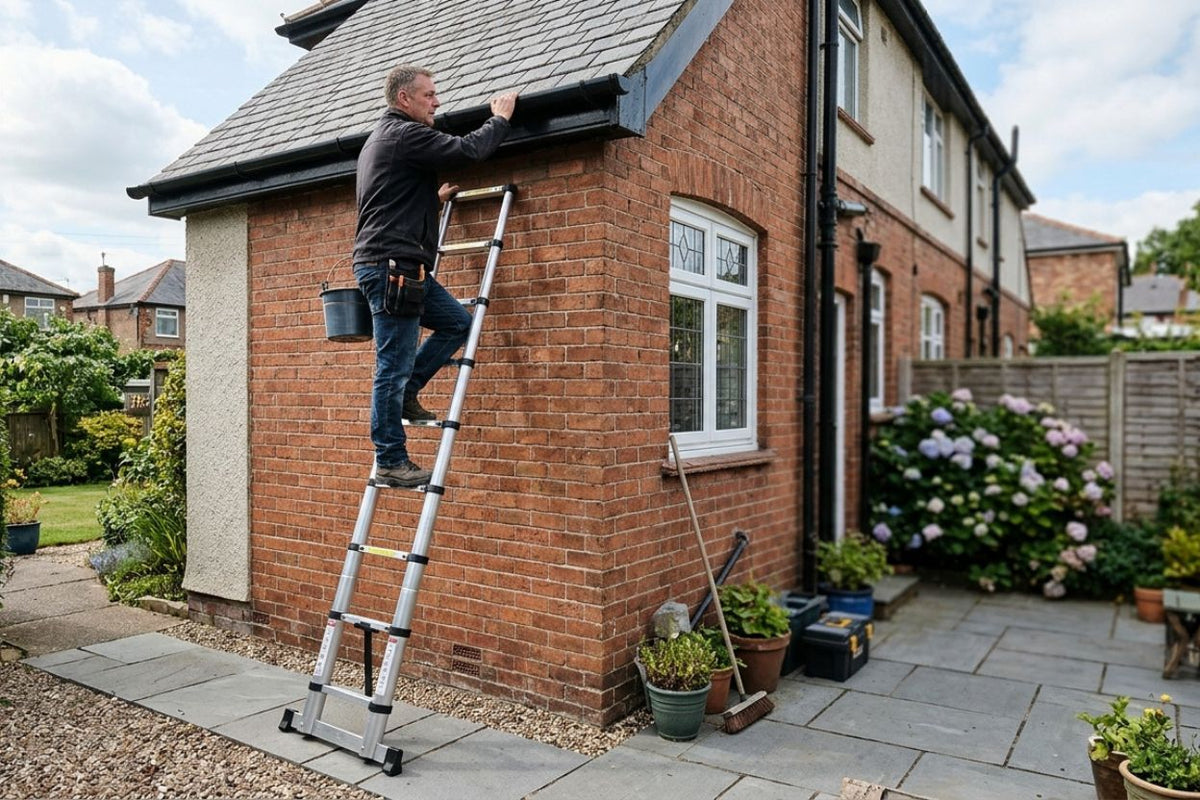
Leave a comment
All comments are moderated before being published.
This site is protected by hCaptcha and the hCaptcha Privacy Policy and Terms of Service apply.