
Choosing the wrong ladder height is the most common mistake we see. Too short and you overreach (or can't do the job at all). Too long and you pay for height you never use. The good news: with a tape measure and two minutes, you can pick the right telescopic ladder size every time.
The short answer
- Measure the highest point you need to touch (gutter, ceiling, window frame).
- Pick a ladder whose "reaches wall up to" figure is at least that height.
- A telescopic ladder extends rung by rung, so if you are between sizes, go up one: you can always extend less.
- Most UK home jobs are covered by 2.6 m, 3.2 m, 3.8 m or 5 m. Two-storey eaves and roof access usually need 6.2 m.
Contents
How to measure the height you need
Forget the height of the ladder for a moment. What you need is the height of the thing you have to reach. Here are three easy ways to find it without climbing anything:
- Use a tape measure for indoor jobs: ceiling, shelf, loft hatch.
- Use a door as a ruler. A standard UK internal door is about 1.98 m (6 ft 6 in). Stack that mentally up the wall.
- Count the bricks outside. A standard UK brick course is about 75 mm, so 13 courses are roughly 1 m. Count from the ground to the gutter and divide by 13.
Did you know?
Modern UK homes usually have ceilings around 2.4 m, but Victorian and Edwardian houses often go to 2.7 m or higher. If your house is older, measure before you assume.

Ladder length vs real reach (the part most guides skip)
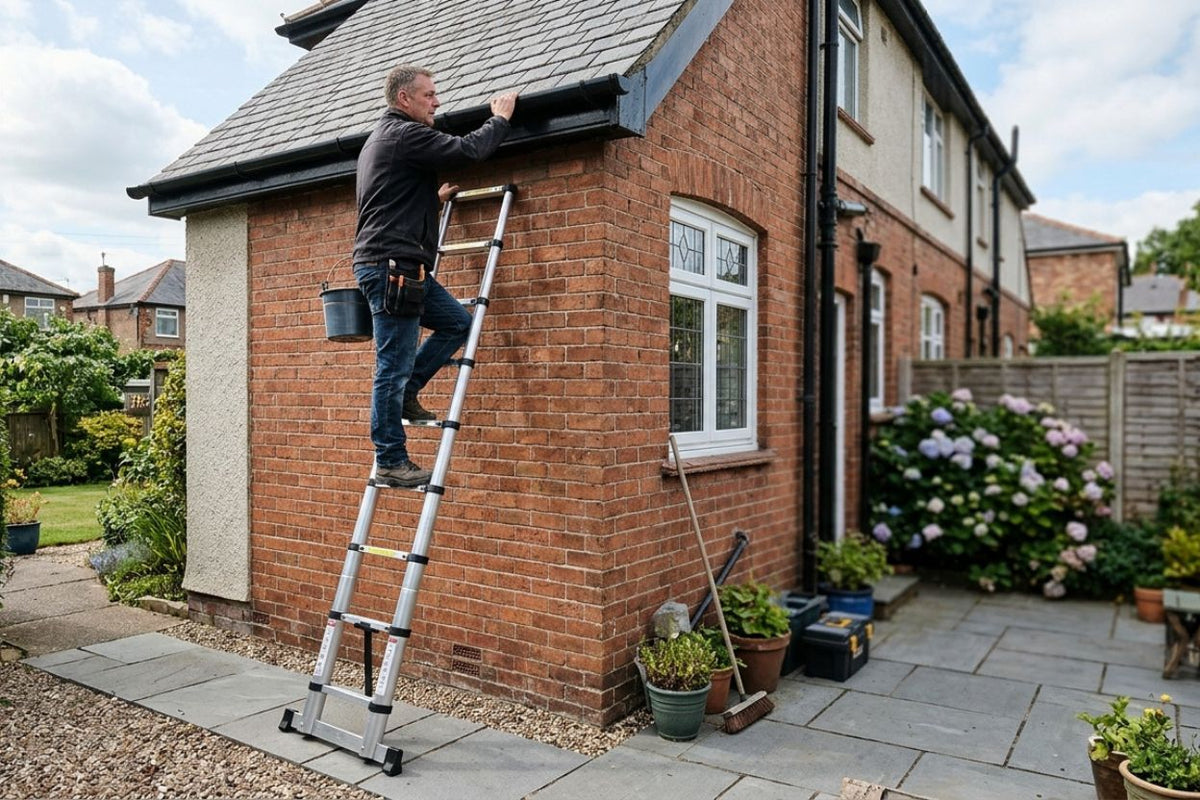
A ladder must lean at a safe angle, about 75 degrees. That is the "1 in 4" rule: for every 4 m of height, the base sits about 1 m away from the wall. Because the ladder leans, it never touches the wall at its full length.
As a rule of thumb, the top of the ladder touches the wall at about 96% of its length. That is the number that matters, and it is why each AscendPro product page shows a "Reaches walls and gutters up to" figure.
| Extended length | Reaches wall up to |
|---|---|
| 2.6 m | 2.5 m |
| 3.2 m | 3.1 m |
| 3.8 m | 3.6 m |
| 4.4 m | 4.2 m |
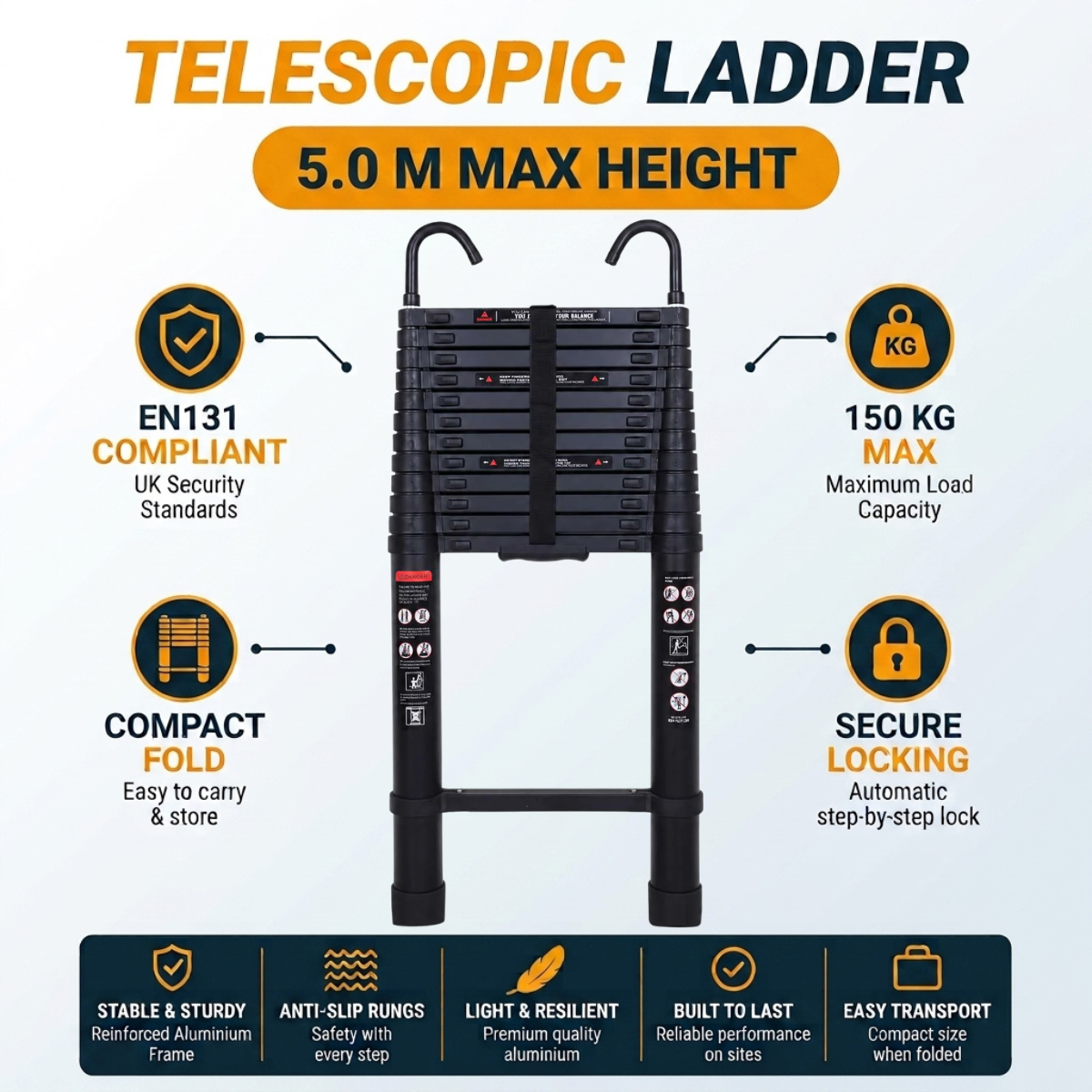
| 5 m | 4.8 m |
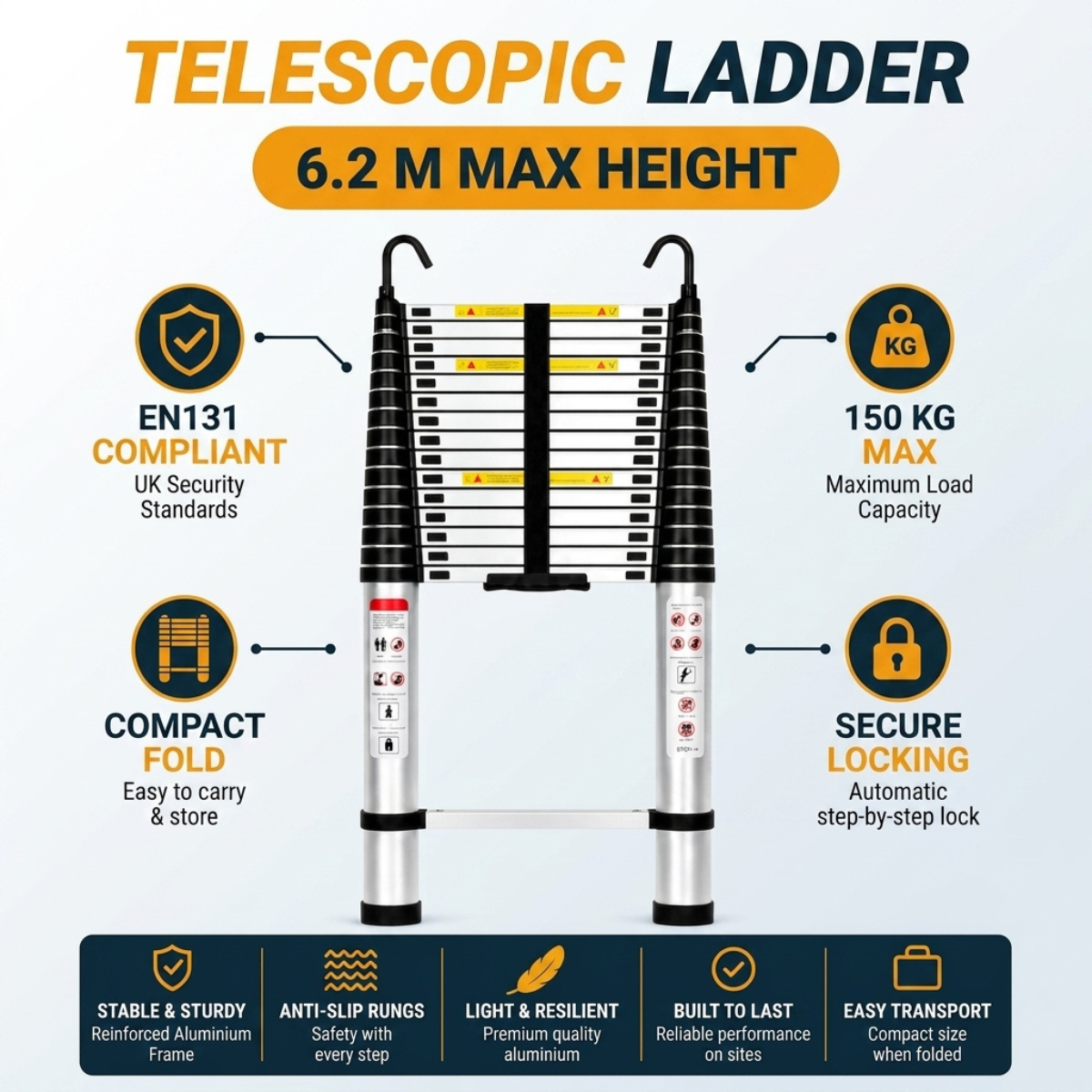
| 6.2 m | 6.0 m |
Pro tip
For work on a wall or gutter, the "reaches wall" figure must be at least the height of the job. For work overhead (a ceiling light, a loft hatch), you do not need the ladder to reach the ceiling: you only need to lean it on the wall nearby and let your arms do the rest.
Which size for which job? (UK cheat sheet)
These are typical heights for UK homes. Always measure your own, but this will get you 90% of the way.
| Your job | Typical height | Ladder to pick |
|---|---|---|
| Loft hatch, smoke alarm, ceiling light (modern home) | 2.4 to 2.6 m | Compact 260 (2.6 m) |
| Hallway light, high shelves, garage racking, single-storey gutter | 2.7 to 3 m | AscendPro 320 (3.2 m) |
| Victorian ceilings, porch, extension roofline, painting indoors and out | 3 to 3.6 m | 380 Multi (3.8 m) |
| First-floor windows and frames | About 4 m | Sentinel 440 (4.4 m) |
| Lower eaves of a two-storey house, tall walls | 4.5 to 4.8 m | Sentinel Pro (5 m) |
| Higher eaves, gable ends, roof access | 5.5 to 6 m | Apex 620 (6.2 m) |

Our best all-rounder: the Sentinel Pro (5 m)
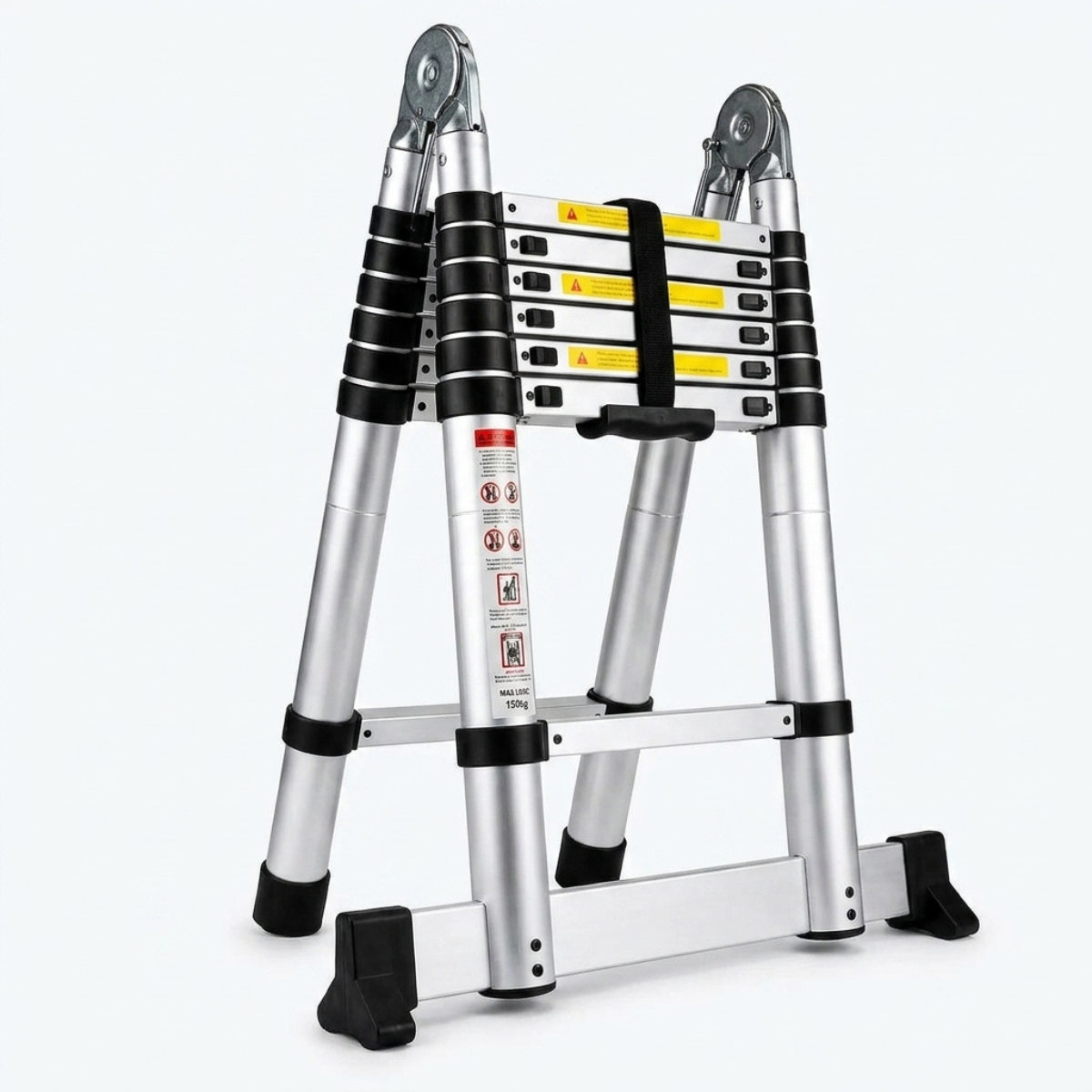
Reaches walls up to 4.8 m, folds to 86 cm and works as a straight ladder or a stepladder. One ladder for most two-storey jobs.
View the Sentinel Pro →The AscendPro range at a glance
| Model | Extends to | Reaches wall | Folds to | Weight |
|---|---|---|---|---|
| Compact 260 | 2.6 m | 2.5 m | 74 cm | 8 kg |
| AscendPro 320 | 3.2 m | 3.1 m | 79 cm | 9.3 kg |
| AscendPro 380 | 3.8 m | 3.6 m | 85.5 cm | 10.8 kg |
| 380 Multi (3-in-1) | 3.8 m | 3.6 m | 81 cm | 12.5 kg |
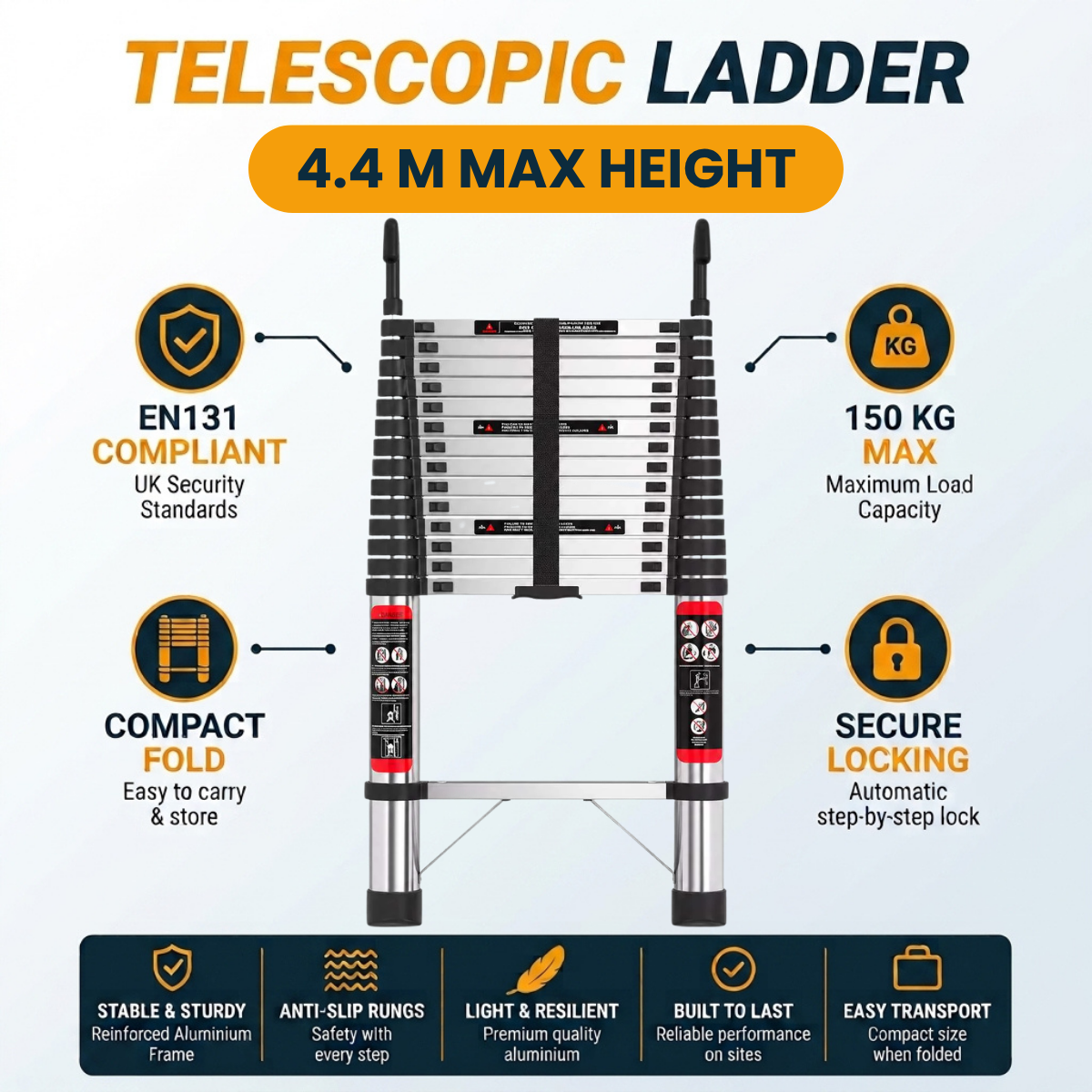
| Sentinel 440 | 4.4 m | 4.2 m | 91.5 cm | 12.5 kg |
| Sentinel Pro (4-in-1) | 5 m | 4.8 m | 86 cm | 15.5 kg |
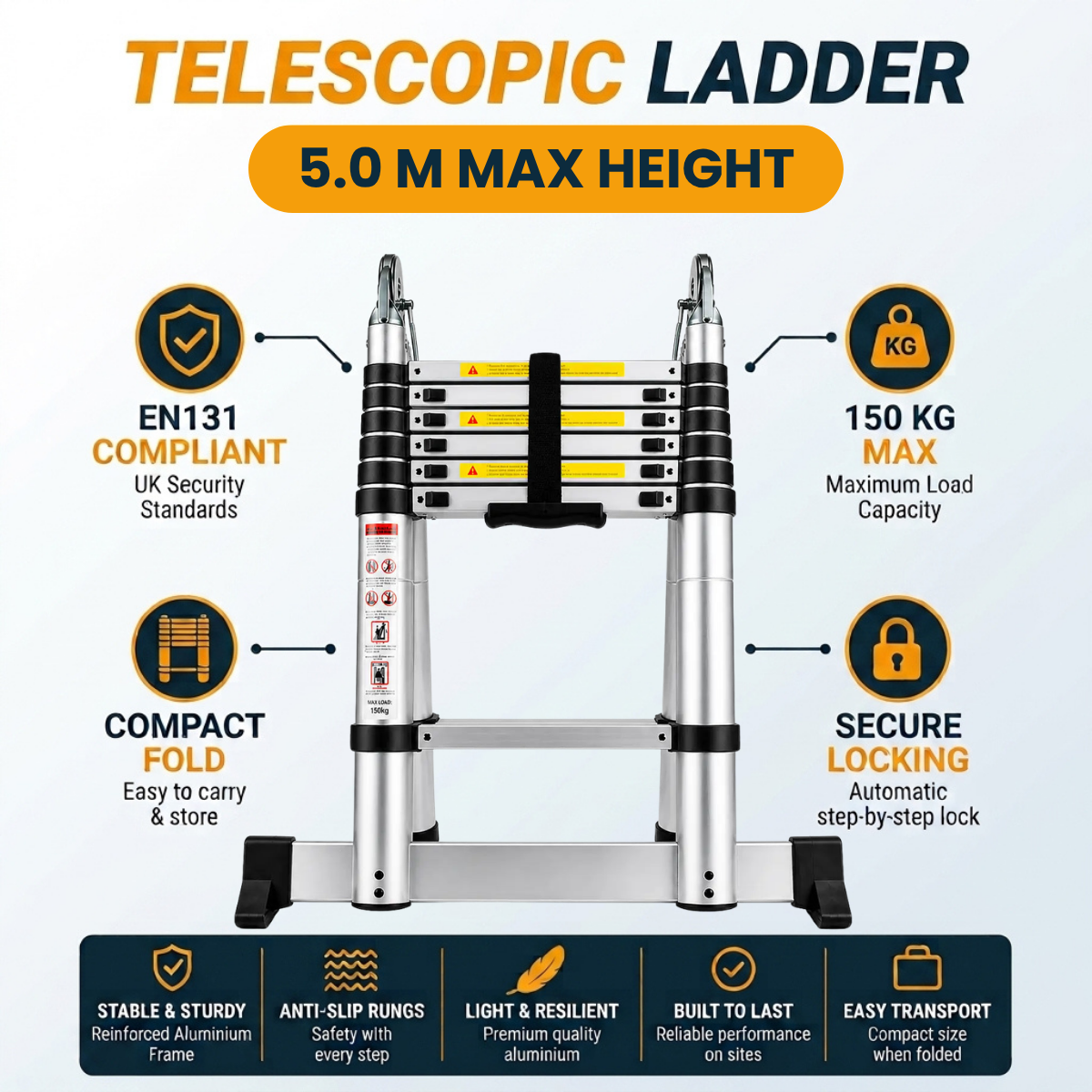
| AscendPro 500 | 5 m | 4.8 m | 96 cm | 14 kg |
| Apex 620 | 6.2 m | 6.0 m | 1.09 m | 16.3 kg |
All models are rated up to 150 kg (user plus tools). See the full telescopic ladder range for current prices.
Straight or multi-position?
A straight ladder gives you the most reach for the least weight. A multi-position ladder (the 3.8 m 3-in-1 or the 5 m 4-in-1) also opens as a stepladder or a trestle, so it is better when you work indoors, in the middle of a room, or where there is no wall to lean on.

Folded size and weight: will it fit?
Size is not only about reach. Before you buy, check two numbers: folded length (will it fit in your car, van or cupboard?) and weight (can you carry it up the stairs on your own?).

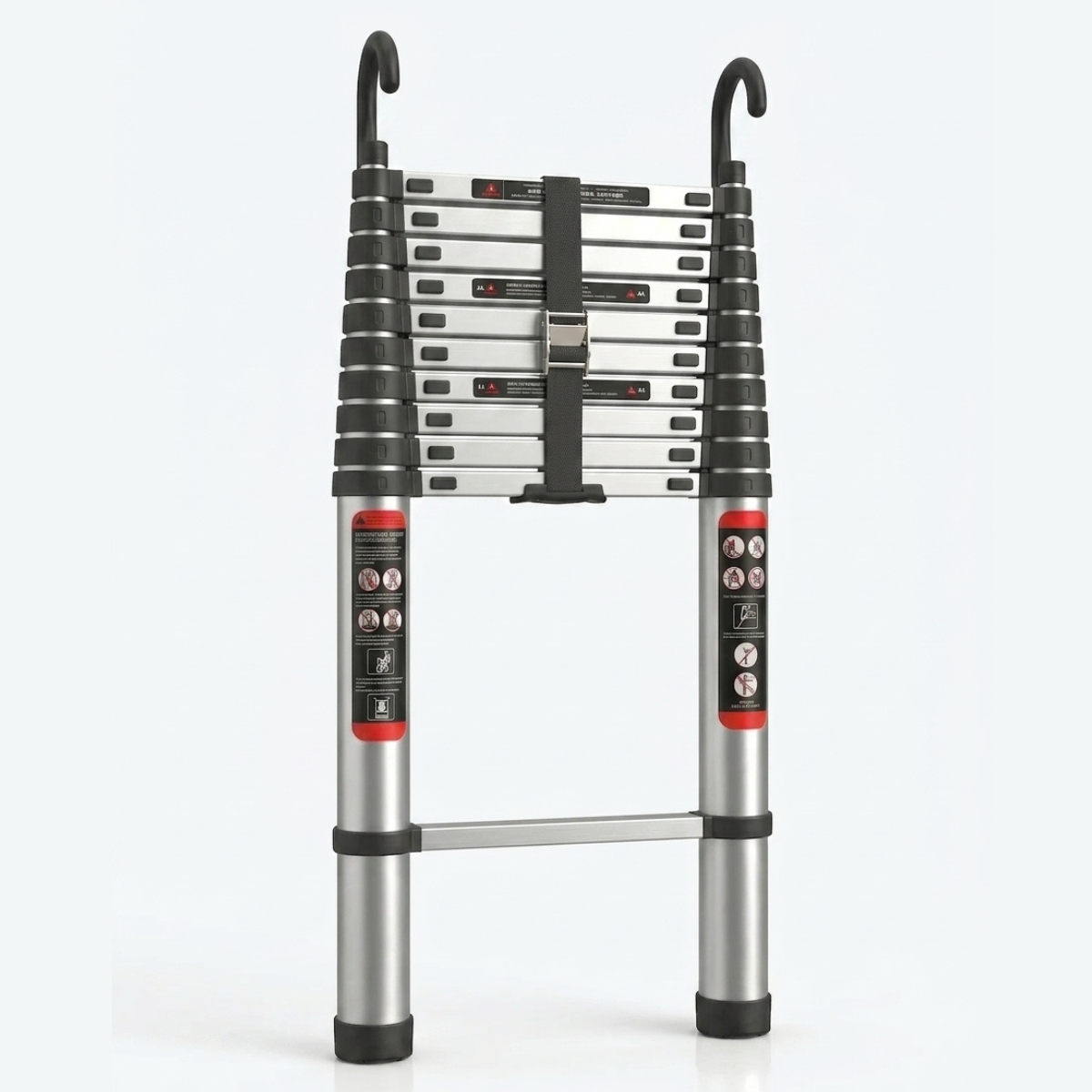
- Under 1 m folded: every model up to the 5 m fits in a hatchback boot, a cupboard or under the stairs.
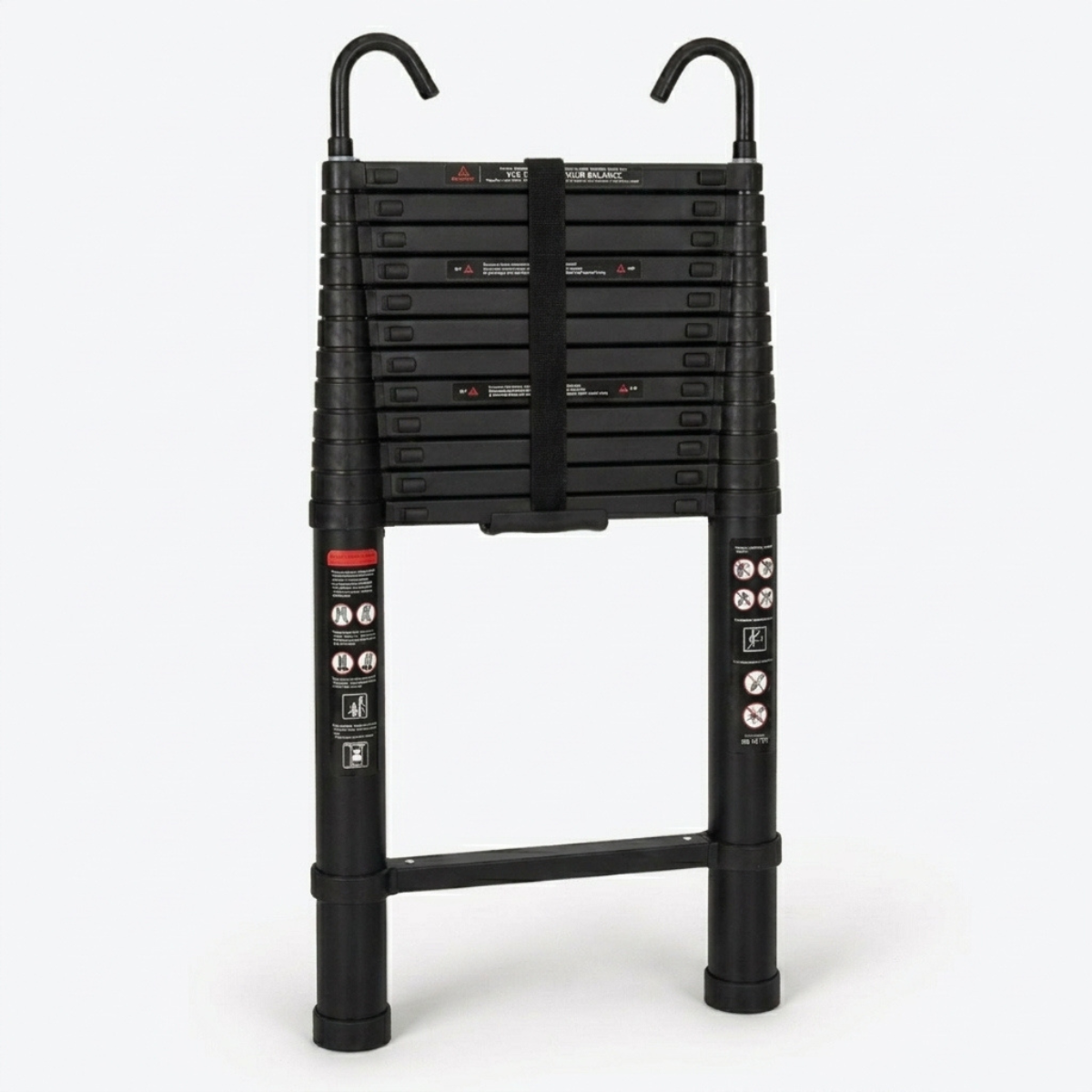
- The 6.2 m folds to 1.09 m: too long for some small boots, but it sits comfortably inside a panel van, so no roof rack is needed.
- Weight: from 8 kg (Compact 260) to 16.3 kg (Apex 620). Most people can carry the 2.6 m to 4.4 m models on their own without difficulty.
Three safety rules that depend on size
- Keep the 1 in 4 angle. A longer ladder needs a bigger gap at the base: about 1 m out for every 4 m of height, so about 1.2 m for a 5 m ladder.
- Never stand on the top three rungs. That is why the "reaches wall" figure should be higher than the job, not equal to it.
- Check the load rating. Add your body weight, your clothes and your tools. All our models are rated up to 150 kg.
Want the full routine? Read our guide: How to Use a Telescopic Ladder Safely.
Did you know?
A telescopic ladder locks section by section, so a 5 m ladder can be set at 2 m, 3 m or 4 m. You do not need a separate short ladder for every job.
FAQ: telescopic ladder sizes
What size telescopic ladder do I need to reach a gutter?
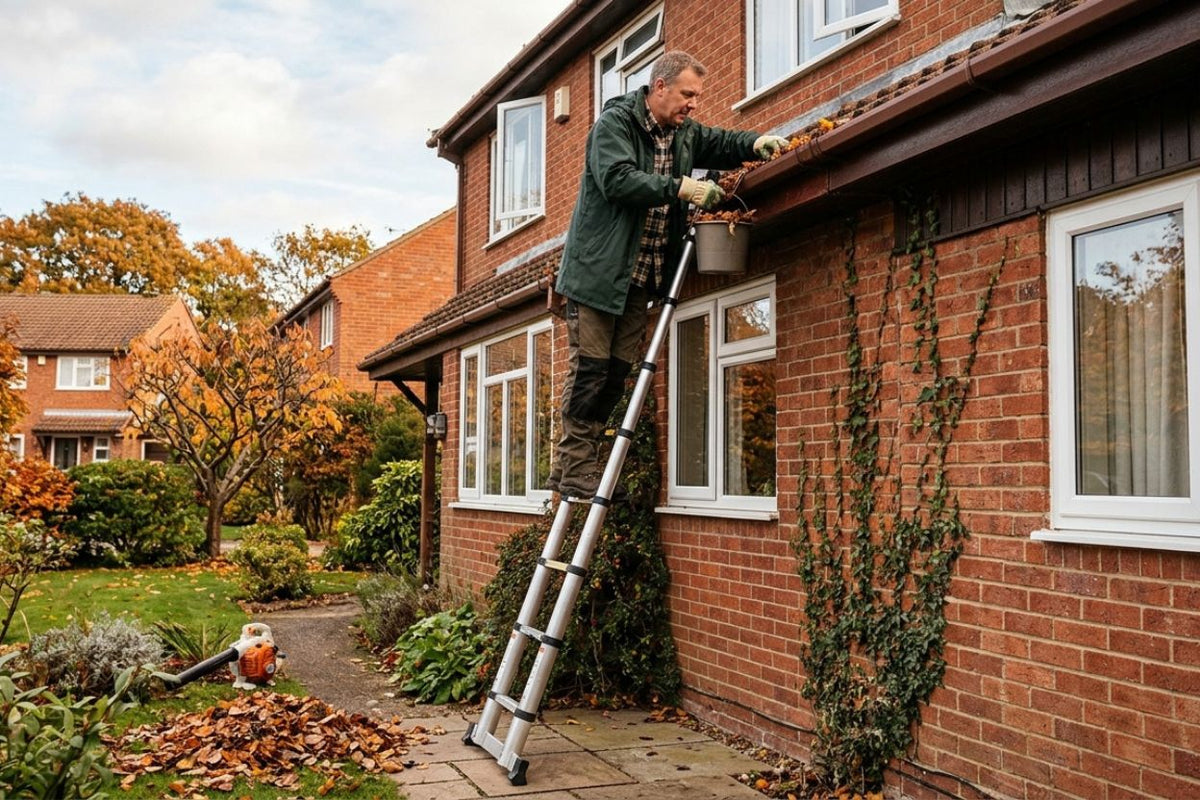
Measure the height of the gutter and choose a ladder whose "reaches wall" figure is slightly higher. For a single-storey gutter (about 2.5 m) a 3.2 m ladder is ideal. For a typical two-storey house, start with a 5 m ladder and go to 6.2 m if the eaves are higher.
How tall is a 5 m telescopic ladder when extended?
It extends to 5 m. Leaned at the correct 75 degree angle, it touches the wall at about 4.8 m.
Which ladder is best for a loft hatch?
A 2.6 m ladder is enough for a standard loft hatch at about 2.4 m. It folds to 74 cm and weighs 8 kg, so it is easy to store in a cupboard.
How far should the base of the ladder be from the wall?
Use the 1 in 4 rule: about 1 m out for every 4 m of height. For a ladder touching the wall at 4 m, the base should be about 1 m from the wall.
Is it better to buy a bigger ladder than I need?
Usually one size up is a good idea. A telescopic ladder extends in steps, so you can use only the height you need. The trade-off is slightly more weight and a longer folded length.
What is the difference between a telescopic ladder and an extension ladder?
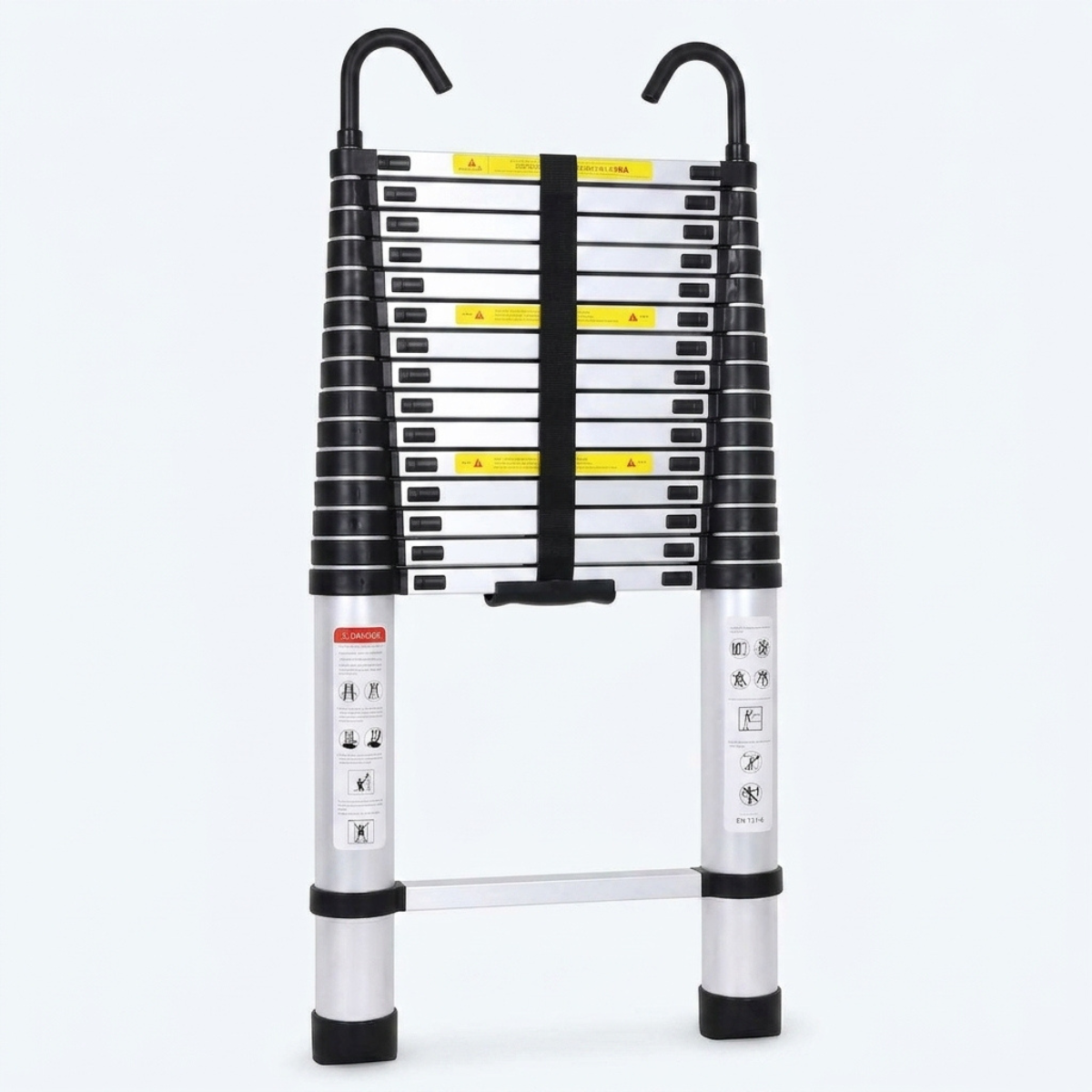
An extension ladder has two rigid sections that slide over each other and is long and heavy even when closed. A telescopic ladder collapses section by section into a compact block, which makes it far easier to carry and store.
Can I use a telescopic ladder for professional work?
Yes. Our ladders are suitable for both personal and professional use, with a 150 kg load rating. Buying for a team? Request a trade quote for volume pricing.
Still not sure? Find your ladder in 30 seconds
Answer four quick questions and we will point you to the right model. Or message us on WhatsApp with your job and the height: we reply before you order.
Find my ladder → Ask on WhatsApp →
Leave a comment
All comments are moderated before being published.
This site is protected by hCaptcha and the hCaptcha Privacy Policy and Terms of Service apply.