
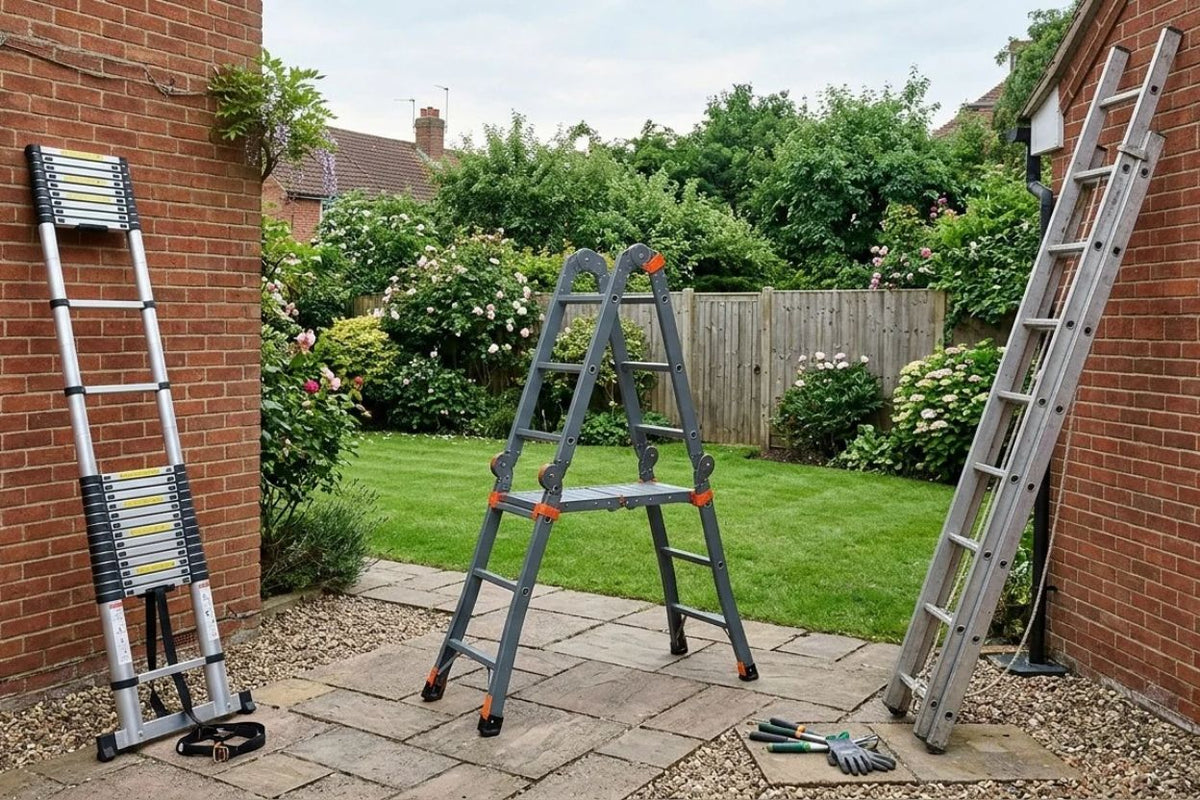
There is no single "best" ladder, only the best ladder for your jobs. Telescopic, folding and extension ladders all get you up to the same height, but they carry, store and behave very differently. This guide compares the three side by side, with the honest downsides of each, so you can pick the right one the first time.
The short answer
- Telescopic: best if space, transport and storage matter. Folds to under 1 m for most models.
- Folding (articulated): best if you want one ladder for stairs, trestle and stepladder set-ups.
- Extension: best for frequent, long jobs where you leave the ladder set up and have room to carry and store it.
- For most homeowners and many tradespeople, telescopic wins on convenience. For heavy daily use, an extension ladder is still hard to beat.
Contents
What each type is
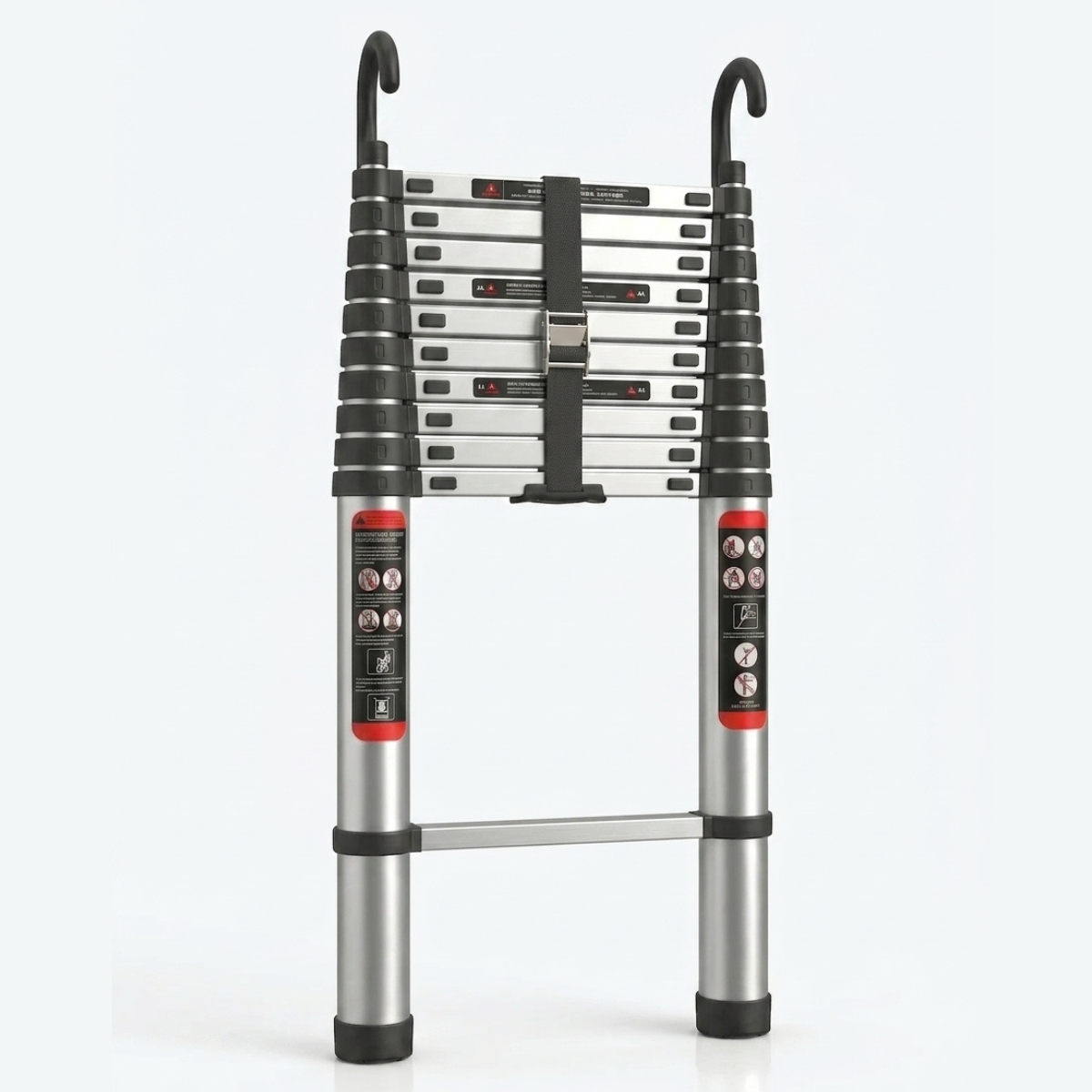
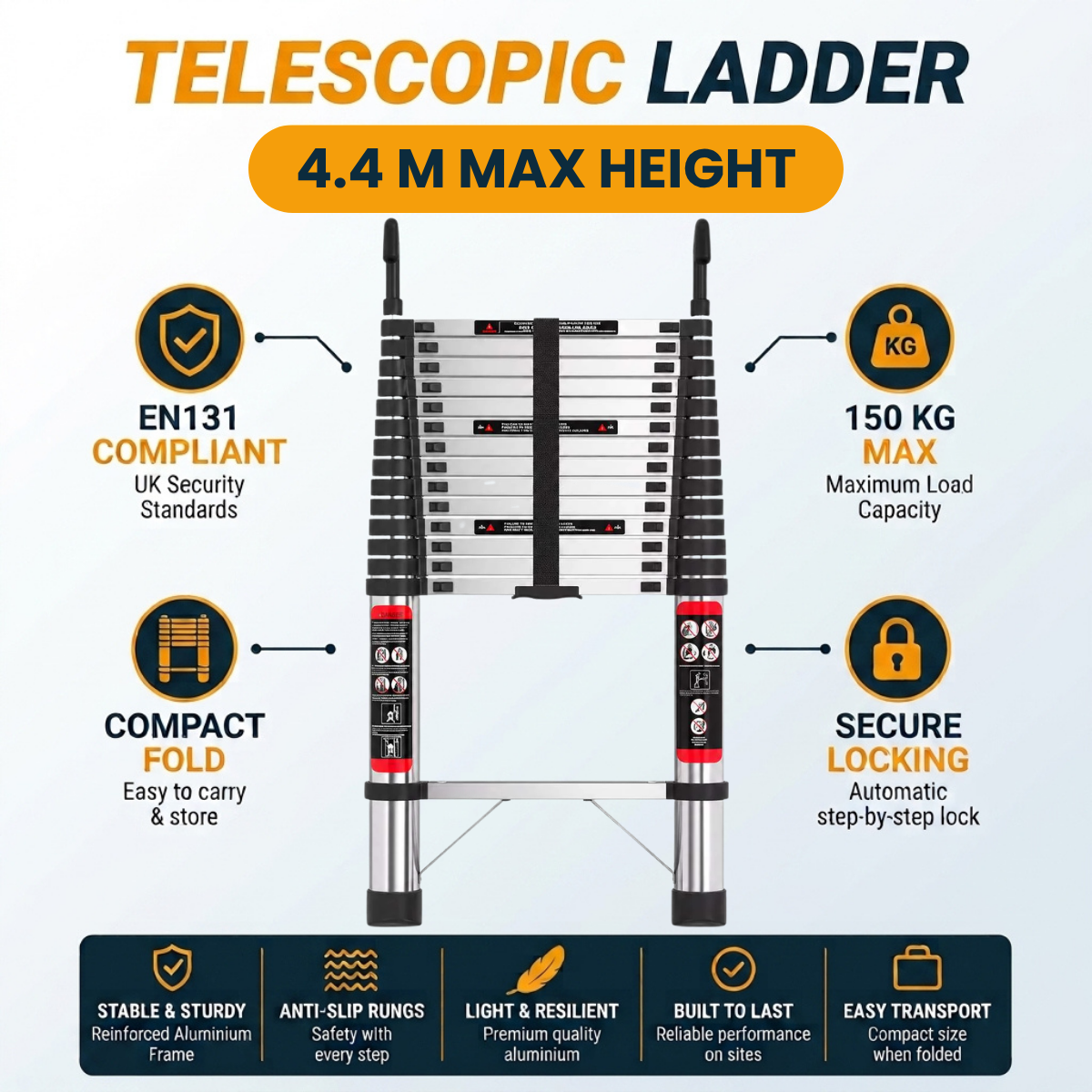
- Telescopic ladder: one set of rungs that slide inside each other. You pull it open section by section, and collapse it back into a compact block.
- Folding (articulated) ladder: a ladder with hinges. It folds in half or in four, and can be locked into different shapes: straight, stepladder, trestle.
- Extension ladder: two or three rigid sections that slide over each other. You raise the top section to the height you need.
Each type has its own safety standard in the EN 131 family: telescopic ladders are covered by EN 131-6 and hinged ladders by EN 131-4. Whatever type you choose, ask the seller for test evidence for the exact model.

Side-by-side comparison
Figures are typical ranges for each type. Always check the exact model.
| Telescopic | Folding (articulated) | Extension | |
|---|---|---|---|
| Folded or closed length | Shortest: about 0.7 to 1.1 m for 2 to 6 m models | About 1 m | Long: roughly half its working length or more |
| Fits in a hatchback | Yes | Usually | No: needs a roof rack or van |
| Set-up speed | Fast: pull open, check locks | Medium: set hinges and pins | Slower: raise, align, check clips |
| Height adjustment | Rung by rung | Fixed steps by shape | Rung by rung |
| Different shapes | Straight on most; some models also open as a stepladder | Most flexible | Straight only |
| Rungs | Narrower rungs | Wider steps or rungs | Wider rungs |
| Storage | Cupboard, car boot, under the stairs | Cupboard or garage | Garage, shed, wall hooks |
| Best for | Home, mobile trades, occasional high jobs | Stairs, mixed indoor jobs | Frequent long outdoor jobs, fixed workshop use |
Telescopic ladders: pros and cons
Pros
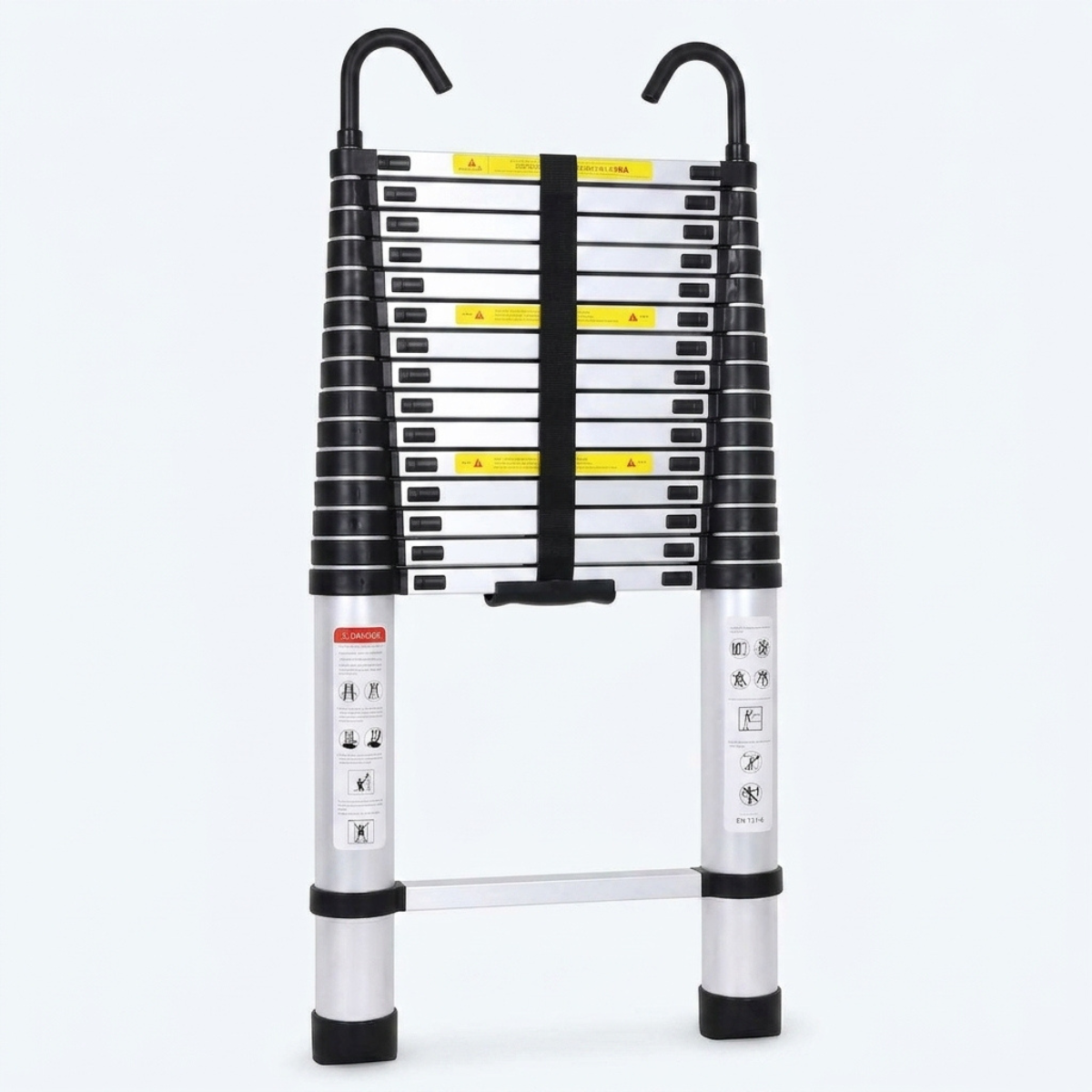
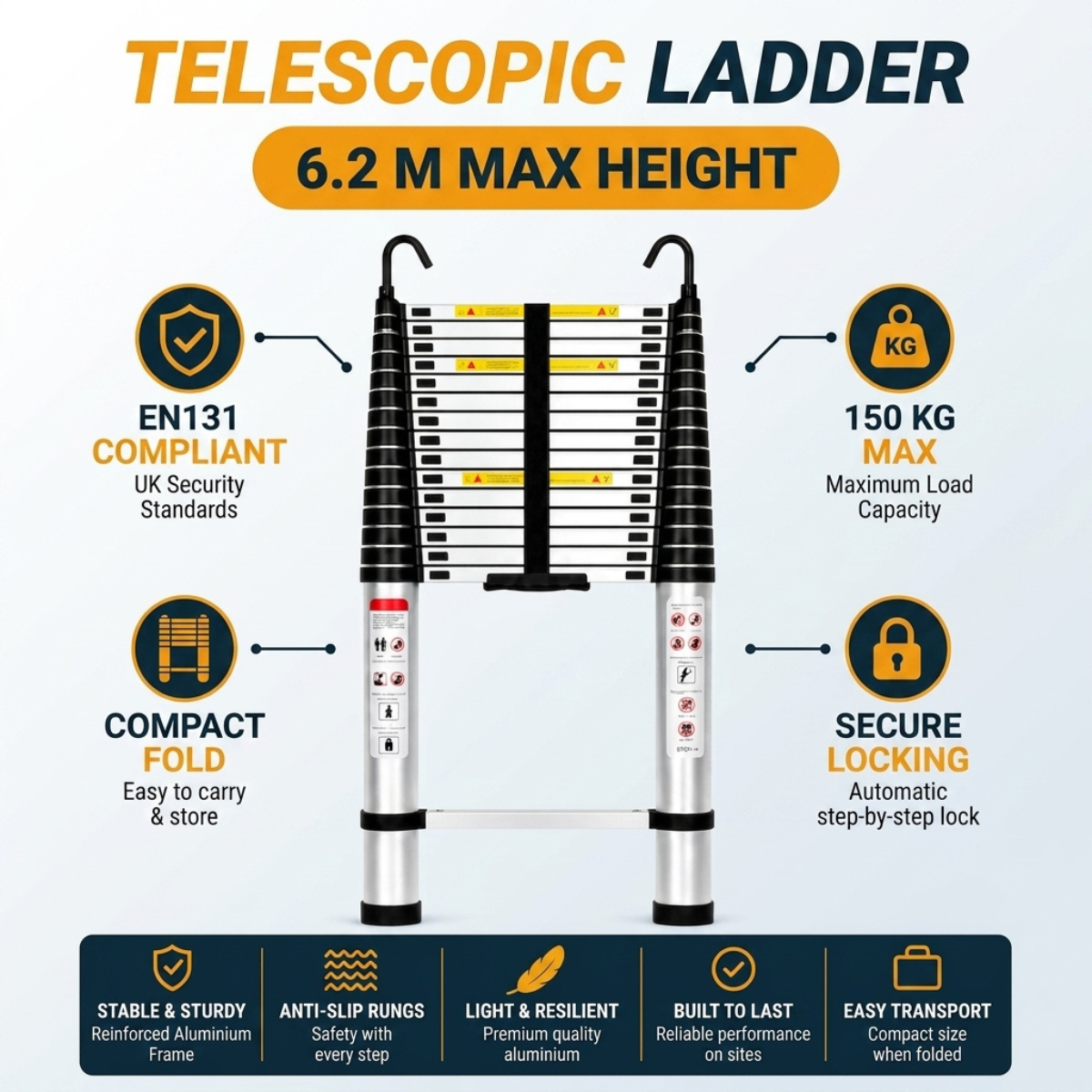
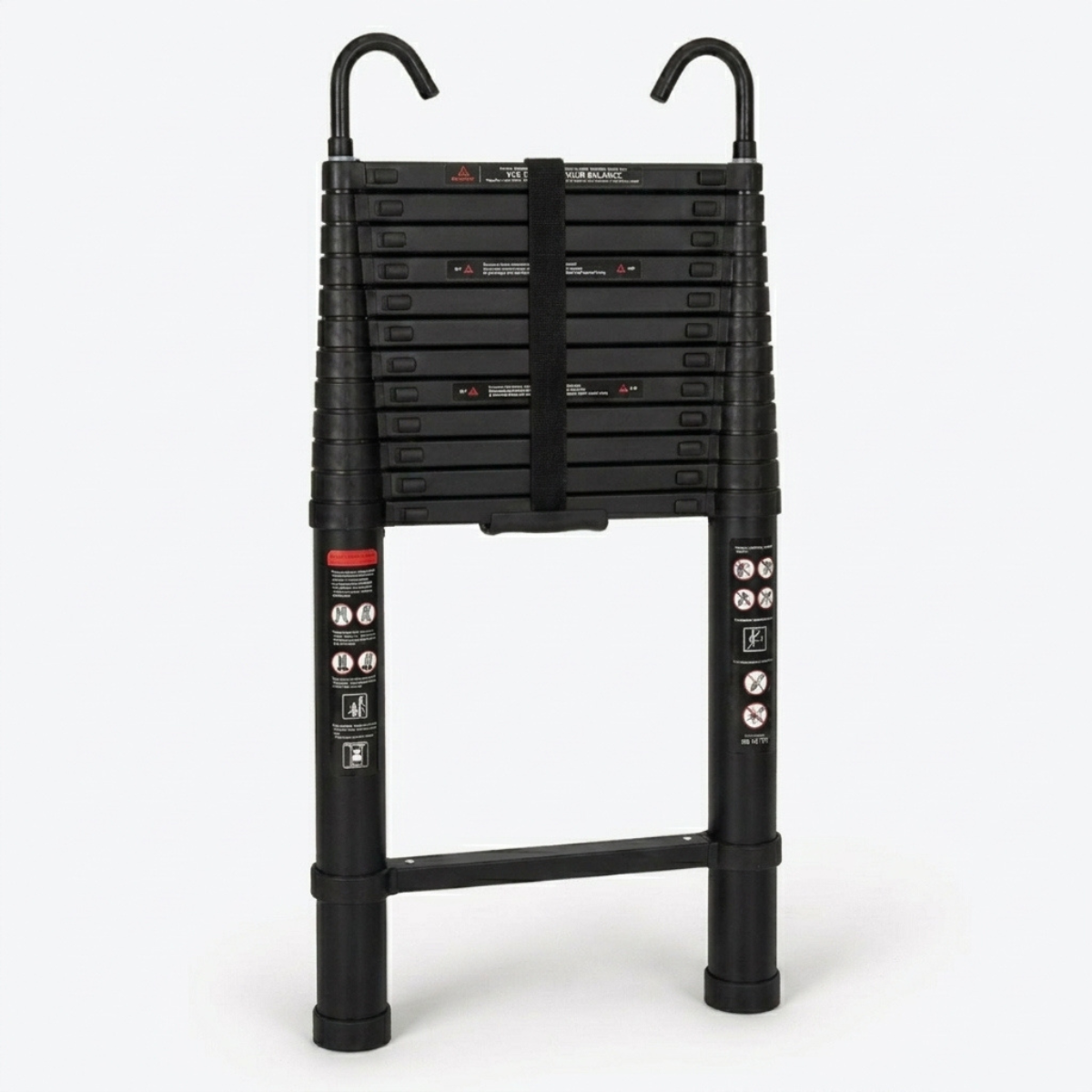
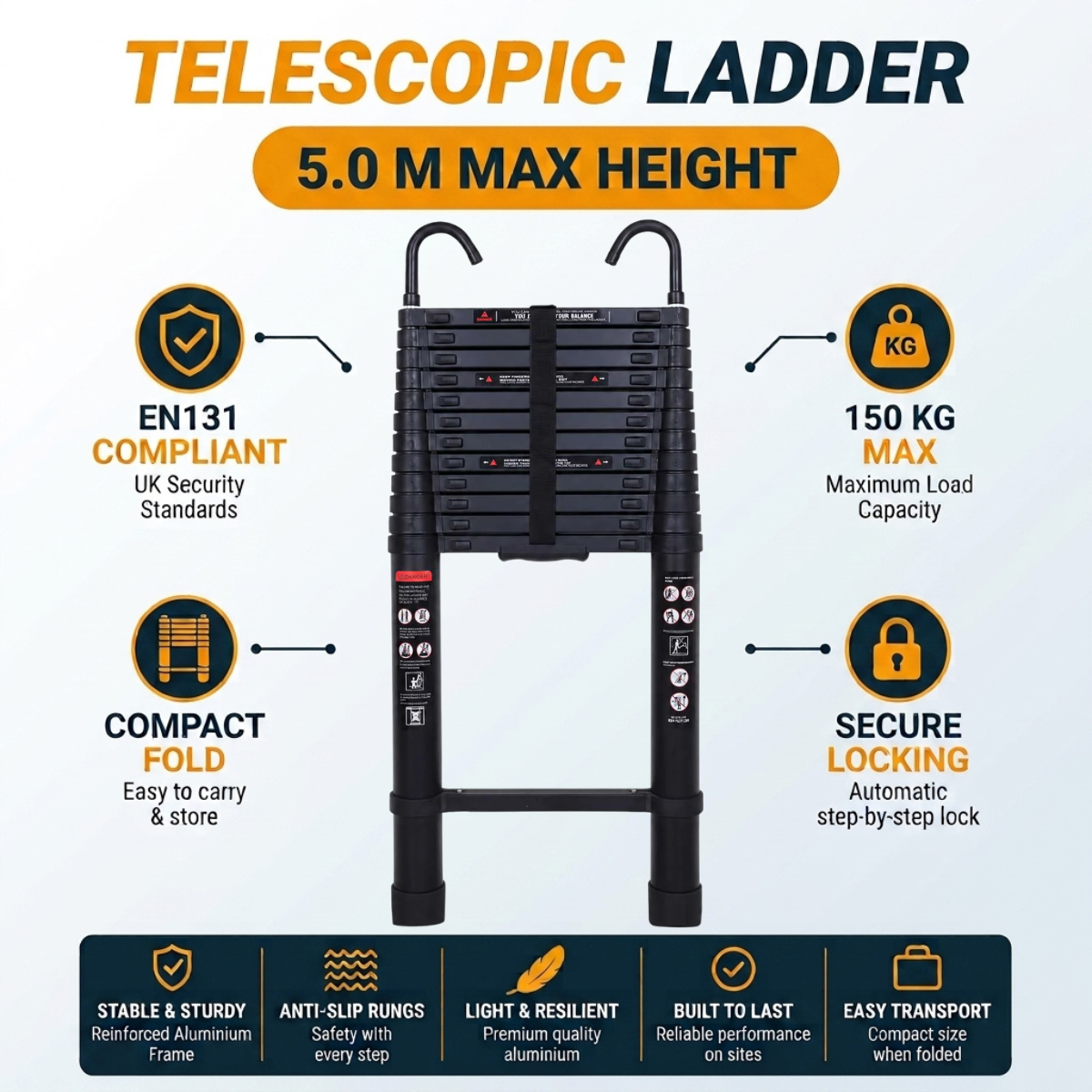
- Compact. A 5 m ladder folds to 86 cm. You can keep it in a cupboard or the boot of a car.
- Adjustable. It locks section by section, so one ladder covers many heights.
- Quick to deploy. No second person needed to raise it.
- Light for the reach. From 8 kg for the 2.6 m up to about 16 kg for the 6.2 m.
Cons
- Narrower rungs. Fine for jobs of 15 to 30 minutes, less comfortable for a full day.
- More locks to check. Every section has a lock, and each must be fully engaged. This is why build quality and checking matter so much.
- Quality varies a lot. Cheap, untested telescopic ladders are a real problem. Buy from a seller who gives a real company address and test evidence for the exact model.

Best of both: the 380 Multi (3.8 m, 3-in-1)
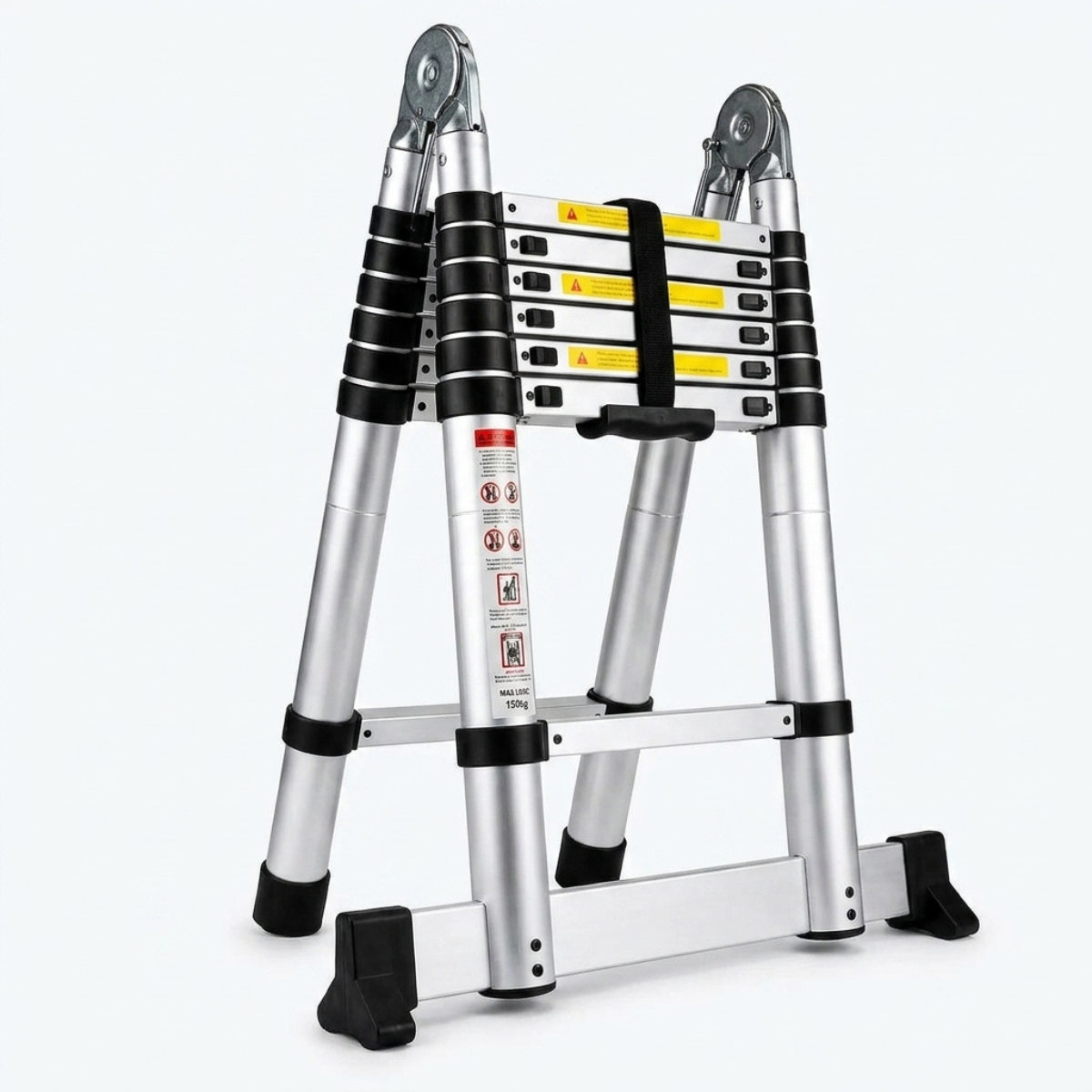
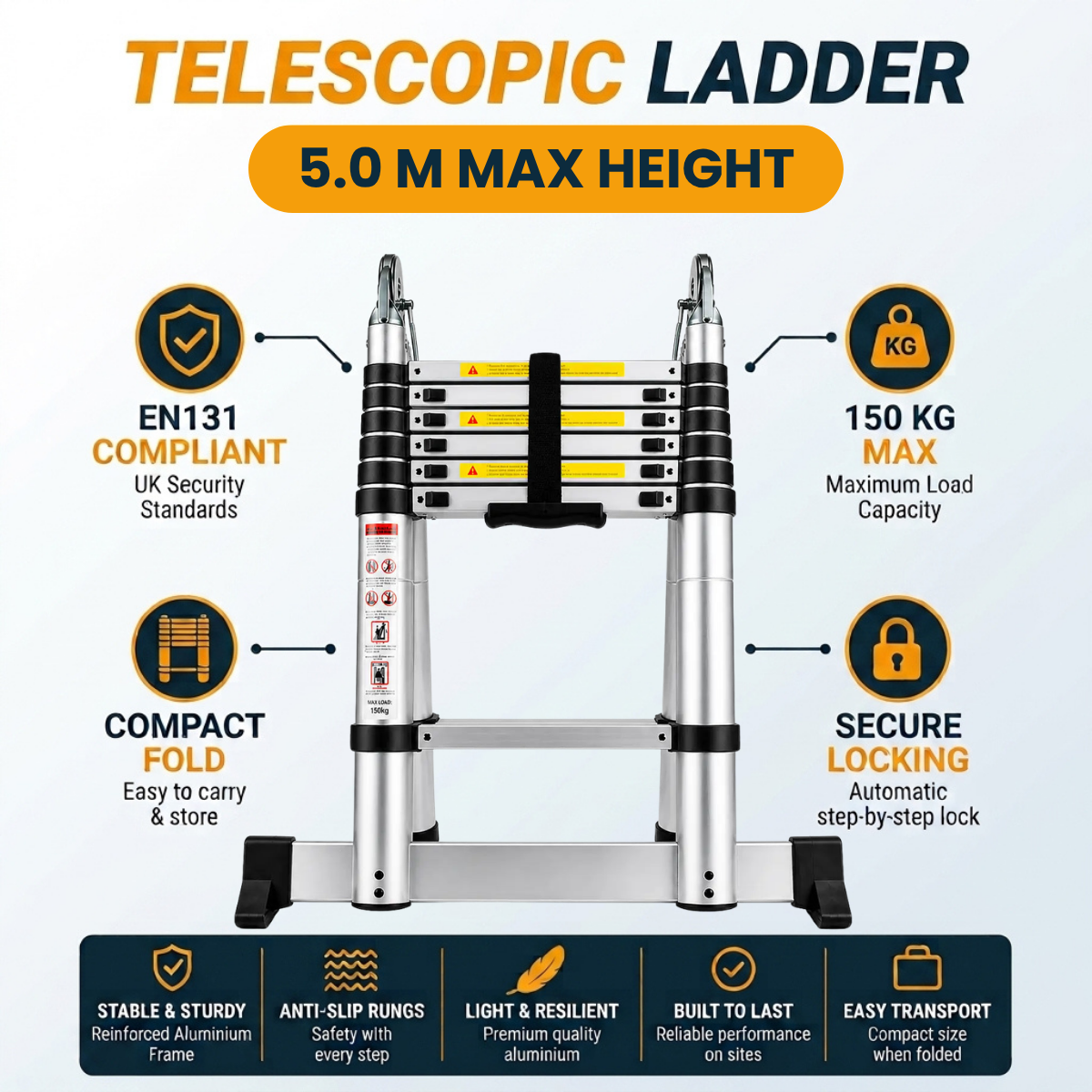
A telescopic ladder that also opens as a stepladder. Reaches walls up to 3.6 m and folds to 81 cm.
View the 380 Multi →Folding ladders: pros and cons
Pros
- Most flexible shapes. Straight, stepladder, trestle and often a staircase set-up, all from one ladder.
- Wider steps on many models, which is more comfortable for longer work.
- Folds to about 1 m.
Cons
- Hinges are the weak point. They must be fully locked every time, and they can pinch fingers when you fold them.
- Often heavier than a telescopic ladder of the same reach.
- Fixed lengths. You choose the shape, not the exact height.
Extension ladders: pros and cons
Pros
- Wide, comfortable rungs and a very solid feel for long jobs.
- Simple. Few moving parts: the sections slide and clip.
- Easy to tie off at the top for repeated outdoor work.
Cons
- Long even when closed. An extension ladder reaching about 4 m is typically around 2.5 m long when closed. It does not fit in most cars.
- Harder to handle alone. Raising one by yourself in a breeze is awkward.
- Straight use only, so it is no help indoors in the middle of a room.
Which one should you choose?
Answer these three questions:
- Where will it live? Cupboard, boot or small van: telescopic. Garage or shed with space: any type.
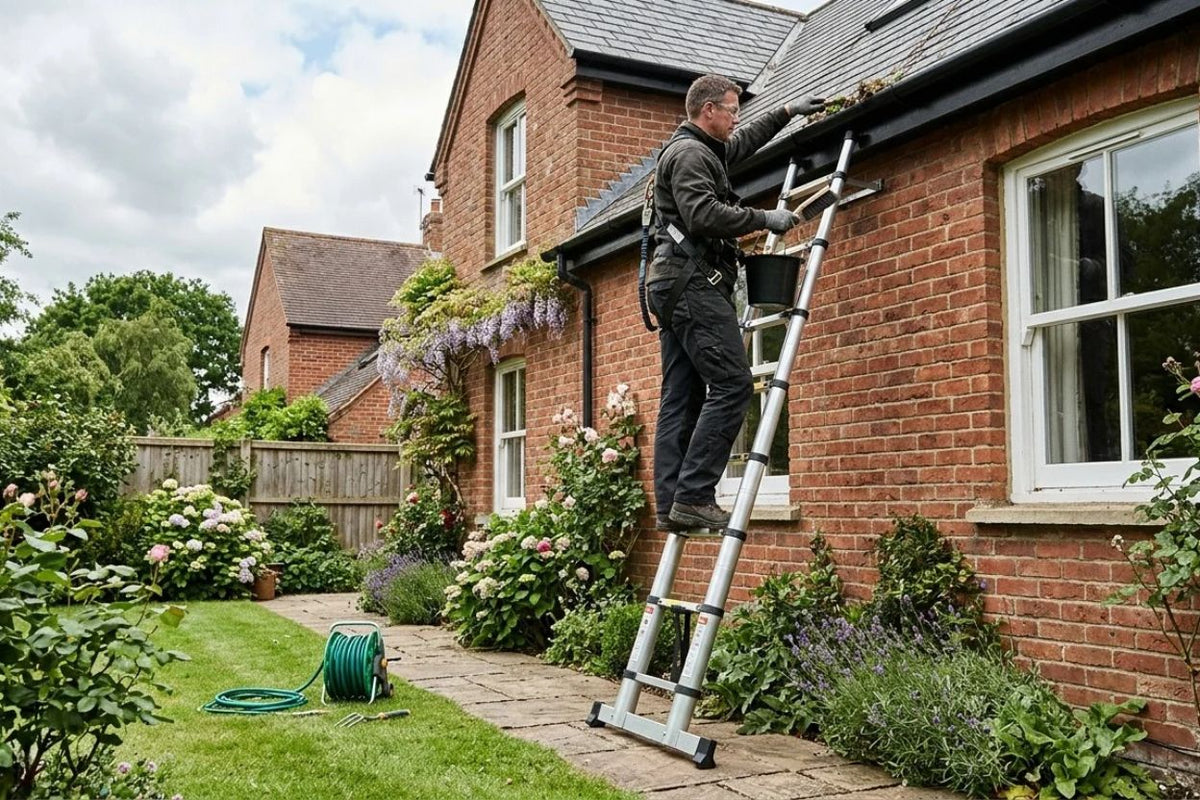
- How long is a typical job? Quick jobs under 30 minutes (bulbs, gutters, loft, windows): telescopic is ideal. A full day on a ladder: extension or folding with wider steps.
- Where will you use it? Mostly leaning on a wall: telescopic or extension. Indoors, in the middle of a room or on stairs: a multi-position telescopic or a folding ladder.
| If you are... | Choose |
|---|---|
| A homeowner doing gutters, loft and bulbs | Telescopic, 3.2 m to 5 m |
| An electrician or maintenance engineer moving between jobs | Telescopic, multi-position |
| A decorator working on stairs and hallways | Folding, or a multi-position telescopic |
| A builder on a long outdoor job with a van | Extension |
| Someone short of storage space | Telescopic |

Safety applies to all three
Whichever type you buy, the same rules apply: firm level ground, 1 m out for every 4 m of height, three points of contact, never stand on the top three rungs, and keep your belt buckle between the rails. The HSE describes ladders as suitable for light work of short duration, so if you are working at height for hours, consider a different piece of equipment such as a scaffold tower.
Read our full routine: How to Use a Telescopic Ladder Safely.
Did you know?
The safest ladder is the one you will actually use properly. A heavy extension ladder left in the shed tends to be skipped for "quick" jobs, while a telescopic one in the cupboard gets used correctly every time.
FAQ: telescopic, folding and extension ladders
Are telescopic ladders as strong as extension ladders?
A good telescopic ladder that is tested to the standard and used within its rating is strong enough for its job. AscendPro models are rated up to 150 kg (user plus tools). Extension ladders have wider rungs, which feel more solid on long jobs.
Which is better for the loft?
A telescopic ladder like the Compact 260 is ideal for reaching and opening the hatch and it stores in a cupboard. If you go into the loft often, a fixed loft ladder is safer for the last step through the hatch.
Can I use a telescopic ladder on stairs?
Only if the instructions for that exact model say it is allowed. Many telescopic ladders are for leaning or stepladder use only. For stairs, a folding ladder with a specific stair set-up is made for the job.
Which type is lightest?
For the same reach, a telescopic ladder is usually the lightest and by far the most compact. The AscendPro Compact 260 weighs 8 kg.
Can tradespeople use telescopic ladders?
Yes, for the short, light jobs ladders are designed for. Electricians, maintenance teams and installers like them for the compact size. Buying for a team? Request a trade quote.
What size should I buy?
Measure the highest point you need to touch and pick a ladder whose "reaches wall" figure is at least that. Our guide What Size Telescopic Ladder Do I Need? shows how, and How Tall Is a 5 m Telescopic Ladder? explains the difference between length, wall reach and working reach.
Find the right ladder for your jobs
Answer four quick questions and we will point you to the right model. Free tracked UK delivery and 30-day returns. Use code WELCOME5 for 5% off your first order.
Find my ladder → Shop telescopic ladders →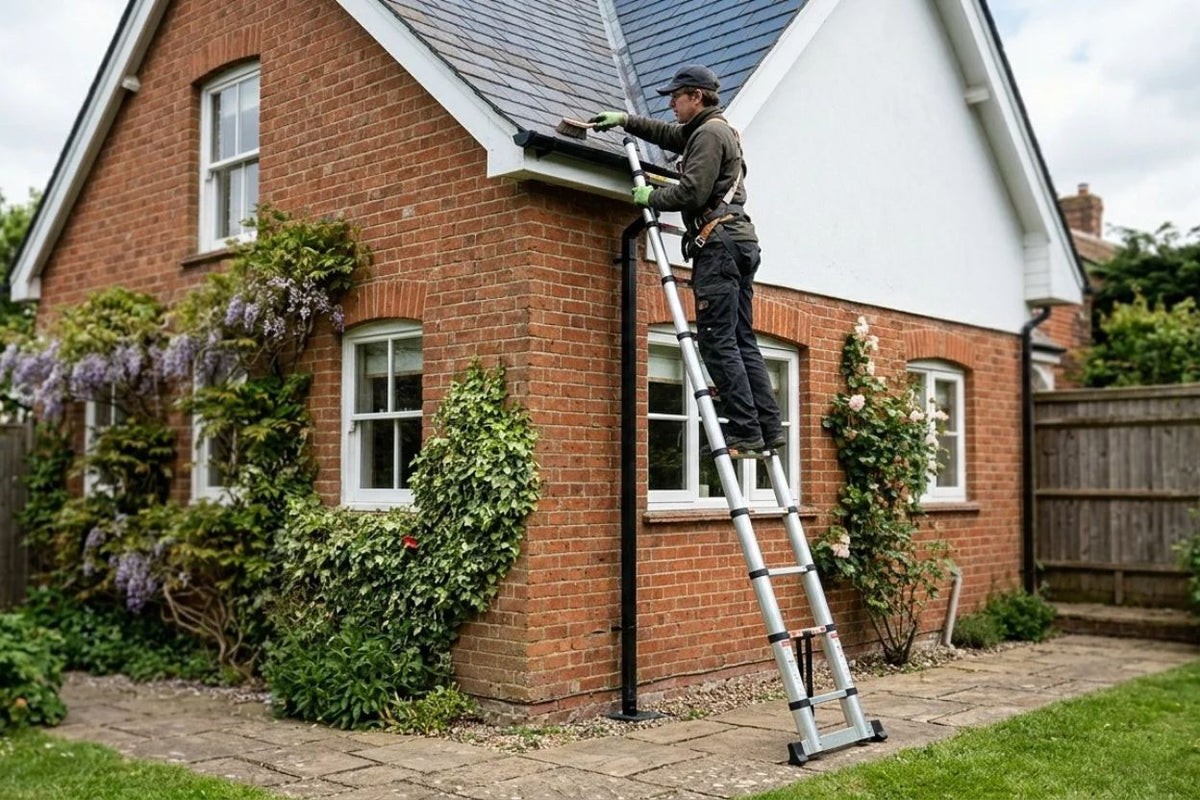
Leave a comment
All comments are moderated before being published.
This site is protected by hCaptcha and the hCaptcha Privacy Policy and Terms of Service apply.