
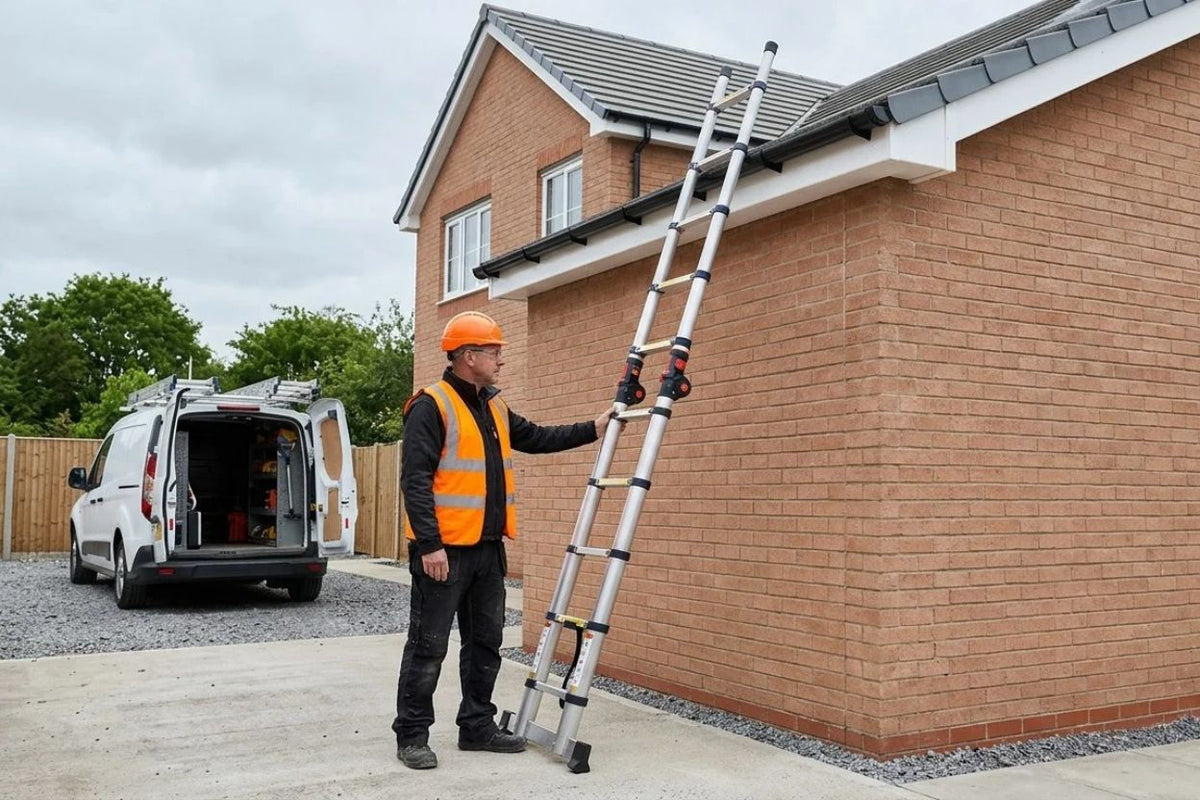
Roofers and builders need height, speed and a ladder that fits in the van. A telescopic ladder gives you all three for the access jobs that fill a normal day: eaves, fascias, soffits, window openings and gable ends. This guide shows which model suits which job, which accessories earn their place on site, and where a ladder is simply the wrong tool.
The short answer
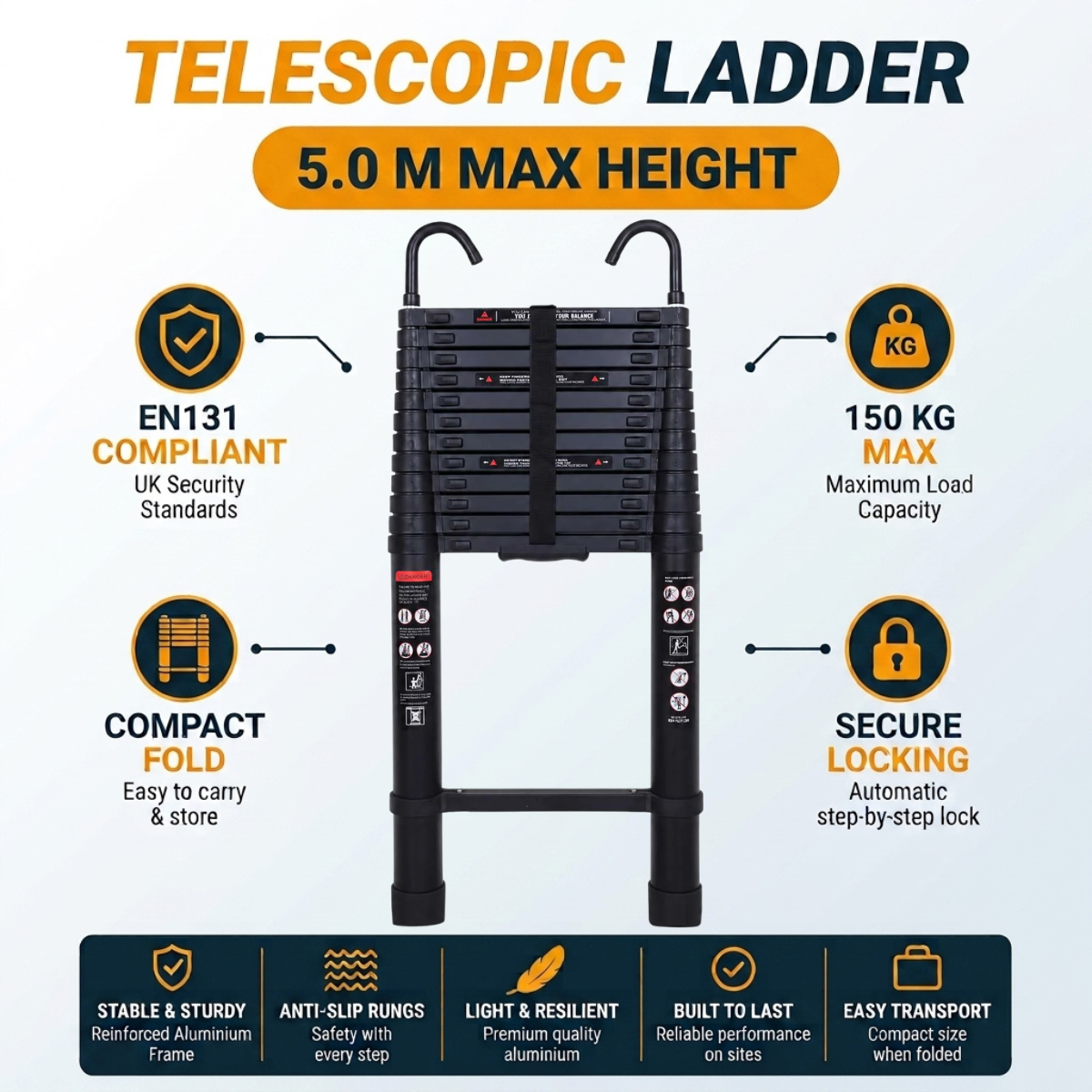
- Eaves and fascias on a two-storey house: a 5 m ladder (reaches walls up to 4.8 m).
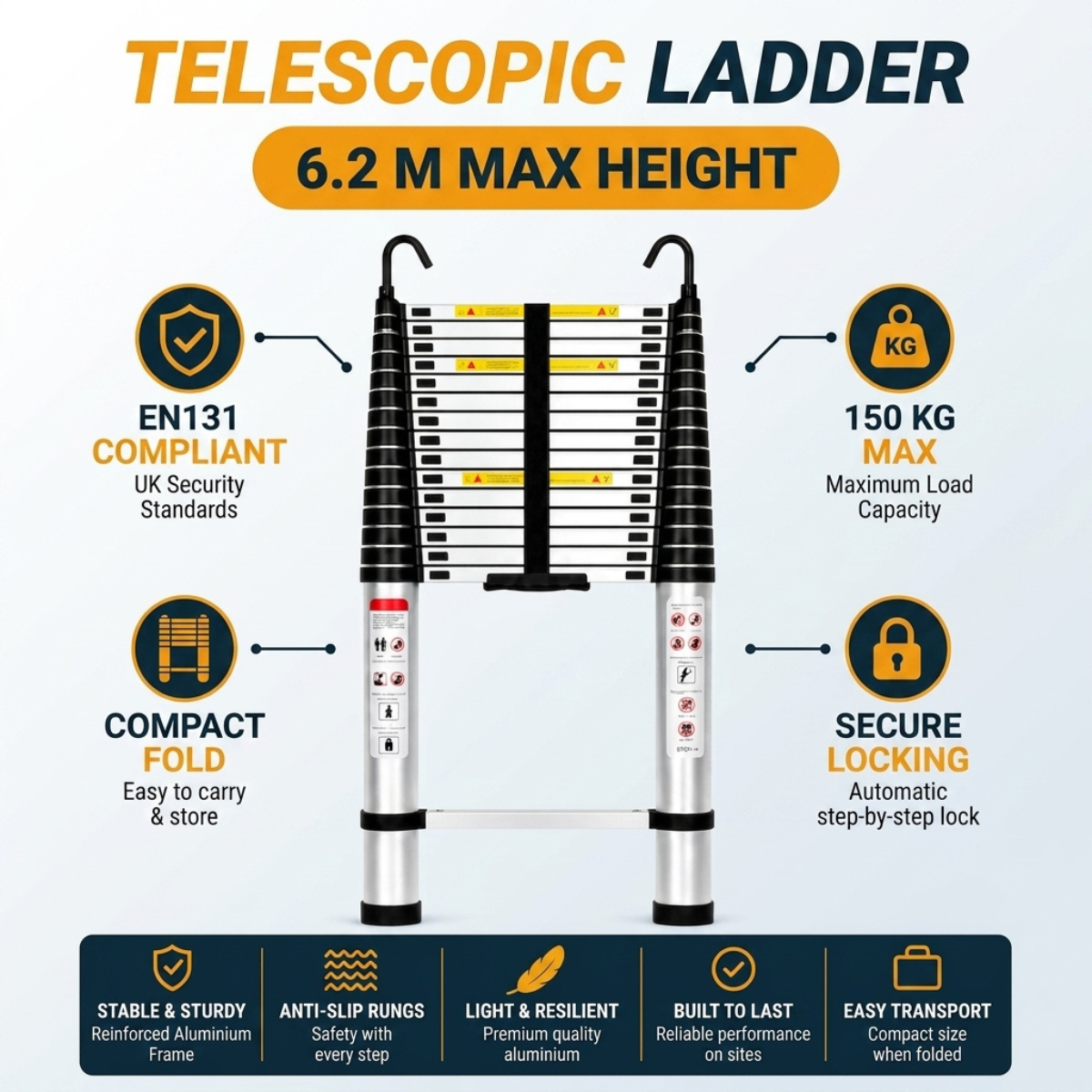
- Higher eaves and gable ends: the 6.2 m Apex 620 (reaches walls up to 6 m, you can work up to 7 m).
- Interior first fix at 2.5 to 3.5 m: a 3.2 m or a multi-position 3.8 m.
- On the Apex 620, fit the ridge hooks when you need a fixed anchor over a roof edge or scaffolding.
- A ladder is for short, light access. For long roof work, use a scaffold or a proper roof access system.
Contents
Why trades use telescopic ladders
- Van space. A 6.2 m ladder folds to 1.09 m. A traditional ladder of the same reach takes the whole roof rack.
- One person can set it up. No second pair of hands to raise a heavy two-section ladder in a breeze.
- Exact height. It locks section by section, so you set the working height instead of settling for the nearest fixed rung.
- Quick between jobs. Fold, carry, extend, check the locks, work.

Which model for which job
| Site job | Typical height | Ladder |
|---|---|---|
| Interior first fix, ceiling boards, lights | 2.4 to 3 m | AscendPro 320 (3.2 m) |
| Mixed indoor and outdoor jobs, trestle work | Up to 3.6 m | 380 Multi (3.8 m) |
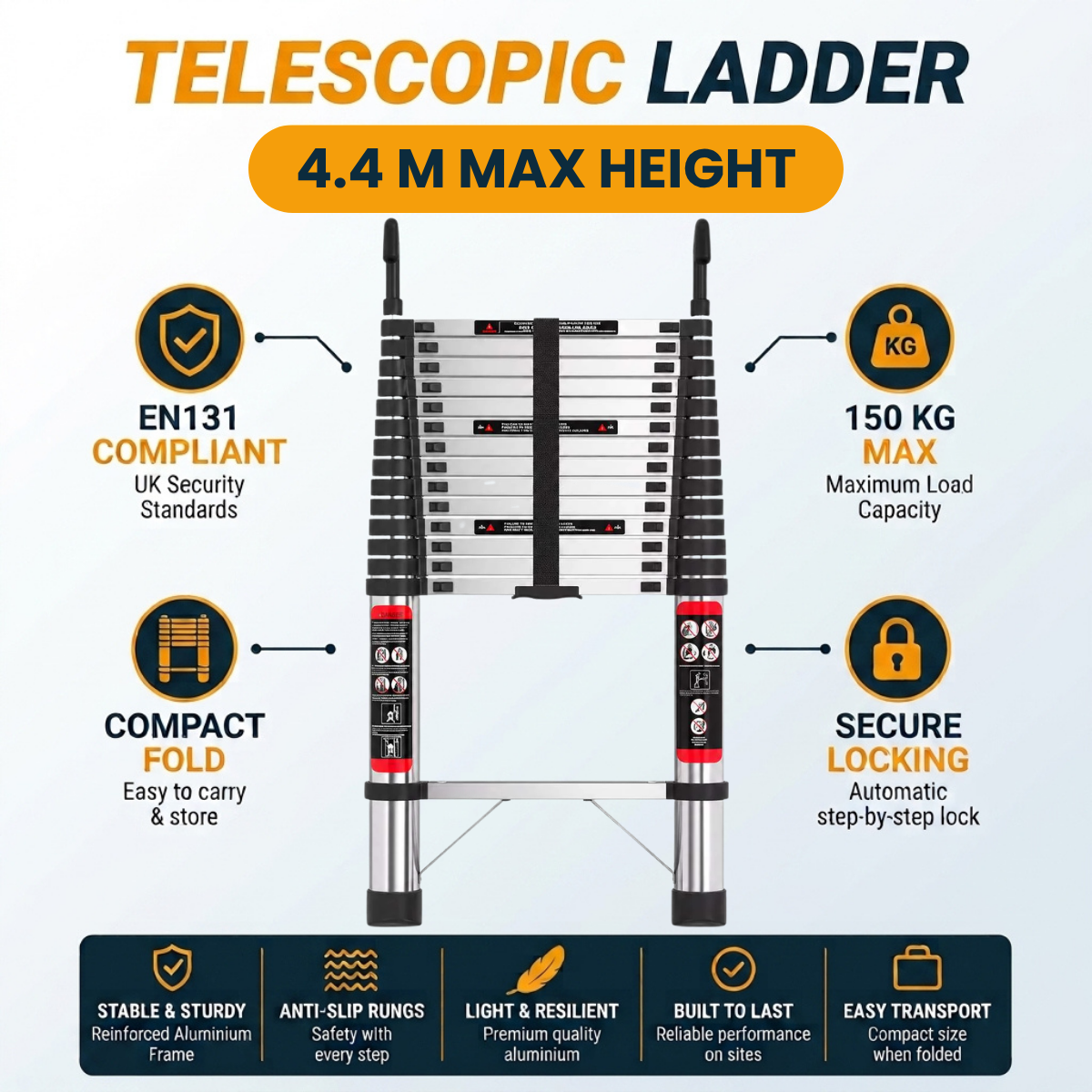
| First-floor window openings, lintels | About 4 m | Sentinel 440 (4.4 m) |
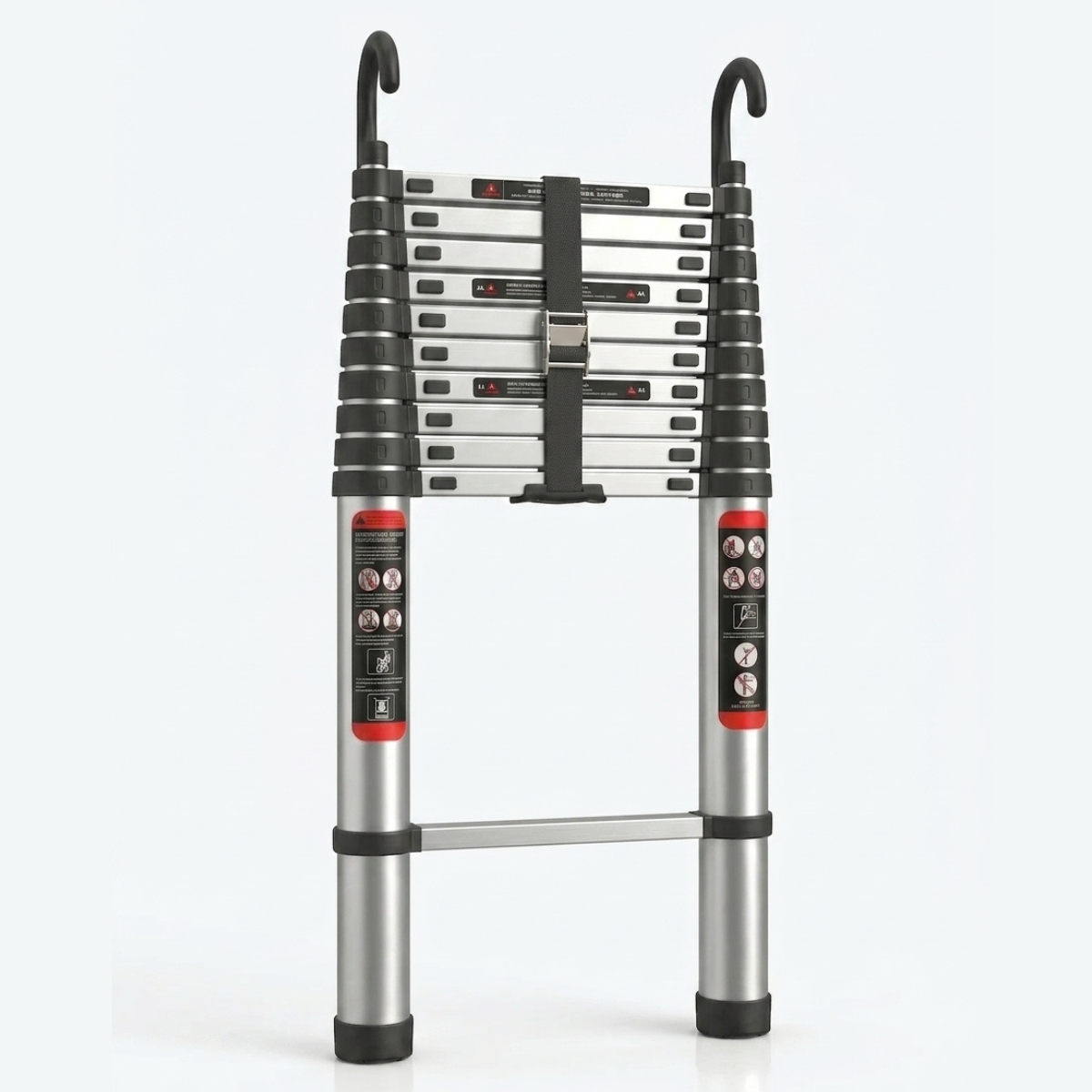
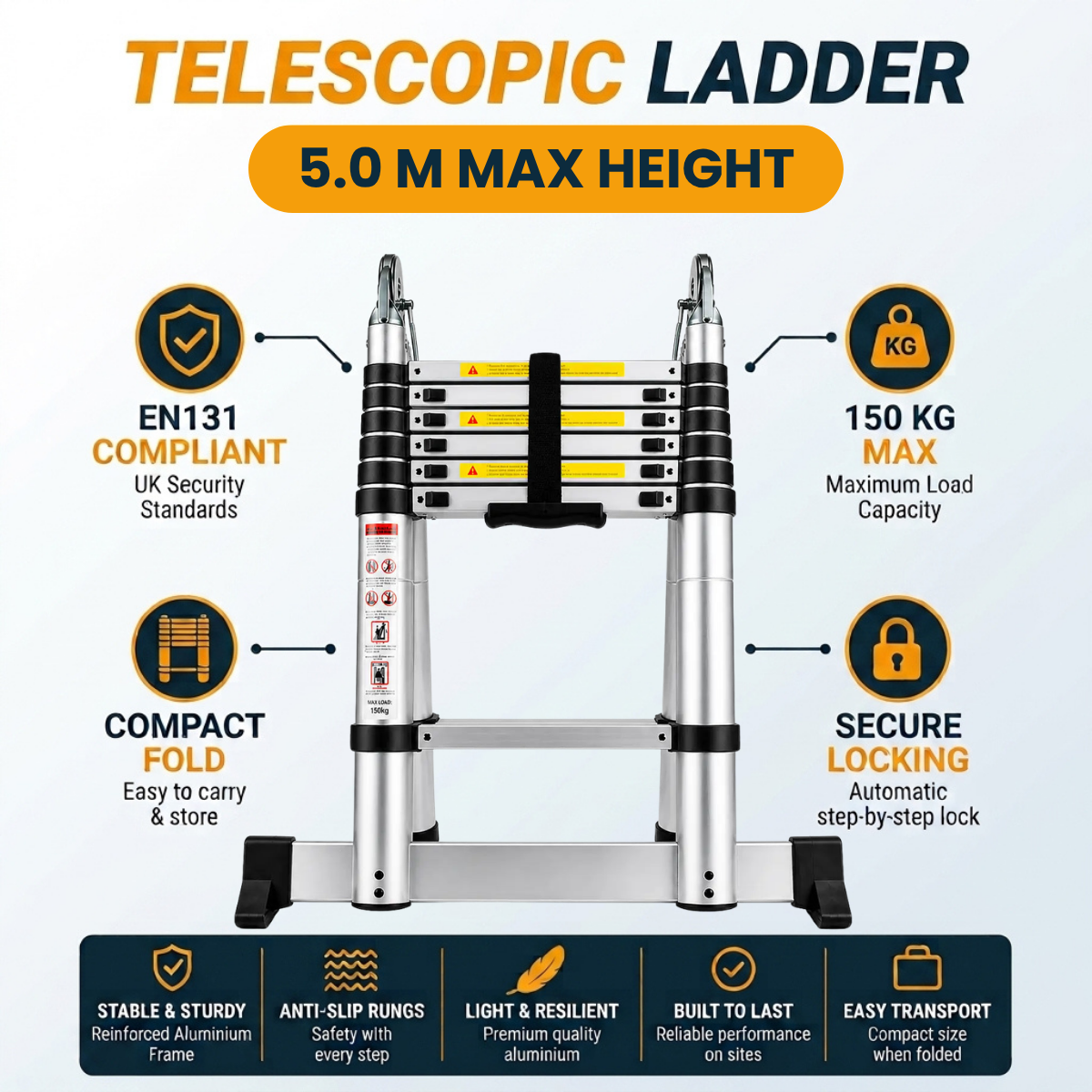
| Fascias, soffits and gutters, two-storey | 4.5 to 4.8 m | Sentinel Pro (5 m) or AscendPro 500 |
| High eaves, gable ends, three-storey fronts | 5 to 6 m | Apex 620 (6.2 m) |
Not sure how the figures work? "Reaches wall" is where the top touches. "You can work up to" is how high your hands go. Both are explained in How Tall Is a 5 m Telescopic Ladder?, and the full sizing method is in What Size Telescopic Ladder Do I Need?
The Apex 620: reach for gable ends and high eaves
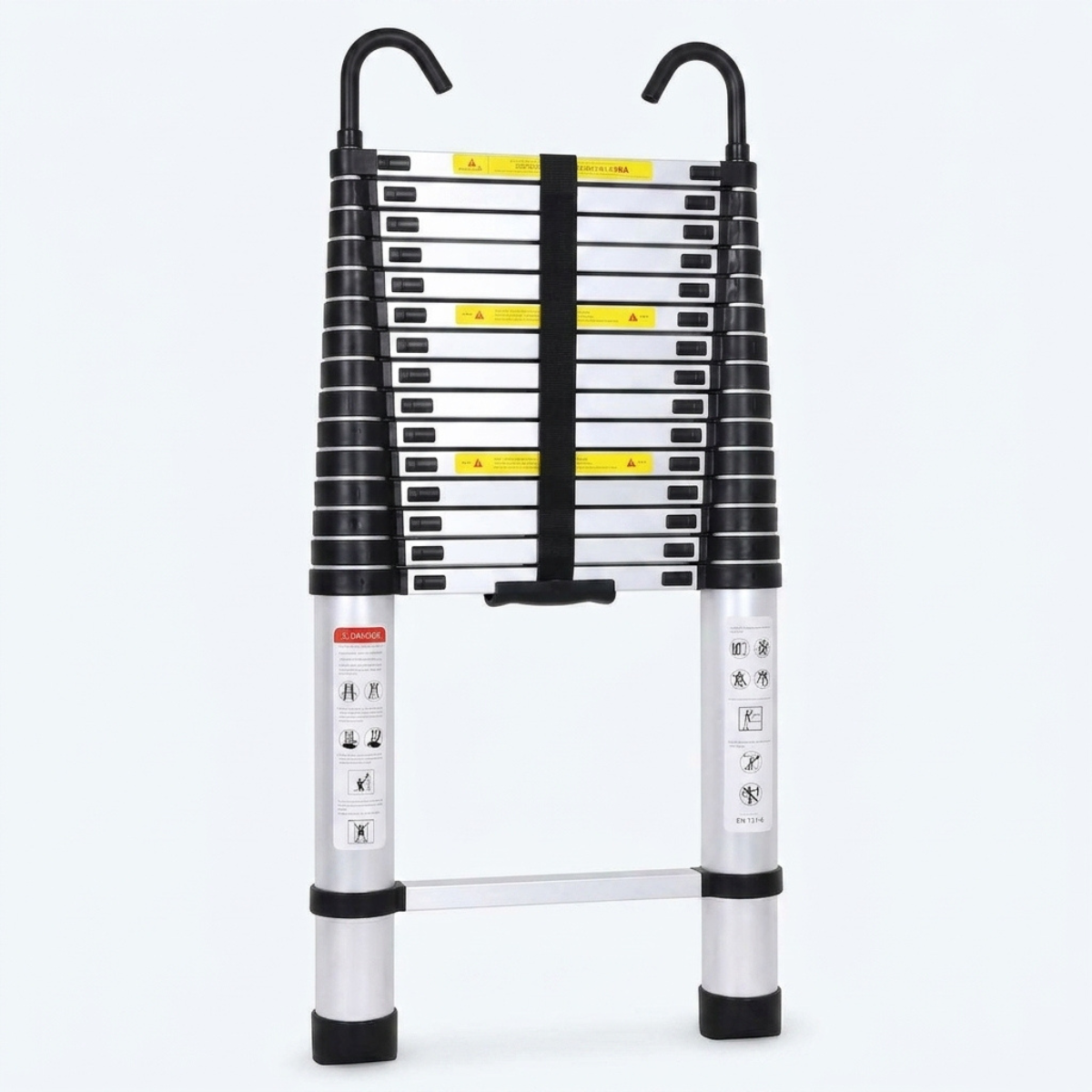
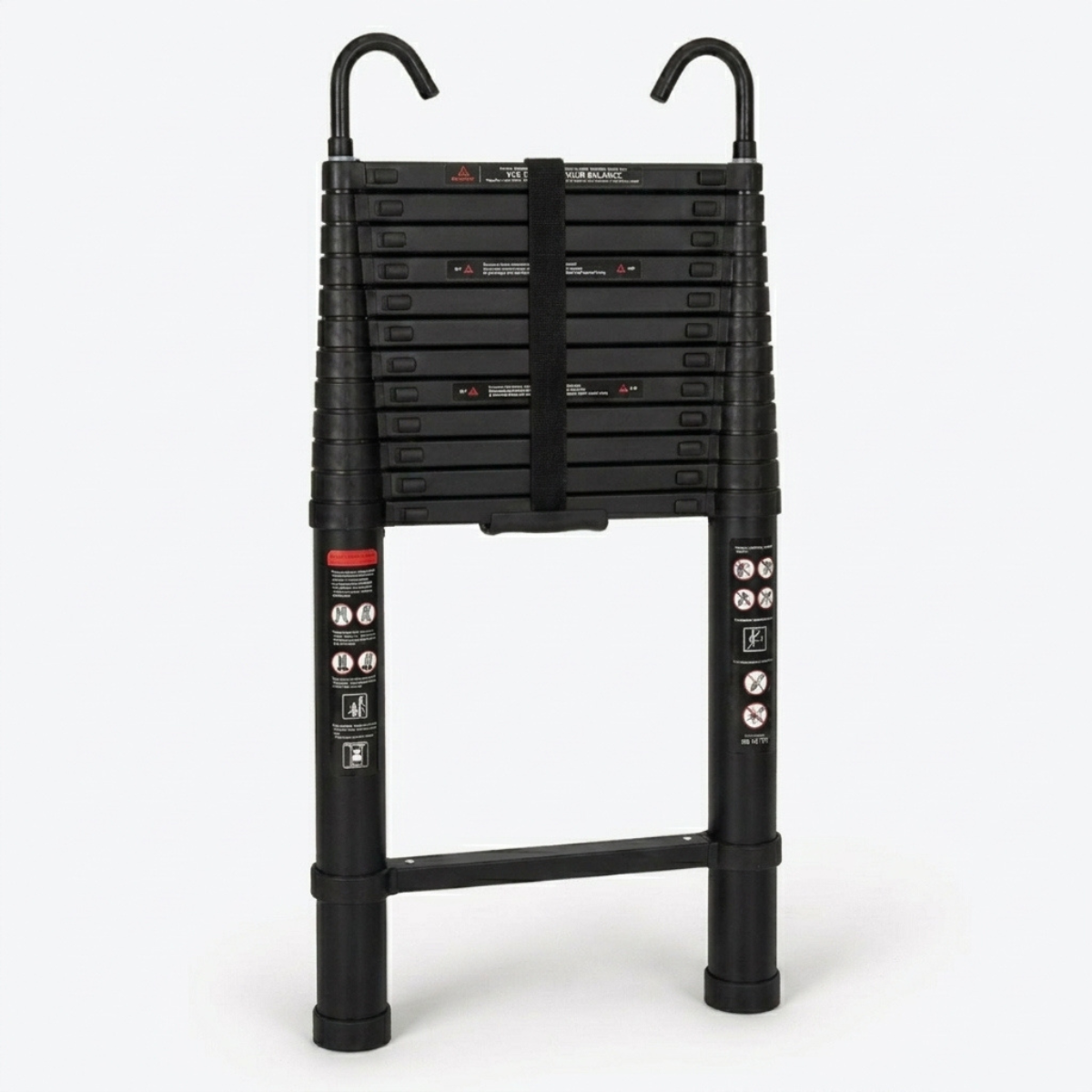
The Apex 620 extends to 6.2 m and folds to 1.09 m. It reaches walls up to 6 m, and you can work up to about 7 m with your hands. It weighs 16.3 kg, so you will notice it, but it is the model that covers most gable ends and high eaves without scaffolding for a short job.

For high eaves and gable ends: the Apex 620
Reaches walls up to 6 m, folds to 1.09 m, rated up to 150 kg. Comes with free ridge hooks.
View the Apex 620 →Did you know?
To step off a ladder onto a landing place, the HSE advises that the ladder should extend about 1 m above it. If your job needs that, choose the ladder from the height of the landing, not the height of the wall.
Accessories that help on site
| Accessory | What it does |
|---|---|
| Ridge hooks | Fit at the top of the Apex 620 and hook over a roof edge or scaffolding, so the ladder stays where you put it. Detachable. Included free with the Apex 620. |
| Stabiliser bar | Widens the base to resist sideways movement on taller extensions. Detachable. Included with several models. |
| Roof hook set with wheels | Anchors the ladder against a roof edge or scaffold, with 360 degree wheels so it slides into place without marking the roofing material. |
| Work platform | Clips onto a rung to give both feet a wide, flat, non-slip surface for tasks that take a few minutes or more. |
| Carry bag | Keeps grit, damp and oil off the folded ladder in the van. |
Pro tip
Hooks and bars help secure a ladder, they do not replace a correct set-up. Check they are fully seated and that the surface is solid before you climb.
Carrying and storing it in the van
Folded lengths run from 74 cm (Compact 260) to 1.09 m (Apex 620). Every model fits inside an ordinary panel van with no roof rack, which also means the ladder is out of the rain and out of sight overnight.
- Store it flat or upright, collapsed fully, with the locks released.
- Wipe off plaster, cement and mud before you fold it. Grit in the sections is what wears the locks.
- Use a carry bag if the ladder shares space with sharp tools.
Where a ladder is the wrong tool
A ladder is a way to get to a job, not a place to do a long job from. The HSE describes ladders as suitable for light work of short duration, around 30 minutes at a time. Choose something else when:
- The work lasts hours (re-roofing, rendering a whole elevation, replacing a full run of fascias). Use a scaffold or a tower.
- You need to work on the roof itself. That needs edge protection and a roof access system, not a ladder and hope.
- The ground is soft, sloping or full of rubble and you cannot make it level.
- There are overhead power lines near the work.
- The wind is strong or gusty. A tall ladder acts like a sail.

Site set-up checklist
- Ground: firm and level. Clear rubble and wet leaves from the feet.
- Angle: 1 m out for every 4 m of height (75 degrees).
- Top contact: on the wall, clear of plastic gutters, with a solid surface to rest on.
- Locks: check that every section is locked and the latch markers show locked.
- Anchor: fit ridge hooks, tie off, or have someone foot the ladder when the job needs it.
- Climb: three points of contact, tools in a belt or bucket, belt buckle between the rails.
Full routine: How to Use a Telescopic Ladder Safely. Comparing with other types? See Telescopic vs Folding vs Extension Ladder. If you are an electrician, read Telescopic Ladder for Electricians.
FAQ: telescopic ladders for roofers and builders
Which telescopic ladder is best for roofers?
For access to the roof edge on a two-storey house, the 6.2 m Apex 620 with ridge hooks gives the most reach. Use the ladder to reach the eaves, not to replace scaffolding for roof work.
What are ridge hooks for?
They fit at the top of the Apex 620 and hook over a roof edge or scaffolding, which gives the ladder a fixed anchor point at the top. They are detachable: fit them for roof-level work and remove them when you fold the ladder.
Can I use a telescopic ladder every day on site?
It is designed for light, short-duration access, with a 150 kg load rating (you plus tools). For work that keeps you on a ladder for long periods, a scaffold or tower is the right choice. For access and quick jobs, a good telescopic ladder is a strong fit.
Will a 6.2 m ladder fit in my van?
Yes. It folds to 1.09 m, which fits inside a panel van with no roof rack. It may be too long for a small hatchback boot.
How heavy is the Apex 620?
16.3 kg. It is a one-person lift, but heavier than the shorter models: the Sentinel Pro (5 m) weighs 15.5 kg and the 3.2 m weighs 9.3 kg.
Do you offer trade pricing?
Yes, for teams and repeat orders. Request a trade quote.
Get the right ladder for your next job
Free tracked UK delivery and 30-day returns. Buying for a team? Ask for a trade quote.
Shop telescopic ladders → Trade quote →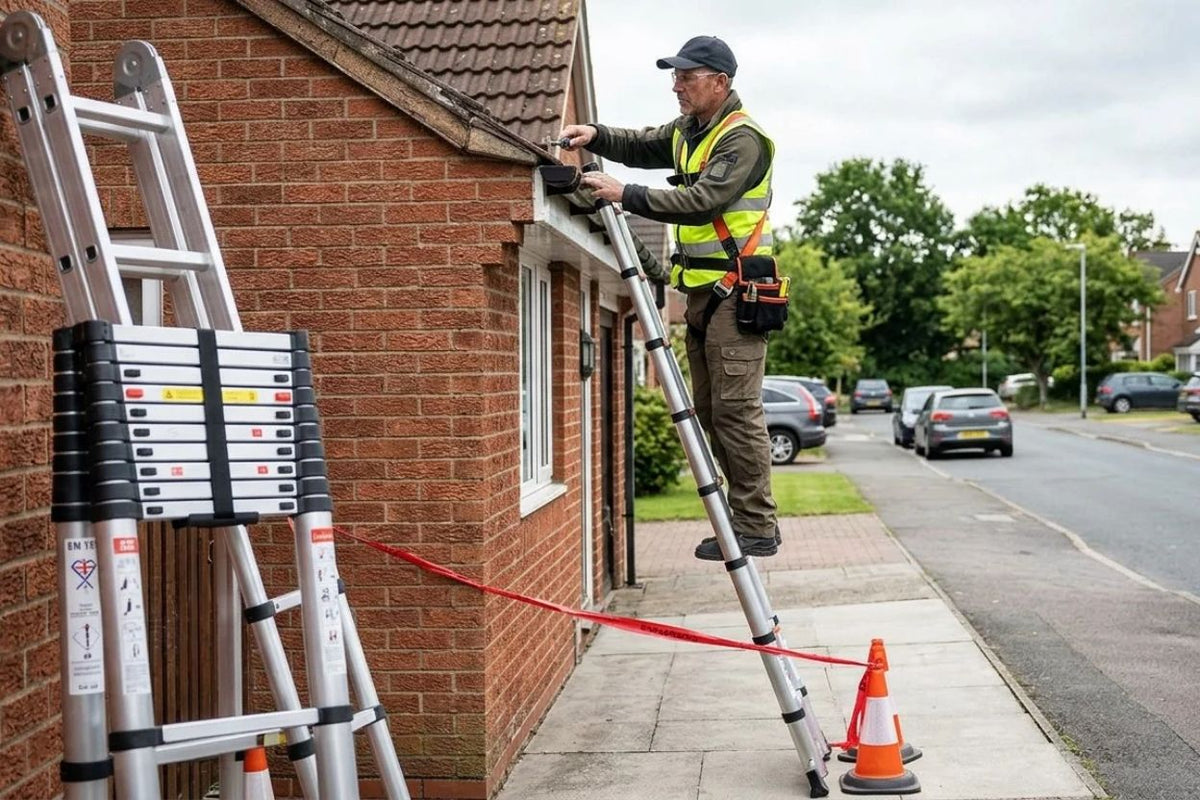
Leave a comment
All comments are moderated before being published.
This site is protected by hCaptcha and the hCaptcha Privacy Policy and Terms of Service apply.